What size cable for an electric car charger?
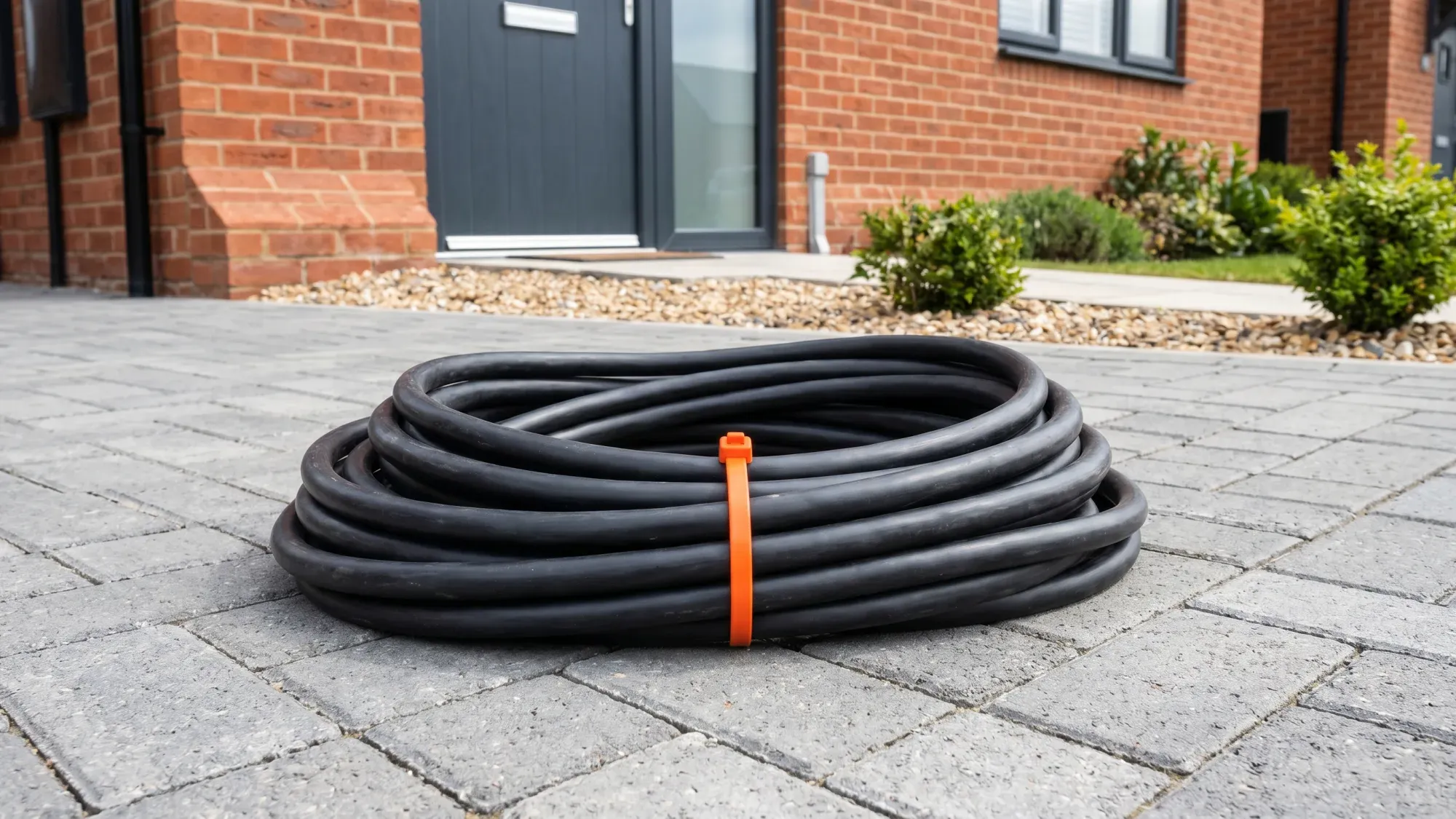
Choosing the correct cable size for your electric car (EV) charger in the UK is a critical safety consideration that always requires a professional assessment. Underestimating cable size can lead to serious hazards, including overheating and fire, while also reducing charging efficiency. All EV charger installations in the UK must comply with BS 7671 IET Wiring Regulations, making professional installation by a qualified electrician essential for safety and compliance.
Installing an EV charger is a significant upgrade for your home. Fuse Energy can help you understand the electrical requirements and ensure a safe, efficient setup. Click here to learn more about our EV charging solutions.
Enter your address to get a quote and see how much you could save
Why correct cable sizing matters for your EV charger
The cable connecting your EV charger to your home's electricity supply is a crucial component of the entire system. Its size directly impacts both safety and performance.
Safety implications of incorrect sizing
An undersized cable for an EV charger can have severe consequences. EV charging is a continuous, high-load application, often running for several hours at a time. If the cable is too small for the electrical current it needs to carry, it can overheat significantly. This overheating poses a substantial fire risk and can damage your home's electrical infrastructure. Ensuring the cable's current-carrying capacity is greater than or equal to the protective device rating (e.g., a 32A circuit breaker for a 7.4 kW charger) is fundamental to preventing overcurrent and ensuring safety.
Preventing voltage drop and ensuring efficiency
Beyond safety, correct cable sizing prevents excessive voltage drop. Voltage drop occurs when the electrical pressure decreases along the length of a cable, especially over longer distances. If the voltage drop is too high, it can reduce the charging efficiency of your EV charger and may even cause the charger to fault. A larger cable cross-sectional area helps to mitigate voltage drop, ensuring your charger operates efficiently and reliably.
Key factors influencing EV charger cable size
Several factors determine the appropriate cable size for your home EV charger installation. A qualified electrician will consider all these elements during a site survey.
Charger power rating
The power rating of your EV charger is a primary determinant of the cable size needed. Most home EV chargers in the UK are single-phase, rated at 7.4 kW, which draws approximately 32amps (A). For such a charger, the circuit protective device (e.g., a circuit breaker) must also be rated appropriately, typically 32A. Three-phase 22 kW chargers are much faster but are not standard in most UK homes, which typically have a single-phase supply.
Cable length and routing
The distance the cable needs to run from your consumer unit to the proposed charger location significantly affects its required size. Longer cable runs inherently increase the risk of voltage drop, meaning a larger cable cross-sectional area will be necessary to compensate. For example, a 7.4 kW charger might use a 6mm² cable for shorter runs, but a 10mm² cable could be required for distances exceeding 15-20 metres.
Installation method and environmental conditions
The way the cable is installed also influences its current-carrying capacity. Cables clipped directly to a surface can dissipate heat more effectively than those enclosed in conduit, buried in walls, or surrounded by insulation. Hotter ambient temperatures or grouping the cable with other heat-generating cables will also reduce its capacity, potentially necessitating a larger cable size.
UK regulations and standards for EV charger installation
Installing an EV charger is not a simple plug-and-play task; it involves adherence to strict electrical regulations and requires coordination with your local electricity network.
Understanding BS 7671 IET Wiring Regulations
All domestic electrical installations in the UK, including EV chargers, must comply with BS 7671 IET Wiring Regulations. The 18th Edition, with Amendment 2 (2022), contains specific requirements for EV charging installations, detailed in Chapter 722. These regulations cover critical aspects such as dedicated circuits, RCD protection, and isolation, ensuring safety for users and preventing accidents. Each charger must be on its own dedicated final circuit with its own protective device.
The role of your distribution network operator (DNO)
Your Distribution Network Operator (DNO) is responsible for maintaining the local electricity network that supplies your home. They must be notified when an EV charger is installed because it creates a steady electrical load, often for several hours. This notification ensures the local network can safely support the additional demand and helps the DNO plan for future upgrades. In most cases, your installer will handle this notification on your behalf. Depending on your property's electrical capacity, the DNO may simply be notified after installation, or pre-approval might be required before work starts, particularly if your property has a limited supply capacity or you are installing multiple chargers. You can find out more about what is a DNO and their role.
Importance of a qualified electrician
Given the complexities of cable sizing, regulatory compliance, and DNO requirements, professional installation by a qualified electrician is paramount. An electrician will perform a comprehensive site survey, assess your existing electrical infrastructure, and calculate the precise cable size needed for your specific setup. They ensure the installation meets all UK electrical regulations, including Part P of the Building Regulations (England and Wales), which requires electrical work in dwellings to be carried out by competent persons. This is a key part of ensuring a safe EV charger installation cost.
Common cable sizes for home EV chargers (7.4 kW)
For the typical 7.4 kW home EV charger, cable sizing often comes down to a choice between two common options, but this is always subject to professional assessment.
Typical recommendations for 7.4 kW chargers
For a standard 7.4 kW (32A) single-phase EV charger, a 6mm² copper cable is commonly used for many domestic installations and shorter cable runs. However, for cable runs exceeding approximately 15-20 metres, or if the cable is installed in a way that restricts heat dissipation (e.g., in insulation or conduit), a 10mm² cable may be required to manage voltage drop and ensure safety. Cables smaller than 6mm² are generally insufficient for a 7.4 kW EV charger due to the continuous high load.
What cable size is typically needed for a 7.4 kW EV charger in the UK?
For a typical 7.4 kW (32A) single-phase EV charger in the UK, a 6mm² copper cable is often suitable for shorter runs. For longer distances (over 15-20 metres) or installations where heat dissipation is restricted, a 10mm² cable may be necessary to prevent voltage drop and ensure safety.
When a meter tail upgrade might be necessary
Installing an EV charger can place a significant new load on your home's electrical system. If your existing meter tails (the cables connecting your electricity meter to your consumer unit) are not sufficient to handle this increased demand, an upgrade may be necessary. Fuse Energy offers a meter tail upgrade service for £100, or £170 if an isolator switch is also required. This upgrade replaces the cables with higher-capacity ones that comply with current electrical standards. After Fuse upgrades the meter tails, you will need to book an appointment with your DNO to upgrade your Fuse cutout to match the increased capacity.
Fuse Energy's Easee one 7.4 kW charger requirements
Fuse Energy offers the Easee One 7.4 kW electric vehicle charger for installation. This smart home charger is designed for the UK domestic market, delivering up to 7.4 kW (32A) via single-phase power. It features integrated open PEN conductor protection, meaning an earth rod is not typically needed, and includes built-in surge protection. The Easee One can also dynamically balance load and link up to three units on one Fuse for power sharing. Fuse provides clear guidance on cable sizing for its Easee One 7.4 kW charger, demonstrating its practical expertise in electric vehicle charging solutions. For more information on electric car charging at home, explore our guides.
Ensuring a safe and compliant EV charger installation
A successful EV charger installation goes beyond just fitting the unit; it involves a thorough assessment, professional execution, and consideration for your home's future energy needs.
The site survey and electrical assessment
Before any installation work begins, a qualified electrician will conduct a detailed site survey and electrical assessment. This involves checking your existing electrical infrastructure, including your consumer unit's capacity, earthing arrangements, and the condition of your meter tails. They will also determine the optimal cable route and assess any environmental factors that could affect cable performance. This comprehensive evaluation ensures that your home's electrical system can safely support the new EV charger.
Professional installation and certification
Professional installation by a qualified electrician is non-negotiable for EV chargers. They will ensure that all work complies with BS 7671 IET Wiring Regulations and that the installation is safe and efficient. Upon completion, a certified electrician will provide an Electrical Installation Certificate (EIC), which is required for every domestic EV installation. This certification confirms that the work has been carried out to the required standards.
Future-proofing your home electrical system
Considering future electrical demands is a smart move when installing an EV charger. As homes become increasingly electrified with technologies like heat pumps and solar panels, the overall electrical load will grow. While a 7.4 kW charger is suitable for most homes, ensuring your electrical infrastructure, including meter tails and consumer unit, has adequate capacity can prevent costly upgrades down the line. Fuse Energy offers essential electrical infrastructure upgrades like meter tail upgrades, ensuring homes are ready for modern electric vehicle charging demands.
Managing your home's energy should be simple and transparent. Fuse Energy offers clear pricing, real-time usage data through our app, and 24/7 human customer support to help you make the most of your energy. Our smart solutions are designed to give you control and help you understand your consumption.
Ready to take control of your home energy and support a greener future? Click here to switch to Fuse Energy today. Discover more about our mission to power change here.
Disclaimer
For the avoidance of doubt, this article is provided for informational purposes only and is not intended to constitute legal or financial advice. The author and/or Fuse Energy shall not be responsible for any losses arising out of any reliance on the information contained herein.