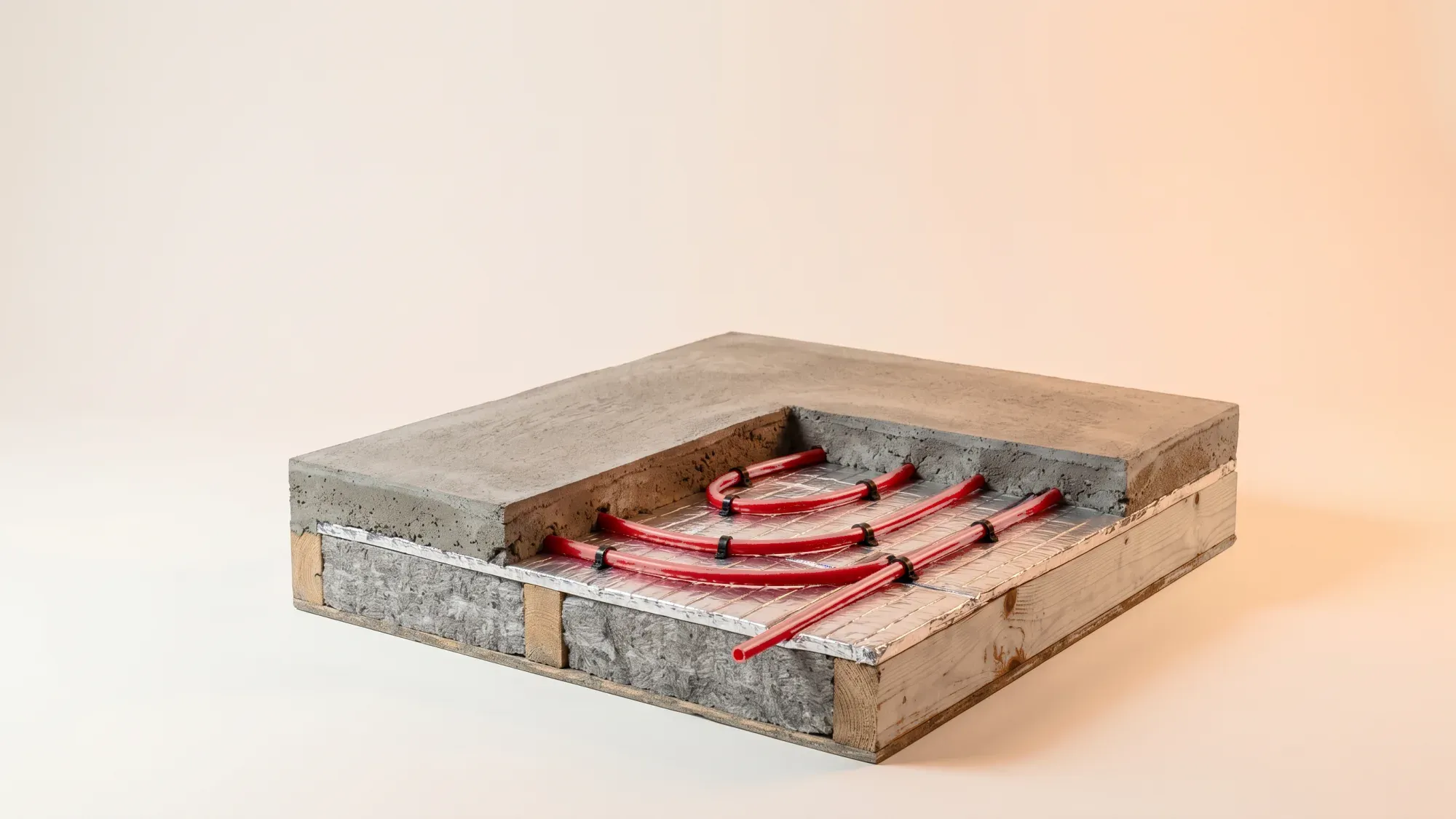
Underfloor heating (UFH) offers a comfortable and efficient way to warm your home, providing an even distribution of heat that can lead to lower thermostat settings compared to traditional radiators. Understanding the different types, installation considerations, and running costs is crucial for making an informed decision about this heating solution.
Considering underfloor heating for your home? Fuse Energy provides transparent energy supply and tools to help you manage your overall energy usage effectively, which indirectly supports efficient heating. Click here to see how Fuse can support your home's energy needs.
The basics of underfloor heating
Underfloor heating (UFH) works by circulating warm water through pipes or heating electric cables installed beneath your floor. This turns the entire floor into a large, low-temperature radiator, gently warming the room from the ground up. Unlike conventional radiators that heat the air directly, UFH provides radiant heat, which warms objects and people in the room, creating a more consistent and comfortable environment.
Even heat distribution explained
The principle behind UFH's comfort is its ability to deliver heat across a large surface area at a low temperature. Traditional radiators operate at higher flow temperatures, typically between 60°C and 80°C, creating convection currents that push hot air upwards, leading to uneven temperatures with warmer air at the ceiling and cooler air at floor level. In contrast, wet underfloor heating systems typically operate with water temperatures between 30°C and 45°C. New UK building regulations from 2026 require all new or substantially upgraded water UFH systems to operate at a maximum flow temperature of 55°C or lower. This lower temperature provides a gentle, even warmth across the entire floor surface, resulting in a more uniform temperature distribution from floor to ceiling and eliminating cold spots and draughts.
Radiant heat vs convection heat
The key difference between underfloor heating and traditional radiators lies in their heat transfer method. Radiators primarily use convection, heating the air around them, which then circulates throughout the room. This can lead to significant heat loss through ventilation and less comfortable temperature gradients. Underfloor heating, however, uses radiant heat, directly warming people and objects in the room. This direct transfer of energy means you feel warmer at a lower air temperature, which can enhance comfort and potentially reduce energy consumption.
There are two primary types of underfloor heating systems available: wet (hydronic) systems and electric systems. Each has distinct characteristics, making them suitable for different renovation projects and budgets.
Wet underfloor heating (hydronic systems)
Wet underfloor heating systems circulate warm water through a network of pipes laid beneath the floor. These pipes are typically connected to a boiler, heat pump, or other heat source. The water temperature is carefully controlled to provide consistent warmth. Wet systems are generally more complex to install, often requiring a screed layer to embed the pipes, which can add to floor height.
Electric underfloor heating systems
Electric underfloor heating systems use heating cables or mats installed directly under the floor finish. These systems are powered by electricity and are typically thinner and quicker to install than wet systems. They are often chosen for smaller areas, such as bathrooms or conservatories, or where floor height is a significant constraint.
Key differences and suitability for renovations
| Feature | Wet Underfloor Heating | Electric Underfloor Heating |
|---|
| Heat source | Boiler, heat pump, solar thermal | Electricity |
| Installation | More complex, typically involves screed, impacts floor height | Simpler, thinner mats/cables, minimal floor height impact |
| Running costs | Generally lower, especially with efficient heat sources | Can be higher, depending on electricity tariffs and usage |
| Upfront cost | Higher | Lower |
| Control | Zoned control possible, slower response time | Zoned control common, faster response time |
| Best for | Whole-house heating, new builds, major renovations | Smaller areas, single rooms, minor renovations, extensions |
The choice often comes down to balancing upfront investment with long-term running costs and the scope of your renovation. For a full property, most underfloor heating installations in the UK cost between £3,000 and £13,000. Electric systems are generally cheaper to install than wet systems.
Underfloor heating offers several advantages over traditional radiator systems, contributing to enhanced comfort, improved energy efficiency, and potentially increasing your property's value.
Enhanced comfort and aesthetics
The primary benefit of UFH is the superior comfort it provides. The even radiant heat eliminates cold spots and creates a pleasant warmth throughout the room. Without bulky radiators, you gain valuable wall space, allowing for greater design flexibility and a cleaner, more minimalist aesthetic. This can be particularly appealing in modern homes or during renovations where maximising space is a priority.
Improved energy efficiency and potential savings
Underfloor heating operates at lower flow temperatures than traditional radiators, which can lead to significant energy savings. Wet systems, for instance, use water temperatures between 30°C and 45°C, compared to 60°C to 80°C for radiators. This lower operating temperature means boilers and heat pumps work less intensively, potentially reducing fuel consumption. The combined efficiency from lower operating temperatures and the radiant effect of UFH can reduce energy use in a typical UK home by up to 35%. A well-designed wet UFH system can potentially reduce heating bills by up to 25% compared to radiators.
Increased property value and market appeal
Installing underfloor heating can be a valuable investment that enhances your home's market appeal. Modern buyers often seek energy-efficient features and comfortable living spaces. The aesthetic benefits, combined with the perception of a premium heating system, can make your property more attractive and potentially command a higher resale value.
Installing underfloor heating, particularly wet systems, requires careful planning and consideration, especially during a renovation project.
Planning and design for new builds and renovations
For new builds, UFH can be integrated seamlessly into the design from the outset. For renovations, the process is more involved. You'll need to consider the existing floor structure, available floor height, and the type of subfloor. Proper planning ensures the system is correctly sized for the room's heat loss and compatible with your chosen floor finish. It's crucial to evaluate your home's insulation and consider upgrades to maximise efficiency before installation.
Floor construction and insulation requirements
Effective subfloor insulation is critical for underfloor heating efficiency. Without it, a significant amount of heat can be lost downwards, increasing running costs. Different floor constructions (e.g., concrete slab, suspended timber) will require specific insulation solutions. The added height of UFH systems, especially wet systems with screed, must also be factored into door clearances and skirting board levels.
Integration with heat sources and smart controls
Underfloor heating systems can integrate with various heat sources, including gas boilers, oil boilers, and increasingly, renewable technologies like air source or ground source heat pumps. The lower operating temperatures of UFH make it an ideal partner for heat pumps, which are most efficient when producing lower temperature water. Smart controls and thermostats are essential for optimising UFH, allowing for zoned heating, scheduling, and remote access, which can further enhance comfort and energy efficiency.
Understanding the running costs and factors affecting efficiency is vital for homeowners considering underfloor heating.
Understanding running costs for wet vs electric systems
The running costs of underfloor heating are influenced by several factors, including the type of system, your home's insulation, the size of the heated area, and your energy tariffs.
- Wet systems: Generally have lower running costs per kWh of heat produced, especially when paired with an efficient boiler or a heat pump. The lower flow temperatures contribute significantly to this efficiency.
- Electric systems: While cheaper to install, electric UFH can have higher running costs due to the higher price of electricity compared to gas. However, for smaller, well-insulated areas, or if used intermittently, they can still be a cost-effective solution.
Factors influencing underfloor heating efficiency
Several factors impact how efficiently your UFH system operates:
- Insulation: Adequate floor, wall, and loft insulation is paramount. Poor insulation leads to heat escaping, forcing the system to work harder.
- Thermostat settings: Running UFH at a lower, consistent temperature is more efficient than cycling it on and off at high temperatures.
- Floor finish: Some floor finishes, like tiles, conduct heat more effectively than others, such as thick carpets, which can act as an insulator.
- Heat source efficiency: The efficiency of your boiler or heat pump directly affects the running costs of a wet system.
Tips for reducing your underfloor heating bills
To keep your underfloor heating bills in check:
- Optimise insulation: Ensure your home is well-insulated, particularly the subfloor, to minimise heat loss.
- Setback temperatures: Use a programmable thermostat to set lower temperatures when rooms are unoccupied or at night, rather than turning the system off completely.
- Zoning: If your system allows, heat only the rooms you are using.
- Consider your tariffs: Explore energy tariffs that might offer cheaper rates during off-peak hours, which can be beneficial for electric UFH or for charging a heat pump's thermal store.
- Regular maintenance: Ensure your boiler or heat pump is serviced regularly to maintain optimal efficiency.
While underfloor heating significantly contributes to home comfort and energy efficiency, managing your home's overall energy consumption is key to truly optimising your heating expenses and reducing bill anxiety.
Monitoring your energy consumption with the Fuse app
The Fuse app provides transparent data on your total home energy usage. This allows you to see your overall energy consumption patterns, alongside other appliances. By presenting clear, data-driven insights, the app empowers you to understand your energy habits better.
Making informed choices for a more efficient home
With the insights gained from monitoring your energy consumption, you can make informed decisions about optimising your underfloor heating alongside other appliances. Fuse provides the tools to help you understand where your energy is going, enabling you to adjust usage patterns and identify areas for further efficiency improvements across your entire home.
Fuse Energy: supporting your home's energy needs
Fuse Energy supplies electricity and gas and provides tools for overall home energy management. We aim to help homeowners manage their energy consumption effectively, giving them more control and transparency over their bills. While Fuse Energy does not directly control or install underfloor heating systems, our approach to energy supply and management empowers you to fully enjoy the comfort and efficiency of your underfloor heating, reducing bill anxiety.