Slow cooker electricity price: how much does it cost to run?
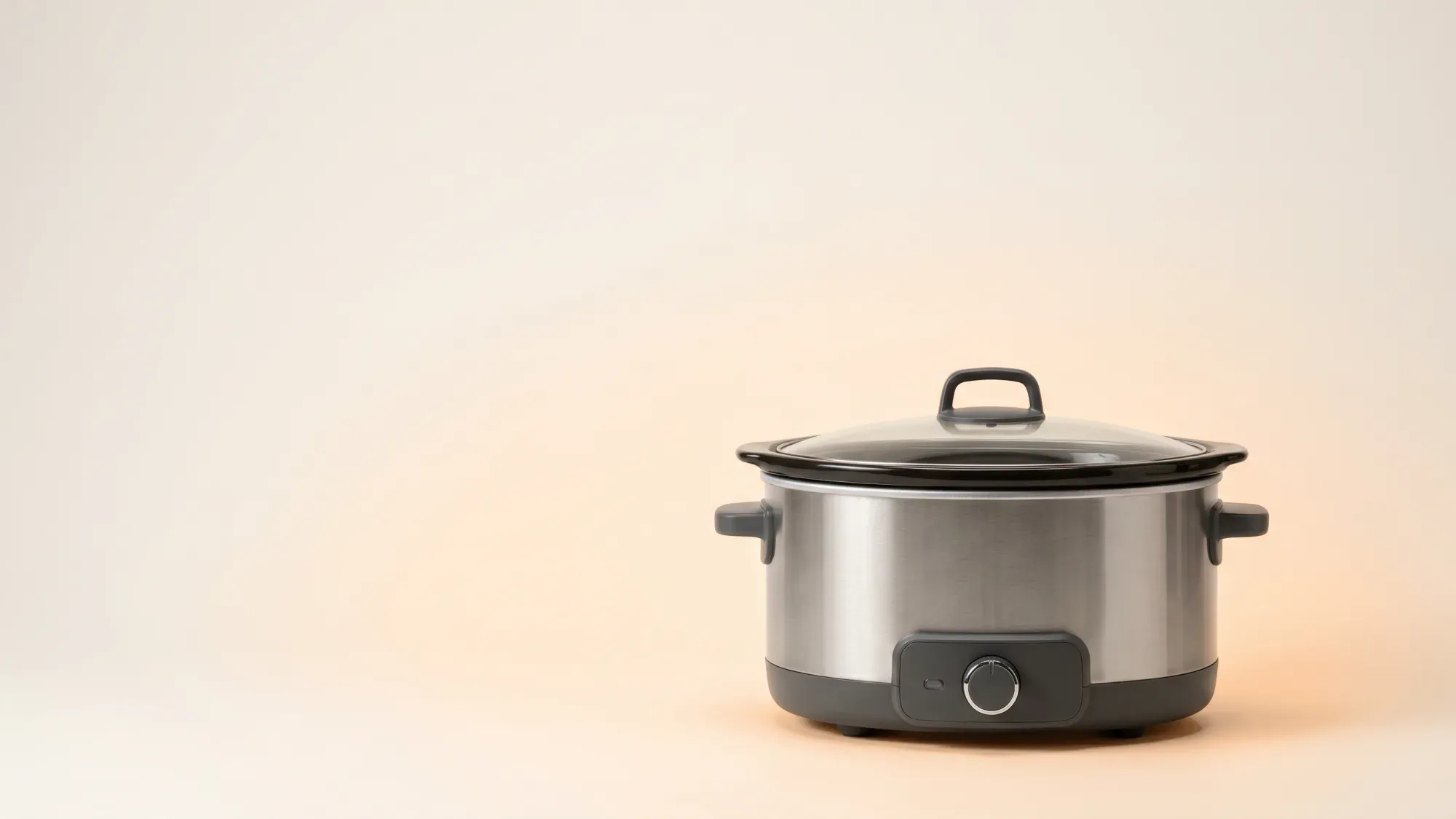
Understanding how much your kitchen appliances cost to run is key to managing household energy bills, especially with rising costs. Slow cookers are often seen as an energy-efficient alternative for cooking, but how much do they really add to your electricity bill? This guide breaks down the costs, helping you calculate your slow cooker's running expenses and compare it with other common kitchen appliances.
To help you manage your energy usage and costs, Fuse Energy offers clear pricing and in-app usage data, giving you the information you need to make informed decisions about your home energy. Click here to switch to Fuse Energy today.
Enter your address to get a quote and see how much you could save
Understanding your slow cooker's energy use
The first step to understanding your slow cooker's running cost is to know how much energy it uses. This is primarily determined by its wattage and how long it operates.
How to find your slow cooker's wattage
Every electrical appliance has a wattage rating, usually found on a label on the appliance itself, in its instruction manual, or on the manufacturer's website. This figure, expressed in Watts (W), indicates the amount of power the appliance consumes when in use. Slow cookers typically have a wattage ranging from 75W to 350W, depending on their size and the heat setting used. A larger slow cooker or one on a higher setting will generally use more power.
The role of cooking duration in energy consumption
Unlike some appliances that use a burst of high power, slow cookers operate at a lower wattage for extended periods. To calculate total energy consumption, you need to consider both the wattage and the hours of use. The energy consumed is measured in kilowatt-hours (kWh), which is simply the appliance's power in kilowatts multiplied by the number of hours it runs. A slow cooker might use less power per hour than an oven, but if it runs for eight hours, the total kWh can add up.
Calculating your slow cooker's running cost
Calculating the exact cost of running your slow cooker is straightforward once you have a few key pieces of information.
Step-by-step calculation formula
Follow these steps to work out your slow cooker's running cost:
- Identify your slow cooker's wattage (W): Check the label, manual, or manufacturer's website.
- Determine your current electricity unit rate: Find this on your energy bill, usually expressed in pence per kilowatt-hour (p/kWh).
- Convert wattage to kilowatts (kW): To convert watts to kilowatts, divide the wattage by 1,000 (e.g., 200W ÷ 1,000 = 0.2 kW).
- Calculate total kilowatt-hours (kWh) consumed: Multiply the kilowatts (kW) by the number of hours you use the appliance.
- Find the cost for that cooking session: Multiply the total kWh by your electricity unit rate (in pence).
- Estimate overall costs: Consider how often you use your slow cooker to project monthly or annual expenses.
Example calculation with current UK rates
Let's say you have a 200W slow cooker and you use it for 8 hours. The average electricity unit rate for a Direct Debit customer on a Standard Variable Tariff in Great Britain is 26.11p per kWh (inclusive of 5% VAT) from 1 July 2026 under the Ofgem Price Cap.
- Step 1: Wattage = 200W
- Step 2: Unit rate = 26.11p/kWh
- Step 3: Convert to kW = 200W / 1,000 = 0.2 kW
- Step 4: Total kWh = 0.2 kW * 8 hours = 1.6 kWh
- Step 5: Cost = 1.6 kWh * 26.11p/kWh = 41.776 pence
So, running this slow cooker for 8 hours would cost approximately 42 pence.
Slow cookers vs other kitchen appliances
When looking to save on energy, it's helpful to compare the running costs of different cooking methods.
Comparing with ovens
Conventional electric ovens are known for their high energy consumption. They can consume between 2,000W and 5,000W, with 3,000W being typical for a full-size range. While an oven might cook a meal faster, its high wattage means that even a shorter cooking time can result in significant energy use. For example, a 3,000W oven running for just one hour would use 3 kWh, costing around 78 pence at the current unit rate.
Comparing with air fryers
Air fryers have gained popularity for their speed and efficiency. They typically use between 1,200W and 2,200W, with many standard models around 1,500W. An air fryer might cook a chicken in 30 minutes, using, for instance, 0.75 kWh (1,500W for 0.5 hours), costing around 20 pence. While this is cheaper per session than the slow cooker example, air fryers are not suitable for all types of meals that a slow cooker can handle. For more ways to reduce your energy consumption, consider exploring options like a smart meter installation to track your usage more effectively.
Why slow cookers can be an efficient choice
Slow cookers excel in energy efficiency for certain types of cooking. Their "low and slow" method, combined with a well-insulated pot, means they retain heat effectively and require less power to maintain a consistent temperature. For dishes that need long cooking times, such as stews, curries, or pot roasts, a slow cooker can be a more economical choice than repeatedly heating a large oven. They are designed to cook food thoroughly with minimal energy input over several hours, making them a smart option for budget-conscious households.
Factors affecting electricity price
Your electricity bill isn't just about how much energy your appliances use; it's also about how your energy supplier charges you.
Your energy tariff and unit rate
The unit rate (p/kWh) is the price you pay for each unit of electricity you consume. This is the most significant factor in calculating appliance running costs. Your energy bill will also include a daily standing charge, a fixed daily fee that covers costs associated with supplying electricity and gas to your home. To get an accurate cost calculation, always use the unit rate from your latest energy bill. Understanding your tariff is crucial, and you can learn more about the differences between fixed and variable tariffs to see which might suit you best.
The Ofgem Price Cap explained
Ofgem, the UK's energy regulator, sets an energy price cap. This cap limits the maximum unit rates and standing charges that energy suppliers can charge customers on standard variable tariffs in Great Britain. This mechanism protects millions of households from sudden and excessive price increases. The average electricity unit rate for a Direct Debit customer on a Standard Variable Tariff is 26.11p per kWh (inclusive of 5% VAT) from 1 July 2026 under this cap. This figure is a crucial benchmark for understanding current electricity costs.
What is the average UK household electricity consumption?
The average UK home uses around 2,500 kWh of electricity per year. This figure, known as the medium Typical Domestic Consumption Value (TDCV), is set by Ofgem1 and is effective from 1 July 2026. It serves as a useful baseline for comparing appliance usage against overall household demand.
Tips for efficient slow cooker use
Making the most of your slow cooker's efficiency can help keep your energy bills in check.
Maximising energy efficiency
- Choose the right size: A slow cooker that's too large for your meal will use more energy to heat its contents. Aim for a pot that's at least two-thirds full.
- Don't lift the lid: Every time you lift the lid, a significant amount of heat escapes, and the slow cooker needs to use more energy to get back up to temperature. Resist the urge to peek!
- Pre-soak dried beans: If your recipe includes dried beans, pre-soaking them can reduce cooking time slightly, saving a little energy.
- Thaw frozen ingredients: Cooking from frozen requires more energy and time. Thawing ingredients beforehand can improve efficiency.
Smart cooking habits
- Batch cooking: Prepare larger quantities of meals in your slow cooker and freeze portions for later. This saves energy by using the appliance once for multiple meals.
- Plan meals: Think ahead about what you want to cook. Slow cookers are excellent for preparing meals while you're out, ensuring a hot dinner is ready when you get home without needing to run an oven for hours.
- Use cheaper cuts of meat: Slow cooking is perfect for tenderising less expensive cuts of meat, which can also help you save money on your grocery bill.
By understanding your slow cooker's energy consumption and applying these tips, you can enjoy delicious, budget-friendly meals while keeping control of your household electricity costs. For more insights into managing your energy, you might find our article on understanding your energy bill helpful.
Managing your home energy should be simple and transparent. Fuse Energy provides clear pricing, real-time usage data through our app, and 24/7 human customer support to help you stay on top of your bills. Switching is quick and easy, allowing you to take control of your energy from day one. Click here to switch to Fuse Energy today, or learn more about our mission to make energy abundant and affordable by clicking here.
References
Disclaimer
For the avoidance of doubt, this article is provided for informational purposes only and is not intended to constitute legal or financial advice. The author and/or Fuse Energy shall not be responsible for any losses arising out of any reliance on the information contained herein.