TRV valves explained
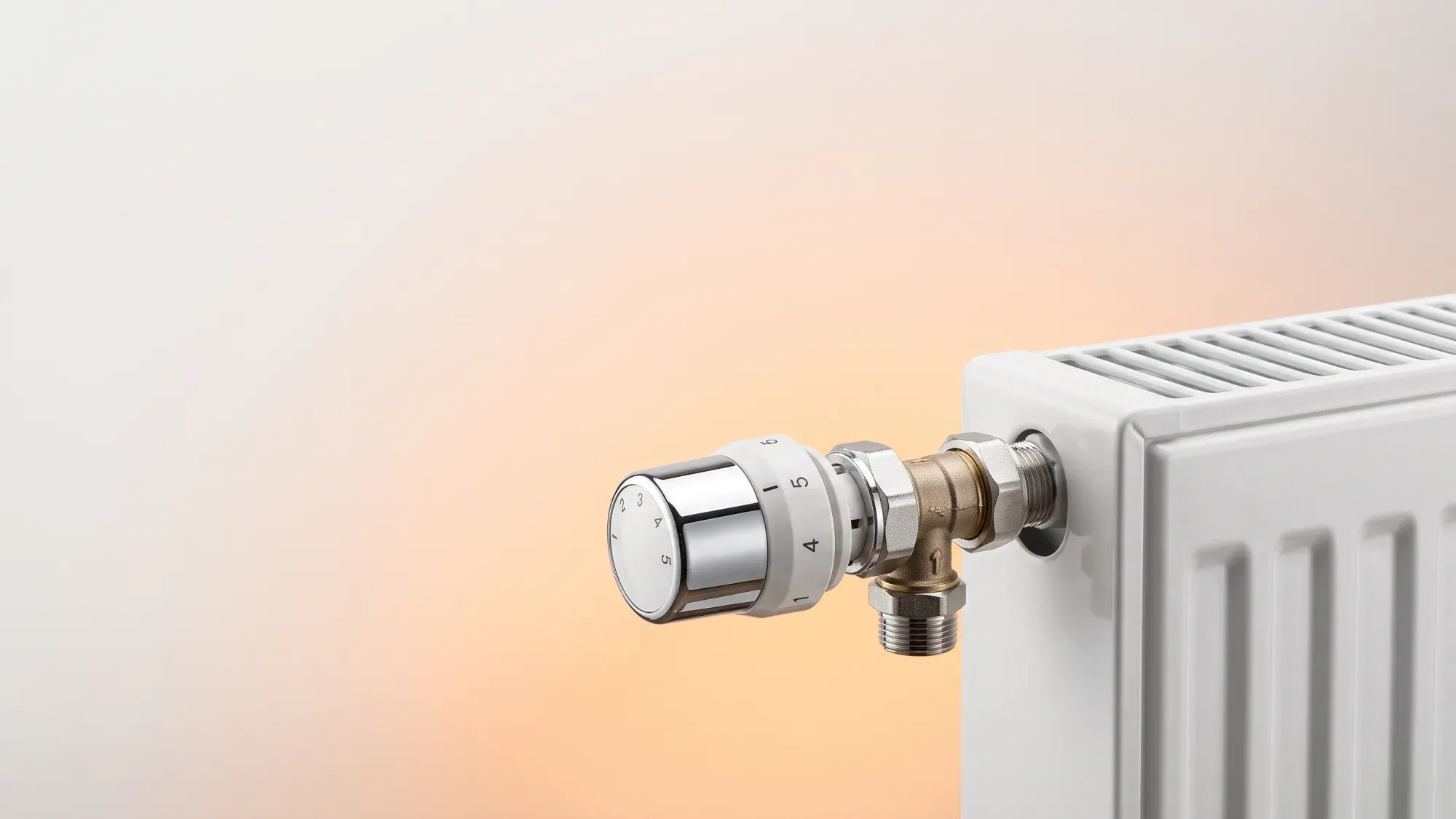
Thermostatic Radiator Valves (TRVs) offer a straightforward way for UK homeowners and tenants to gain precise control over their home heating, reduce energy waste, and manage energy bills more effectively. By allowing individual room temperature control, TRVs empower you to heat your home according to your actual needs, rather than a one-size-fits-all approach. This guide will explain how these essential devices work, their benefits, and practical advice for optimal use.
Understanding how TRV valves work can help you manage your home heating more efficiently. Fuse Energy provides smart tariffs and in-app usage data to help you take control of your energy consumption. Switch to Fuse Energy today to start your journey towards a smarter, more efficient home. Click here to get started.
Enter your address to get a quote and see how much you could save
What is a TRV valve and how does it work?
A Thermostatic Radiator Valve (TRV) is a self-regulating device fitted to a hot water radiator that controls the flow of hot water into it based on the room's air temperature. It acts like a mini thermostat for each radiator, ensuring that individual rooms maintain a desired temperature without overheating.
The basic principle of thermostatic control
The core idea behind a TRV is thermostatic control: sensing the ambient temperature and reacting to it. When a room warms up, the TRV reduces the hot water supply to the radiator; when it cools, the valve opens to allow more hot water through. This automatic adjustment helps maintain a consistent temperature, preventing energy waste from overheating.
Components of a TRV: sensor, valve body, and head
A TRV typically consists of two main parts: the valve body, which connects to the radiator pipework, and the thermostatic head. Inside the head is a temperature-sensitive element, often a capsule filled with wax or liquid, that expands and contracts with changes in air temperature. This expansion and contraction pushes or pulls a pin within the valve body, which in turn adjusts the flow of hot water.
How a TRV regulates room temperature
As the room temperature rises, the wax or liquid in the sensor expands, pushing the pin down to partially close the valve and restrict the flow of hot water into the radiator. This reduces the radiator's heat output. Conversely, as the room temperature drops, the sensor contracts, allowing the pin to retract and the valve to open further, increasing the hot water flow and the radiator's heat output. This continuous cycle ensures the room stays at your chosen temperature without constant manual adjustment.
Key benefits of installing TRV valves
Installing TRVs offers several advantages, from reducing your energy bills to improving comfort throughout your home.
Improved energy efficiency and cost savings
TRVs significantly enhance energy efficiency by preventing rooms from becoming warmer than necessary. By automatically reducing heat output in rooms that have reached their set temperature, they reduce the load on your boiler, meaning it fires up less often. Field studies suggest that using TRVs effectively can reduce heating bills by 8-12% annually, with some studies showing potential savings of up to 41% in specific conditions. For a typical heating bill, this could translate to savings of £60-£120 per year. The Energy Saving Trust estimates that installing and correctly using TRVs could save a typical household in Great Britain around £110 per year.
Enhanced comfort and room-by-room temperature control
TRVs provide granular control over the temperature in each room, allowing you to tailor heating to how you use different spaces. You can set your living room to a comfortable 20°C for evenings, while a bedroom might be cooler at 16°C for better sleep. This individual control means you avoid overheating unoccupied or less-used areas, ensuring comfort where and when you need it most.
Environmental advantages of reduced energy consumption
By optimising heating and reducing energy waste, TRVs contribute to lower overall energy consumption. This not only benefits your wallet but also reduces your household's carbon footprint, supporting broader efforts towards a more sustainable energy system.
Setting your TRV valves for optimal performance
Understanding how to set your TRVs correctly is crucial for maximising their benefits.
Understanding the TRV numbering system and temperature equivalents
Most TRVs feature a numbered dial, typically from 0 to 5, sometimes with a snowflake or star symbol for frost protection. These numbers do not represent exact temperatures in degrees Celsius but rather approximate temperature ranges. For instance, setting '3' often corresponds to around 20°C, a comfortable temperature for many living spaces. Turning a TRV to a higher number won't make the room heat up faster; it simply sets a higher target temperature that the room will eventually reach.
What do the numbers on a TRV mean?
The numbers on a TRV indicate the target room temperature, not how hot the radiator gets. Typically, '0' is off, a snowflake symbol offers frost protection (around 5-7°C), '1' is cool (10-12°C), '2' is cooler (15-16°C), '3' is comfortable (18-20°C), and '4' or '5' are warmer settings (21-25°C+). Exact temperatures can vary by manufacturer.
Recommended settings for different rooms and usage patterns
Optimal TRV settings vary by room and how it's used:
- Living rooms: Start with '3' (around 20°C) and adjust slightly if needed.
- Bedrooms: Settings '2' or '3' (16-19°C) are often ideal for sleeping.
- Bathrooms: A setting of '3' or '4' (20-24°C) might be preferred for warmth.
- Hallways and landings: '2' is often sufficient, as these areas benefit from heat spilling from other rooms.
- Spare rooms: Setting '1' or the snowflake symbol can provide frost protection without excessive heating. Avoid turning them completely off in cold weather to prevent damp and mould.
Adjust settings gradually, allowing a few hours for the room temperature to stabilise before making further changes.
Tips for balancing your heating system with TRVs
For TRVs to work effectively, your entire heating system needs to be balanced. This ensures hot water is distributed evenly to all radiators. If some radiators are hot while others remain cold, or rooms further from the boiler heat up slowly, your system may need balancing. This typically involves adjusting lockshield valves on radiators and is often best done by a heating engineer. The radiator in the same room as your main wall thermostat should not have a TRV, or its TRV should be set to its highest setting, to prevent the two controls from conflicting.
Common TRV valve problems and troubleshooting
While generally reliable, TRVs can encounter issues that affect heating performance.
Sticking pins and cold radiators: diagnosis and solutions
A common problem is a stuck TRV pin, especially after the heating system has been off for an extended period. If a radiator remains cold even when the heating is on, the pin inside the valve body might be stuck in the closed position.
Solution: Remove the TRV head (usually by twisting or unscrewing a collar) to expose the small metal pin. Gently press the pin down with a blunt object and work it up and down until it moves freely. If the pin won't move or water leaks, it's best to call an engineer. To prevent this, set TRVs to their highest setting during non-heating seasons.
Leaking TRVs: causes, prevention, and repair
Leaking TRVs can be caused by loose connections, damaged seals, or corrosion. If you notice water around your TRV, tighten any visible nuts carefully. If the leak persists, the valve may need replacing. This often requires draining the heating system, so it's usually a job for a qualified plumber.
Noise issues: banging, whistling, or gurgling from TRVs
Noisy radiators can be frustrating. Banging or knocking sounds, often called "radiator hammer," can occur if a TRV is incorrectly installed on the return pipe, causing high-velocity water to create noise. Gurgling noises typically indicate air trapped in the system, which can be resolved by bleeding the radiator. Whistling sounds might suggest excessive water flow rates, which can sometimes be fixed by turning the radiator valves to their highest setting. If these issues persist, a heating engineer can diagnose and resolve them.
TRV valve installation and replacement considerations
Deciding when and where to install or replace TRVs can significantly impact your heating system's efficiency.
When to install or replace a TRV valve
Consider installing TRVs if your home currently uses manual radiator valves, or if you're looking to gain more precise control over individual room temperatures. If your existing TRVs are old, faulty, leaking, or consistently failing to regulate temperature, it's time for a replacement. Upgrading to new TRVs can be particularly cost-effective if you're already having a new boiler fitted, as the system will likely be drained anyway.
Where to FIT and where to avoid fitting TRVs for best performance
TRVs should be installed on every radiator in your home, with one key exception: the radiator in the same room as your main wall thermostat. This ensures the main thermostat can accurately control the boiler without conflicting with a TRV.
Avoid placing TRVs:
- Behind curtains, furniture, or radiator covers: These can trap warm air around the sensor, causing the TRV to shut off prematurely and leave the room feeling cold. Ensure the sensor head is exposed to the room's ambient air.
- In direct sunlight or near other heat sources: This can lead to inaccurate temperature readings and inefficient operation.
For optimal performance, TRVs are typically installed on the flow pipe (the pipe bringing hot water into the radiator).
DIY vs professional installation advice
Replacing a TRV head (the twisty part with the numbers) is often a straightforward DIY task if your existing valve body is compatible. However, replacing the entire valve body requires draining the heating system, which is a plumbing job best left to a qualified professional to avoid leaks or system damage. If you're unsure, consulting a professional plumber is always recommended.
Integrating TRVs with your home heating system
TRVs are a powerful tool for home heating control, especially when integrated thoughtfully with your central thermostat and, potentially, smart home systems.
TRVs and your main thermostat: working together effectively
Your main wall thermostat dictates when your boiler fires up and circulates hot water through the system. Once the system is running, TRVs then control how much of that hot water each individual radiator receives. They work as complementary controls: the thermostat says "heat the house," and the TRVs decide "how much heat for this room". It's crucial to ensure the radiator in the room with your main thermostat either has no TRV or has its TRV set to fully open, preventing the two from fighting for control.
Smart TRVs: the next step in home heating control and automation
Smart TRVs take individual room control to the next level. These devices connect to your home's Wi-Fi network and can be managed via a smartphone app, voice commands, or pre-set schedules. When paired with a smart room thermostat, they can create a sophisticated zoned heating system, allowing you to set different temperatures and schedules for various rooms, even remotely. This level of automation can further enhance energy efficiency and convenience.
Maximising efficiency with a comprehensive heating approach
To truly maximise your heating efficiency, consider TRVs as part of a broader strategy. This includes ensuring your boiler is serviced regularly, your home is well-insulated, and you understand your energy consumption. The average UK home uses around 9,500 kWh of gas per year. By actively managing your heating with TRVs, you can significantly reduce this figure.
Understanding and optimising TRVs complements smart home energy management, enabling more informed decisions about overall energy usage, especially when paired with smart meter data. This empowers you to gain granular control over your heating, reduce energy waste, and ultimately eliminate the "fear of the bill." Fuse Energy advocates for efficient home heating solutions like TRVs, helping you make the most of your energy with clear pricing and in-app usage insights. Click here to switch to Fuse Energy today. You can also learn more about our mission to make energy abundant and affordable by clicking here.
Disclaimer
For the avoidance of doubt, this article is provided for informational purposes only and is not intended to constitute legal or financial advice. The author and/or Fuse Energy shall not be responsible for any losses arising out of any reliance on the information contained herein.