Thermostatic radiator valves explained
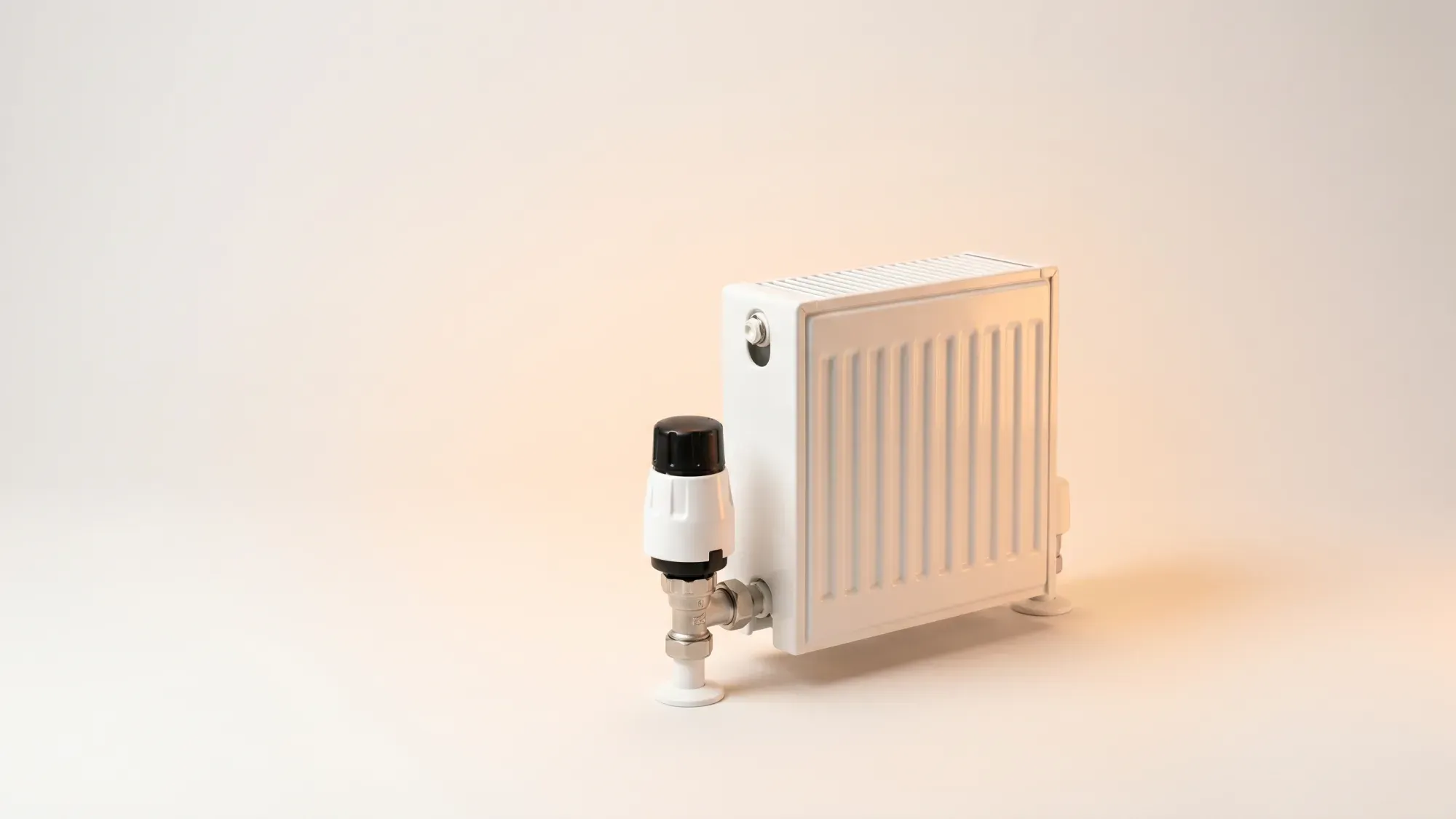
Thermostatic radiator valves (TRVs) offer a simple way to manage the heating in individual rooms, helping you achieve comfort and potentially reduce energy bills. These small but effective devices give you more precise control over your home's temperature, moving beyond a single thermostat dictating the warmth of your entire house. They allow you to tailor the warmth to your specific needs, preventing overheating and reducing wasted energy.
Taking control of your home's heating and energy use is easier with the right tools. Fuse Energy provides clear pricing and real-time usage data through our app, empowering you to manage your bills effectively. Click here to switch to Fuse Energy today and start optimising your home's energy.
Enter your address to get a quote and see how much you could save
What is a thermostatic radiator valve?
A thermostatic radiator valve is a self-regulating device fitted to a radiator that controls the flow of hot water into it based on the air temperature in that specific room. Unlike a basic on/off valve, a TRV automatically adjusts, ensuring the room maintains your desired temperature without constant manual intervention.
Beyond the basic radiator valve
Traditional radiator valves are manual, meaning you turn them on or off, or adjust the flow of hot water to the radiator without any temperature sensing. This can lead to rooms becoming too hot or too cold, as they do not react to changes in the ambient temperature. TRVs, by contrast, respond to the room's actual warmth, offering a more sophisticated approach to heating.
Key components of a TRV
A typical TRV consists of two main parts: the valve body, which is fitted to the radiator, and the thermostatic head, which contains a temperature-sensing element. This element expands or contracts with changes in room temperature, mechanically adjusting a pin within the valve body to control the flow of hot water.
What is the primary function of a TRV?
The primary function of a TRV is to regulate the temperature of an individual room by controlling the flow of hot water to its radiator. It does this by sensing the ambient air temperature and automatically adjusting the valve to maintain a pre-set level, preventing overheating and saving energy.
How thermostatic radiator valves work
TRVs work by continuously monitoring the air temperature around them and adjusting the heat output of the radiator accordingly. This allows for zone control, meaning different rooms can be set to different temperatures based on their use.
Sensing room temperature
The thermostatic head of a TRV contains a wax or liquid-filled sensor. As the room temperature rises, this substance expands, pushing a pin down into the valve body. When the room cools, the substance contracts, allowing the pin to rise. This mechanical action is what controls the flow of hot water.
Regulating hot water flow
When the pin is pushed down, it restricts the flow of hot water into the radiator, causing the radiator to cool down. Conversely, when the pin rises, it allows more hot water to enter, increasing the radiator's heat output. This continuous adjustment ensures the room stays at the desired temperature without wasting energy by overheating. It's important to remember that TRVs do not control the boiler; they only regulate the heat output of individual radiators.
The role of the central thermostat
TRVs work in conjunction with your central thermostat, not as a replacement for it. Your central thermostat sets the overall heating schedule and the minimum temperature for your home, telling the boiler when to fire up. TRVs then fine-tune the temperature in individual rooms. For example, if your central thermostat is set to 20°C, a TRV in a bedroom set to a lower temperature (e.g., 16°C) will close once that temperature is reached, even if the central heating is still on for other parts of the house.
Benefits of using thermostatic radiator valves
Installing and correctly using TRVs can significantly improve your home's heating efficiency and comfort. They offer a practical way to manage energy consumption on a room-by-room basis.
Enhanced comfort and zone control
With TRVs, you can achieve consistent comfort throughout your home. Instead of having one room stiflingly hot while another remains chilly, you can set each room to its ideal temperature. This zone control means you only heat the spaces you use, to the level you need, preventing overheating in specific rooms.
Potential for energy savings
According to Ofgem, the average UK home uses around 9,500 kWh of gas per year1, and ensuring heat isn't wasted in unused or already warm rooms can make a difference. By preventing rooms from becoming unnecessarily hot, TRVs can contribute to reducing overall energy consumption and heating costs. This aligns with Fuse Energy's vision of energy abundance, allowing you to achieve comfort without guilt by optimising where and when you use energy.
Reducing your carbon footprint
More efficient heating directly translates to lower energy usage, which in turn means a reduced carbon footprint for your household. By making conscious choices about how you heat your home, you contribute to broader environmental goals.
Choosing and using your thermostatic radiator valves
Understanding the types of TRVs available and how to set them correctly is key to maximising their benefits.
Types of TRVs available
- Manual TRVs: These are the most basic type, requiring you to physically turn a dial to set the desired temperature. They are widely available and cost-effective.
- Smart TRVs: These advanced versions can be controlled remotely via a smartphone app, often integrating with smart home systems. They offer features like scheduling, geofencing, and even learning your habits to optimise heating automatically. Fuse Energy's app provides real-time energy usage data, allowing you to see the direct impact of optimising your heating with thermostatic radiator valves.
- Liquid or wax sensor TRVs: This refers to the internal mechanism. Liquid sensors tend to be more responsive to temperature changes than wax sensors.
Setting your TRVs for optimal efficiency
TRVs typically have numbers or symbols (e.g., 1-5 or frost to max) corresponding to temperature ranges. A common mistake is to set them to the highest number to heat a room faster; however, this only means the room will heat to a higher temperature, not that it will heat more quickly.
- Understand the numbers: Each number usually corresponds to a specific temperature range (e.g., 1 = 10-13°C, 2 = 15-16°C, 3 = 18-20°C, 4 = 20-22°C, 5 = 22-24°C). The frost setting (snowflake symbol) prevents pipes from freezing.
- Match to room use: Set living areas to a comfortable temperature (e.g., 3) and bedrooms slightly lower (e.g., 2). Guest rooms or rarely used spaces can be set to the frost protection or a very low setting.
- Avoid obstructions: Ensure TRVs are not covered by curtains, furniture, or radiator covers, as this will prevent them from accurately sensing the room temperature.
Integrating TRVs with your heating system
For maximum efficiency, ensure your central thermostat is set to a temperature that is lower than or equal to the highest TRV setting in any room you want to heat. If your central thermostat is set to 18°C, but a TRV in a room is set to 20°C, that room will only ever reach 18°C before the boiler switches off. TRVs empower homeowners with granular control over their heating, turning energy management into a tangible capability.
Common TRV issues and troubleshooting
While generally reliable, TRVs can occasionally encounter issues. Here's how to identify and address some common problems.
Radiator not heating up
If a radiator with a TRV isn't heating, first check that the TRV isn't set to a low number or the frost protection setting. The valve's pin might also be stuck in the closed position. You can often free a stuck pin by removing the thermostatic head (usually by unscrewing it or releasing a clip) and gently wiggling the pin with pliers until it moves freely.
TRV stuck open or closed
A TRV stuck open will cause a room to overheat, while one stuck closed will leave a room cold. This is usually due to a stuck pin, as described above. If freeing the pin doesn't resolve the issue, the TRV head or the entire valve may need replacing.
Noise from the TRV
Gurgling, banging, or whistling noises from a TRV can indicate a few issues:
- Incorrect installation: The TRV might be installed on the wrong side of the radiator (they are usually designed to be fitted to the flow pipe, not the return).
- Water pressure issues: Air in the system or incorrect water pressure can cause noise. Bleeding the radiator might help.
- Valve wear: An old or faulty valve might be making noise and could need replacing.
Understanding and managing your home's energy use, especially with tools like thermostatic radiator valves, can make a real difference to your bills and comfort. Fuse Energy is here to help you take control. We offer clear pricing, real-time usage data through our app, and 24/7 human customer support to answer any questions you might have. Switching to Fuse is quick and easy, empowering you to optimise your energy consumption and contribute to a greener future. Click here to switch to Fuse Energy today and start your journey towards smarter home heating. You can also learn more about our mission to make energy abundant here.
References
Disclaimer
For the avoidance of doubt, this article is provided for informational purposes only and is not intended to constitute legal or financial advice. The author and/or Fuse Energy shall not be responsible for any losses arising out of any reliance on the information contained herein.