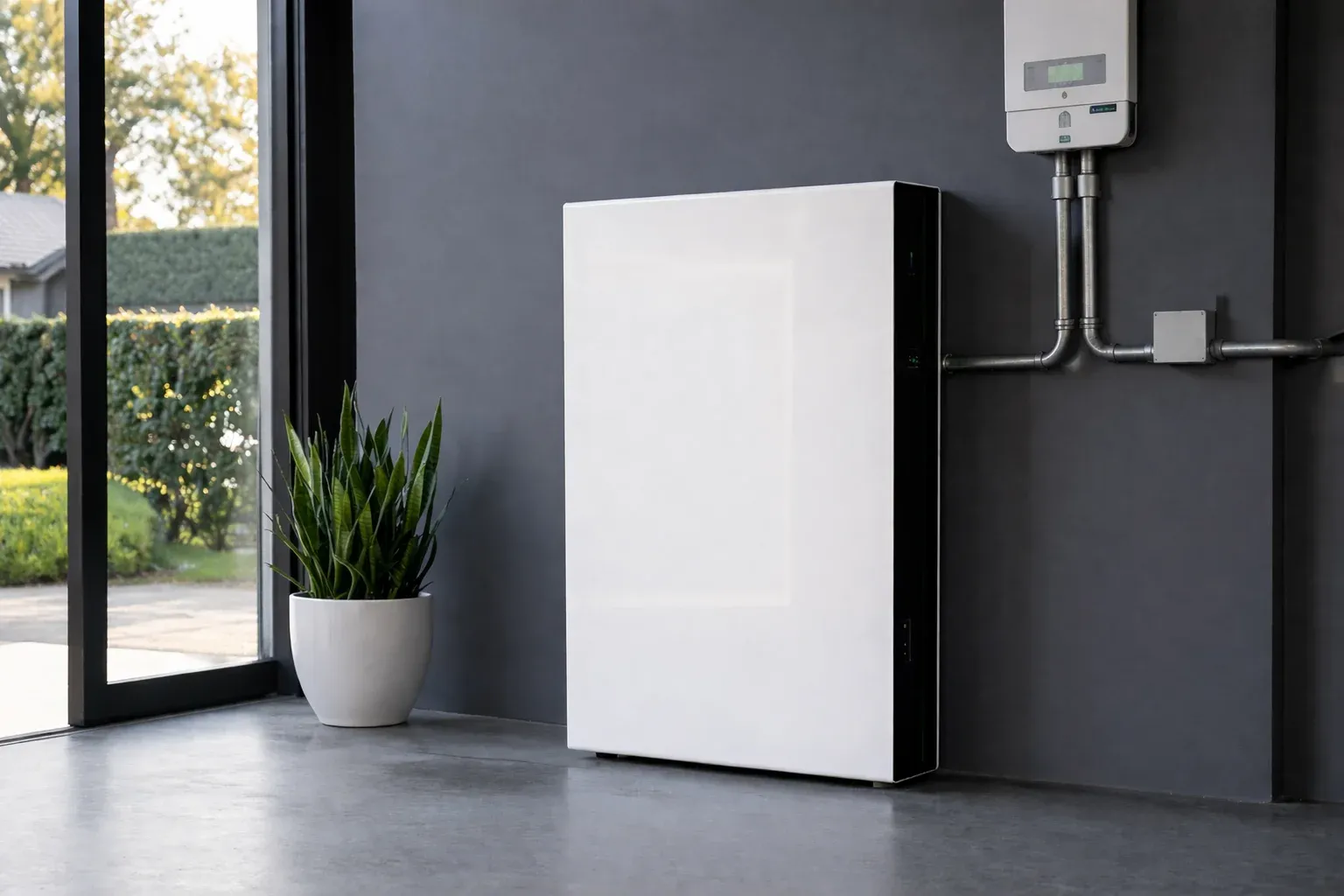
Solar battery storage: how to maximise independence
Solar battery storage allows homeowners to store surplus electricity generated by their solar panels for later use, increasing self-consumption and reducing reliance on grid electricity. For UK homeowners, understanding how this technology works, its benefits, and how to optimise its performance is key to maximising their investment and achieving greater energy independence.
What is solar battery storage?
Solar battery storage systems capture excess electricity produced by solar panels that would otherwise be exported to the grid. This stored energy can then be used when the panels are not generating power, such as during the evening or on cloudy days.
Understanding the basics of solar battery systems
A solar battery system typically consists of a battery unit, an inverter, and a smart energy management system. When your solar panels generate more electricity than your home needs, the surplus energy is directed to the battery for storage. When your panels are not producing enough power, your home draws electricity from the battery instead of the grid. This simple mechanism turns your home into a more self-sufficient energy hub.
How solar panels and batteries work together
Solar panels convert sunlight into direct current (DC) electricity. An inverter then converts this DC electricity into alternating current (AC) for use in your home. With a solar battery, this process becomes more dynamic. Any AC electricity not immediately consumed by your household can be sent to the battery for storage. When your home's demand exceeds solar generation, the battery discharges, supplying power to your appliances. Only when both solar panels and the battery cannot meet demand does your home draw electricity from the National Grid.
Key benefits for UK homeowners
Integrating solar battery storage offers several compelling advantages for UK homeowners, from financial savings to enhanced energy security.
Increased self-consumption of solar energy
Without a battery, a significant portion of the electricity generated by solar panels might be exported to the grid, often at lower rates than what you pay to import. Solar battery storage systems dramatically increase your solar self-consumption, typically from around 30% to 70-80%. This means you use more of your own clean energy, reducing your reliance on grid electricity.
Reducing your energy bills
By storing and using your own solar energy, you buy less electricity from your supplier, especially during expensive peak demand periods. The average UK home uses around 2,500 kilowatt-hours (kWh) of electricity per year1, highlighting the potential for solar battery storage to cover a significant portion of household demand and lead to lower energy bills.
Achieving greater energy independence
A solar battery system moves you closer to energy independence. You become less vulnerable to fluctuating energy prices and grid instabilities, taking greater control over your home's power supply. This enhanced self-sufficiency provides peace of mind and a more predictable energy future.
Grid resilience and backup power
Some solar battery storage systems, when paired with a compatible inverter, can provide backup power during grid outages. This means your essential appliances can continue to run even if the wider electricity network goes down, offering valuable grid resilience.
Choosing the right solar battery system
Selecting the appropriate solar battery storage system for your home requires careful consideration of your energy needs and the technical specifications of different options.
Battery capacity and your household needs
The ideal battery capacity depends on your household's energy consumption patterns and solar generation. Underestimating or overestimating required battery capacity can lead to inefficient use or unnecessary expense. It is crucial to assess how much electricity you typically use and when, to size your battery correctly. As a rule of thumb, your battery capacity in kWh should be roughly 1-1.5 times your solar system size in kilowatts (kW).
Types of solar batteries: lithium-ion and beyond
Modern residential solar battery storage systems predominantly use lithium-ion technology, particularly lithium iron phosphate (LiFePO4) variants. These are favoured for their efficiency, compact size, and longevity compared to older lead-acid batteries. While other technologies exist, lithium-ion remains the standard for home solar applications in the UK.
Efficiency, lifespan, and warranty considerations
The lifespan of modern lithium-ion solar batteries typically ranges from 10 to 15 years, with warranties often covering a similar period or a certain number of cycles. It is important to understand these terms, as a battery's "end of life" is usually defined as when its usable capacity drops to 70-80% of its original rating. Always check the warranty details, including cycle limits and guaranteed capacity retention, before making a purchase.
Optimising your solar battery with smart energy management
The true power of solar battery storage is unlocked through intelligent energy management, particularly with the advent of smart tariffs and user-friendly applications.
The role of smart tariffs in battery optimisation
Smart tariffs are electricity plans that charge different prices at different times of the day, using half-hourly smart meter readings. These tariffs can enable homeowners to charge their solar battery with cheaper off-peak grid electricity and discharge it during expensive peak times, further enhancing savings. This strategy, known as tariff arbitrage, allows your battery to act as a financial asset, buying low and selling (or using) high.
How do smart tariffs work with solar batteries?
Smart tariffs use time-of-use pricing, meaning electricity costs less during off-peak hours (often overnight) and more during peak times. A solar battery can be programmed to charge from the grid when rates are low and then discharge this stored, cheaper electricity during expensive peak periods, saving you money and optimising your solar energy use.
Using smart apps for real-time control and monitoring
Smart apps provide real-time data on your solar generation, battery charge, and home consumption. These tools allow you to monitor your energy flow, adjust charging schedules, and respond to dynamic tariff changes. This level of control ensures your solar battery storage system is always operating at peak efficiency, maximising both financial returns and environmental benefits.
Charging your battery with cheap grid electricity
Even if your solar panels are not generating enough power, smart tariffs allow you to charge your battery using cheap off-peak grid electricity. This ensures your battery remains full, ready to power your home during higher-priced peak hours, or even to export electricity back to the grid for payment under schemes like the Smart Export Guarantee (SEG).
Solar battery storage costs and return on investment
Investing in solar battery storage involves an upfront cost, but the long-term savings and benefits can lead to a significant return on investment.
Understanding the investment in battery storage
The cost of a solar battery storage system varies depending on factors such as capacity, technology, and installation complexity. While the initial outlay can be substantial, the financial benefits come from reduced electricity bills, increased self-consumption, and potential earnings from exporting surplus energy.
Factors influencing solar battery storage price
Key factors influencing the price of a solar battery storage system include the battery's capacity (measured in kWh), the type of battery technology (e.g., lithium-ion), the brand, the complexity of the installation, and any additional components like hybrid inverters. The overall cost will also include installation fees from certified installers.
Calculating your potential savings and roi
Calculating your potential savings involves comparing your current electricity costs with the reduced costs after installing a battery. This includes the value of increased self-consumption, savings from avoiding peak-rate grid electricity, and any income from the SEG. While the payback period for a battery alone might be 12-18 years, the additional benefits of energy independence and backup power often make it a worthwhile investment.
Next steps for UK homeowners
For UK homeowners considering solar battery storage, a structured approach ensures a successful installation and optimal long-term performance.
Finding a certified solar battery installer
Solar battery storage installations in the UK should be carried out by MCS-certified installers to ensure quality and eligibility for any potential government schemes. MCS certification confirms that the installer and the system meet recognised quality and safety standards. This is also a requirement for accessing benefits like the SEG.
Integrating your system for maximum value
Once installed, integrating your battery system with smart energy management tools is crucial. This includes connecting it to your smart meter and potentially to smart tariffs offered by energy suppliers. Homeowners may also be eligible for the SEG to earn money for surplus solar electricity exported to the grid, which can be further optimised with battery storage.
Making the most of your stored solar energy
To truly maximise the value of your solar battery, intelligent energy management is essential. This involves using smart apps to monitor performance and adjust usage patterns to align with the cheapest grid electricity rates or periods of high solar generation. By actively managing your stored solar energy, you can ensure your system delivers maximum savings and energy independence.
Managing your home's energy should be simple and transparent. Fuse Energy provides clear pricing, real-time usage data through our app, and 24/7 human customer support to help you make the most of your solar battery storage. Our smart tariffs are designed to work with your system, helping you reduce bills and increase your energy independence.
For the avoidance of doubt, this article is provided for informational purposes only and is not intended to constitute legal or financial advice. The author and/or Fuse Energy shall not be responsible for any losses arising out of any reliance on the information contained herein.
Solar battery storage: how to maximise independence