Selling electricity back to the grid: how much per kWh?
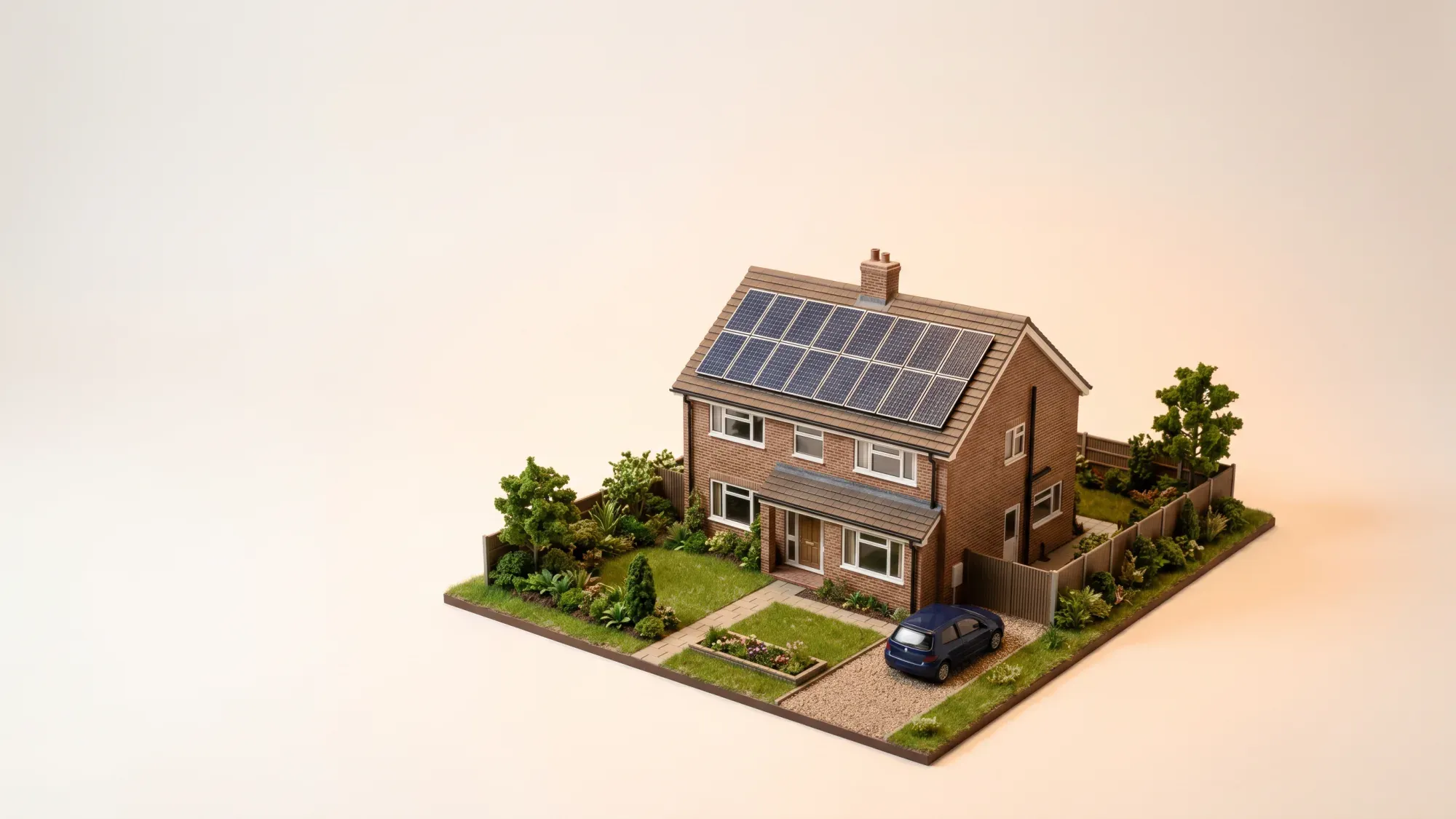
Homeowners with solar panels can earn money by selling surplus electricity back to the grid through the Smart Export Guarantee (SEG). This scheme helps you get paid for the green energy you contribute.
If you're looking to sell your surplus solar energy back to the grid, Fuse Energy offers a competitive SEG tariff. Discover how easy it is to switch and start earning by clicking here.
Enter your address to get a quote and see how much you could save
Understanding the Smart Export Guarantee (SEG)
The SEG is a government-backed scheme that rewards homeowners who generate their own renewable electricity and export any unused surplus to the National Grid. It replaced the Feed-in Tariff (FiT) scheme, which closed to new applicants in March 2019. Under the SEG, licensed electricity suppliers must offer a tariff for exported electricity, ensuring you get paid for your green energy.
What is the SEG scheme?
The SEG scheme mandates that electricity suppliers with over 150,000 domestic customers must provide at least one export tariff. Smaller suppliers can also offer SEG tariffs voluntarily. These tariffs pay you for every unit (kWh) of eligible low-carbon electricity you export. The rates offered by suppliers must always be above zero, but they vary significantly.
Eligibility criteria for solar panel owners
To qualify for an SEG tariff, your solar panel installation must meet specific criteria:
- MCS certification: Your solar PV system and its installer must be certified under the Microgeneration Certification Scheme (MCS) or an equivalent scheme. This certification is crucial for eligibility.
- Smart meter: You need a smart meter capable of providing half-hourly export readings. This ensures accurate measurement of the electricity you export.
- System size: Your installation must have a total installed capacity of no more than 5MW (50kW for micro-CHP). Most domestic solar systems easily fall within this limit.
- Location: The installation must be located in Great Britain.
Can plug-in solar systems get SEG payments?
No, plug-in solar systems are generally not eligible for SEG tariffs. The SEG requires MCS certification for the installation, which self-installed plug-in kits typically do not have. While unused generation from these systems still goes to the grid, SEG payments are not applicable, though suppliers may still offer their own export tariffs outside the SEG scheme.
The difference between SEG and the Feed-in Tariff (FiT)
The SEG and the older Feed-in Tariff (FiT) scheme both incentivise renewable energy generation, but they operate differently. The FiT scheme, which ran from 2010 to 2019, paid for both the electricity you generated and the electricity you exported. It offered guaranteed payments, often over 20 years.
In contrast, the SEG only pays for the electricity you export back to the grid, not for what you generate or consume yourself. FiT rates were set by Ofgem, while SEG rates are determined by individual suppliers, leading to greater variation. If you are already on a FiT scheme, you will continue to receive payments under its terms and generally cannot switch to SEG without losing your FiT generation payments.
How SEG tariffs work and what influences rates
SEG tariffs are designed to pay you for the surplus electricity your solar panels generate and send to the grid. The amount you earn per kWh can vary based on several factors.
Fixed vs variable export rates
When choosing an SEG tariff, you'll typically find two main types:
- Fixed-rate tariffs: These pay a set amount per kWh for all exported electricity, regardless of the time of day. They offer predictability in your earnings.
- Variable-rate tariffs: These tariffs offer different rates depending on the time of export. You might receive higher payments during peak demand periods (e.g., evenings) and lower rates at other times. While potentially offering higher earnings, they require more active management to optimise exports.
Factors affecting the price per kWh
The price per kWh you receive through an SEG tariff is influenced by:
- Supplier competition: As suppliers set their own rates, competition can drive up the payments offered. It's always worth shopping around.
- Tariff type: Fixed versus variable rates will naturally lead to different payment structures.
- Import tariff bundling: Some suppliers offer higher export rates if you also take your import electricity from them.
- Battery storage: Tariffs designed for homes with battery storage can offer significantly higher rates, especially if you can export during peak demand.
- Market conditions: Wholesale electricity prices can influence variable tariff rates.
SEG rates vary between suppliers and tariff types. Some fixed rates are available, and time-of-use tariffs can offer higher payments during periods of high demand.
Smart meters and half-hourly readings
A smart meter is essential for SEG eligibility because it accurately records your electricity exports. These meters are capable of providing half-hourly readings, which allows suppliers to calculate payments based on the exact amount of electricity you send to the grid. Without a smart meter, you cannot receive SEG payments. You can learn more about how to read your smart meter here.
Comparing Smart Export Guarantee tariffs
Choosing the right SEG tariff can significantly impact your earnings. It's not just about the highest headline rate; the overall package matters.
Key considerations when choosing a tariff
When comparing SEG tariffs, consider:
- The export rate: Compare the pence per kWh offered, noting whether it's fixed or variable.
- Import tariff requirements: Does the SEG tariff require you to also buy your electricity from the same supplier? Sometimes a bundled deal offers the best overall value.
- Payment frequency: How often will you receive payments for your exported electricity? Some suppliers pay quarterly, others annually.
- Contract length: SEG tariffs can have varying contract lengths, with some fixed for 12 months.
- Eligibility criteria: Ensure you meet all specific requirements for the tariff, such as having a particular type of smart meter or battery.
How to find the best SEG rate for your home
To find the best SEG rate, you should:
- Check with your current supplier: They may offer competitive rates, especially if you bundle your import and export tariffs.
- Shop around: Compare tariffs from various SEG licensees. Ofgem publishes a list of suppliers offering SEG tariffs.
- Consider your export patterns: If you have battery storage and can export during peak hours, a variable tariff might be more lucrative. If you prefer simplicity, a fixed rate may be better.
Fuse Energy's SEG offering
Fuse Energy aims to empower UK homeowners with MCS-certified solar installations to understand and maximise their earnings from surplus electricity. We offer a SEG tariff that pays 13p per kWh for MCS-certified solar installations. Our app provides tools to understand energy usage and exports, giving you control over your earnings. Our 24/7 human customer support is available to assist with questions about SEG tariffs and optimising solar exports.
Maximising your solar export earnings
Beyond choosing the right tariff, several strategies can help you get the most out of your solar panels.
Optimising self-consumption vs export
The electricity you use directly from your solar panels is typically worth more than the rate you get for exporting it. This is because you avoid paying your import electricity rate (which is usually higher than the export rate). The average UK home uses around 2,500 kWh of electricity per year, according to Ofgem's Typical Domestic Consumption Values (TDCVs) effective from 1 July 2026. Maximising self-consumption means using your generated electricity when it's available, for example, by running appliances during daylight hours.
The role of battery storage in increasing earnings
Battery storage allows you to store surplus solar electricity generated during the day and use it later, such as in the evening when import rates are higher. This increases your self-consumption and reduces your reliance on the grid. Batteries can also enable you to take advantage of variable export tariffs by discharging stored energy during peak demand periods when export rates are highest.
Monitoring your generation and export
Keeping track of your electricity generation, consumption, and export is key to optimising your earnings. Many energy suppliers, including Fuse Energy, offer apps that provide transparent data on your energy flows. This allows you to identify patterns, adjust your energy usage, and make informed decisions to maximise your financial returns. A smart meter installation can help you track your energy usage more accurately.
Frequently asked questions about selling solar power
How often do I get paid for exported electricity?
Payment frequency for exported electricity varies by supplier. Some suppliers pay quarterly, while others pay annually. Some may offer more frequent payments upon request. Payments are typically made within a certain number of days after receiving your latest export meter reading.
Can I sell electricity back to the grid without solar panels?
Generally, the SEG is designed for eligible low-carbon technologies like solar PV, wind, hydro, and micro-CHP. While it's technically possible to export electricity from a home battery without solar panels, the statutory SEG will not pay for grid-charged power. You would need a supplier that offers its own commercial export tariff outside of the SEG scheme, and you would still require network approval.
What happens if my smart meter is offline?
If your smart meter goes offline, it may stop sending automatic readings to your supplier. In such cases, you will likely need to provide manual meter readings to ensure accurate billing. Your energy supplier's smart meter team will usually be alerted and work to reconnect your meter, though this process can sometimes take several weeks. Your energy supply will continue uninterrupted, but manual readings are important for correct payments.
Disclaimer
For the avoidance of doubt, this article is provided for informational purposes only and is not intended to constitute legal or financial advice. The author and/or Fuse Energy shall not be responsible for any losses arising out of any reliance on the information contained herein.