Roof insulation for a warmer home
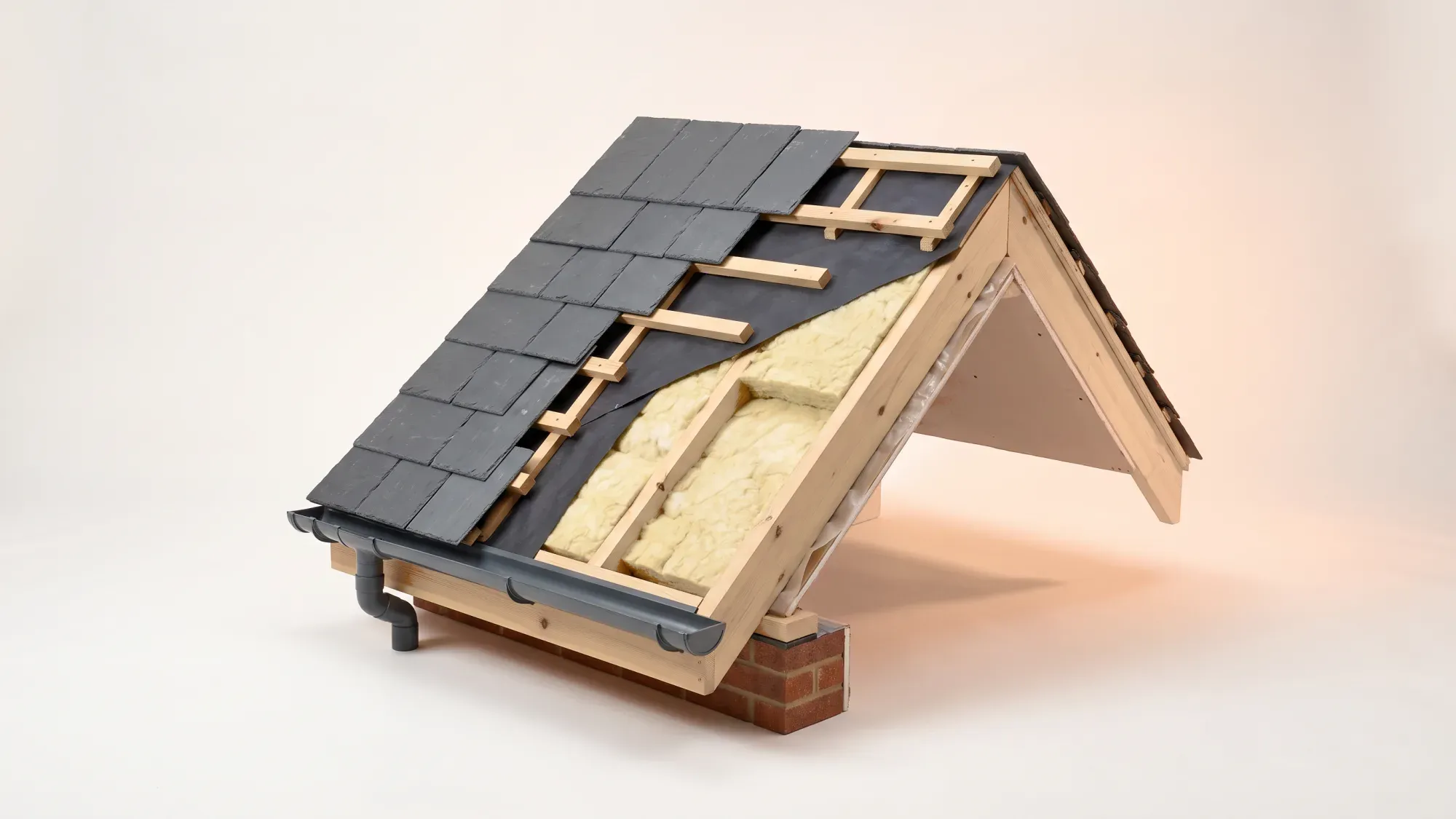
For homeowners, effective roof insulation is a foundational 'power play' that significantly reduces energy demand, making your home more resilient and contributing to a future where energy is abundant and less of a concern. It is about gaining control over your indoor climate and energy expenditure, allowing for greater comfort without the guilt of high energy consumption. This guide will walk you through the benefits, types, materials and installation considerations for roof insulation, framing it as a strategic investment that unlocks more 'power to play with' in your home.
Ready to take control of your home's energy? Explore how Fuse Energy's smart energy solutions can complement your newly insulated home and put more power in your hands. Click here to switch to Fuse Energy today.
Enter your address to get a quote and see how much you could save
Why roof insulation is a smart investment for UK homes
An uninsulated home can lose a significant amount of heat through its roof, often up to 25%. This constant heat escape leads directly to higher energy bills and a less comfortable living environment. Investing in roof insulation is one of the most cost-effective ways to improve your home's energy efficiency, providing long-term benefits beyond just financial savings.
Significant energy bill reductions
Effective loft insulation can lead to substantial savings on your energy bills. While individual savings vary, a typical home could save roughly £200 to £380 a year on heating. The Energy Saving Trust estimates that insulating an uninsulated loft to 270mm could save between £210 and £390 per year, with detached houses potentially saving up to £445 annually. These savings mean that the initial investment often pays for itself within a few years.
Enhanced home comfort year-round
Insulation acts like a thermal blanket for your home, keeping warmth inside during colder months and blocking excessive heat from entering during summer. This creates a more stable and comfortable indoor temperature, reducing draughts and cold spots. You will find your heating system does not have to work as hard to maintain your desired warmth, leading to a cosier home environment.
Reducing your carbon footprint
By reducing the amount of energy needed to heat your home, roof insulation directly lowers your household's carbon emissions. This contributes to a healthier planet and aligns with broader efforts to combat climate change, making your home a part of a sustainable future.
Understanding different types of roof insulation
Different roof structures require specific insulation approaches for optimal performance. Choosing the right type is crucial to avoid issues like damp and reduced effectiveness.
Loft insulation: the most common approach
Loft insulation is typically installed in the floor of an unheated loft space, separating the living areas from the cold loft above. This is the most common and often the easiest type of roof insulation to install in UK homes. Mineral wool rolls are frequently used, laid between and across the joists to a recommended depth of 270mm.
Room-in-roof insulation: for converted attics
If your loft has been converted into a living space, the insulation needs to be installed directly within the pitched roof structure itself, between and over the rafters. This is more complex than insulating a cold loft floor and requires careful attention to ventilation to prevent condensation and moisture issues. Rigid insulation boards or mineral wool batts are common choices for this application.
Flat roof insulation: specific considerations
Flat roofs have unique insulation requirements. They are typically insulated from above, either by adding rigid insulation boards on top of the existing roof covering or by integrating insulation when the roof is being replaced. Insulating a flat roof from underneath is possible but carries a higher risk of condensation if not done correctly by a qualified professional. UK Building Regulations (Part L) specify a maximum U-value of 0.18 W/m²K for new elements in existing flat roofs, meaning the insulation must be highly effective.
Choosing the right roof insulation materials
The market offers a variety of insulation materials, each with distinct properties suited to different applications and budgets.
Mineral wool (glass and rock wool)
Mineral wool, encompassing both glass wool and rock wool, is the most widely used loft insulation material in the UK. Made from molten rock or recycled glass spun into fibres, it is known for its excellent thermal and acoustic insulation properties, as well as being non-combustible. It typically comes in rolls or batts and is cost-effective and easy to install in lofts.
Rigid insulation boards (PIR and phenolic)
Rigid insulation boards, such as Polyisocyanurate (PIR) and phenolic foam, offer high thermal performance with less thickness compared to mineral wool. These boards are ideal for insulating pitched roofs (between or above rafters) and flat roofs where space is at a premium or a firm, continuous layer is needed.
Spray foam insulation
Spray foam insulation is a two-component polyurethane system that expands on contact to form a seamless, airtight insulation layer. While it offers excellent thermal resistance and can fill irregular spaces, it comes with significant drawbacks for homeowners. Many mortgage lenders refuse to lend on properties with spray foam in the loft due to concerns about blocked ventilation, trapped moisture and potential damage to roof timbers. For most residential applications, the financial and practical consequences make it a less favourable choice.
Why is spray foam insulation often a problem for UK homes?
While spray foam offers excellent thermal benefits, it can create serious issues for UK homeowners, particularly in lofts. It can block ventilation, prevent timber inspection, and trap moisture, leading to rot. This has caused many mortgage lenders to refuse loans on properties with spray foam, making it a financial liability.
Other eco-friendly options
For those prioritising sustainability, several eco-friendly insulation materials are available. These include sheep's wool, hemp, wood fibre, cork and cellulose (made from recycled paper). Many of these natural materials are breathable, renewable and offer good thermal performance, making them suitable for older properties where moisture regulation is important.
Roof insulation cost, installation and UK grants
Understanding the costs involved, whether to DIY or hire a professional, and potential grants can help you plan your insulation project effectively.
Average costs for professional installation
The cost of roof insulation varies depending on the type of roof, material and property size. For loft insulation, professional installation typically ranges from £650 for a terraced house to around £1,200 for a detached house or bungalow. DIY mineral wool insulation materials can start from £300 to £500. Flat roof insulation generally costs between £30 and £35 per square metre installed.
DIY vs professional installers
Installing loft insulation can be a DIY project if access is easy and the joists are regular. However, for more complex situations like room-in-roof insulation, flat roofs, or if damp is present, professional installation is recommended. Improper installation can lead to reduced effectiveness, damp and condensation. When hiring a professional, ensure they are certified under schemes like TrustMark or the National Insulation Association (NIA) for quality assurance.
Government grants and schemes for insulation
The UK government offers schemes to help homeowners with the cost of insulation. The Great British Insulation Scheme (GBIS) launched in March 2023 and its GOV.UK referral service closed on 31 March 2026, with all installations needing to be completed by this date. It aimed to help households with less energy-efficient homes get free or cheaper insulation, primarily focusing on single insulation measures like loft or cavity wall insulation. Eligibility typically depended on factors like your home's Energy Performance Certificate (EPC) rating (D to G) and Council Tax band (A to D in England, A to E in Scotland and Wales), or if you received certain benefits.
The Energy Company Obligation (ECO4) scheme also offers grants for eligible homeowners, often taking a 'whole house' approach to energy efficiency improvements. ECO4 runs from July 2022 to December 2026 and targets low-income households and those receiving certain benefits, with properties having an EPC rating of D, E, F or G. It is worth checking current government and local authority schemes for available funding.
Ensuring proper ventilation
Proper ventilation is crucial when installing roof insulation, especially in pitched roofs and room-in-roof conversions. Blocking ventilation can lead to moisture build-up, condensation and potential structural damage. A professional installer will ensure adequate airflow is maintained or installed to prevent these issues.
Maximising your energy savings with smart home integration
Roof insulation is a foundational step, but its benefits are amplified when integrated with smart home energy management systems. This combination empowers you with greater control and insight into your energy usage.
How insulation boosts smart thermostat performance
A well-insulated home provides a stable thermal envelope, meaning less heat escapes and less cold air enters. This significantly reduces the workload on your heating system. With less heat loss, your smart thermostat can maintain your desired temperature more easily and efficiently. It will not need to cycle on and off as frequently or run for as long, leading to more consistent comfort and lower energy consumption. This allows your smart thermostat to truly optimise your heating schedule, reacting to your habits and external conditions with greater precision.
Leveraging smart meter data with a well-insulated home
Smart meters provide real-time data on your energy consumption, allowing you to see exactly how much energy you are using. In a well-insulated home, this data becomes even more meaningful. You will observe clearer patterns of reduced energy demand, making the impact of your insulation visible. This insight empowers you to make further informed decisions about your energy use, identify any remaining inefficiencies, and optimise your energy consumption further through your Fuse app. Understanding your smart meter installation can help you track these changes effectively.
The long-term 'power play' of an efficient home
Insulating your roof is not just a one-off upgrade; it is a strategic 'power play' that transforms your home's energy profile. By drastically cutting down heat loss, you reduce your reliance on external energy sources and make your home more resilient to energy price fluctuations. This aligns with Fuse's vision of a future with power to play with, where energy is abundant and less of a constant worry. Your efficient home becomes a testament to smart energy management, giving you greater control and comfort for years to come. For more ways to reduce your energy usage, consider exploring energy saving tips for your home.
Managing your energy bills should be clear and easy to understand. Fuse Energy focuses on straightforward pricing, so you can see exactly what you are paying without unnecessary complexity. If you have a smart meter, you can view detailed usage data through the app or website, helping you understand how you can lower your bills. Our 24/7 human support team is always on hand with fast response times whenever you need help. Click here to switch to Fuse Energy today. Find out about our mission by clicking here.
Disclaimer
For the avoidance of doubt, this article is provided for informational purposes only and is not intended to constitute legal or financial advice. The author and/or Fuse Energy shall not be responsible for any losses arising out of any reliance on the information contained herein.