How does a smart meter work?
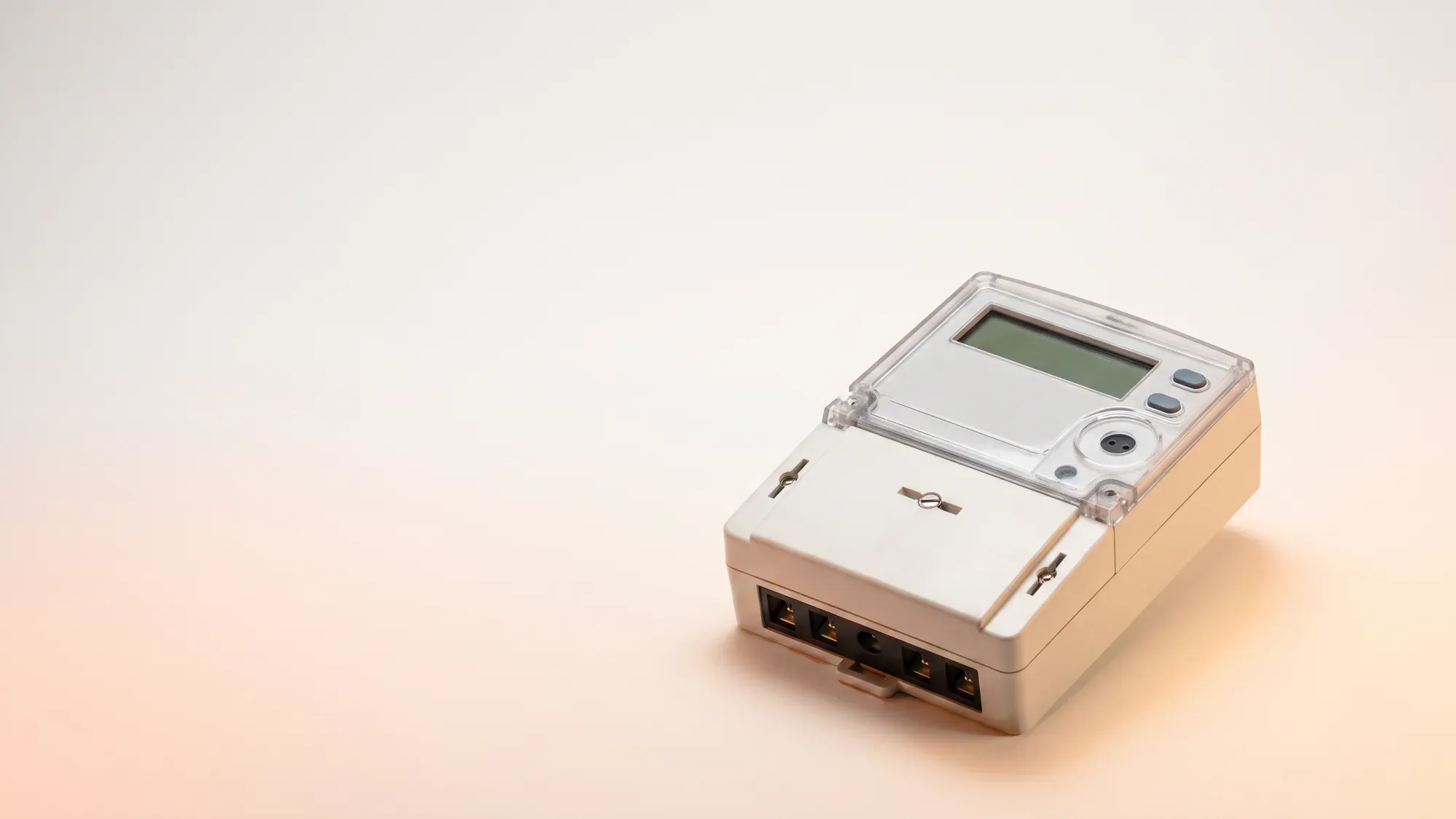
Smart meters automatically send energy readings to suppliers, significantly reducing the need for manual meter readings and providing households with near real-time energy consumption data. These devices are foundational for enabling dynamic tariffs and more effective household energy management in the UK.
Smart meters are key to understanding and managing your home's energy use. With Fuse Energy, you can leverage this technology for clear insights and greater control over your bills. Click here to switch to Fuse Energy today.
Enter your address to get a quote and see how much you could save
What is a smart meter?
A smart meter is an advanced energy meter that digitally measures and records your electricity and gas consumption, then securely sends this data directly to your energy supplier. Unlike traditional meters, which require manual readings, smart meters automate this process, ensuring more accurate billing and giving you a clearer picture of your energy use.
Beyond the basic meter
Traditional meters only track total consumption, often leading to estimated bills and a lack of insight into when and how energy is being used. Smart meters go a step further by recording usage in smaller intervals, typically every 30 minutes for electricity and daily for gas. This detailed data helps you understand your energy habits and make informed decisions to manage your consumption.
The two generations: SMETS1 and SMETS2
There are two main generations of smart meters in the UK: SMETS1 and SMETS2. SMETS1 meters were the first generation, and some initially lost their smart functionality if you switched suppliers because they used supplier-specific communication methods. The current generation, SMETS2 (Smart Metering Equipment Technical Specifications 2), addresses this by communicating via a dedicated, secure national network. This ensures that your smart meter remains fully functional, even if you change energy providers. Many eligible SMETS1 meters have also been migrated to this network to retain their smart features upon switching.
The mechanics: how smart meters communicate
Smart meters are sophisticated devices designed for secure and efficient data transmission, operating independently of your home internet.
Sending your readings automatically
Your smart meter automatically sends your energy readings to your supplier. For electricity, this is typically every 30 minutes, and for gas, it is usually once a day. This automatic process means no more fumbling with torchlights in a dark cupboard or submitting readings online. It also significantly reduces the need for estimated bills, ensuring you primarily pay for the energy you actually use.
The role of the data Communications Company (DCC)
In Great Britain, SMETS2 smart meters communicate securely via a dedicated national network managed by the Data Communications Company (DCC). This network is separate from the public internet and your home Wi-Fi, ensuring a high level of security and reliability for your energy data. The DCC acts as a secure bridge between your meter and your energy supplier, protecting your information and ensuring it reaches the right place.
Your In-Home Display (IHD)
Every smart meter installation typically includes an In-Home Display (IHD). This small device shows your energy consumption in near real-time, often in pounds and pence. It helps you see how much energy you are using, what it is costing you, and identify energy-hungry appliances. Some IHDs also show historical data, allowing you to compare your usage over days, weeks, or months.
Key benefits of having a smart meter
Smart meters offer more than just automated readings; they provide tools and insights that can empower you to manage your energy more effectively.
Accurate bills and real-time usage
One of the most immediate benefits is accurate billing. Because your smart meter sends readings directly to your supplier, you receive bills primarily based on your actual consumption, significantly reducing the reliance on estimates. The IHD provides real-time usage data, allowing you to see the impact of turning appliances on or off, helping you make informed decisions about your energy use. This can help you better understand your energy bill.
Understanding your energy habits
With detailed consumption data at your fingertips, you can gain a deeper understanding of your household's energy habits. This insight can help you identify peak usage times, spot inefficient appliances, and discover opportunities to reduce waste. For example, you might notice higher electricity use during certain hours and adjust your routines to shift some activities to off-peak times. The average UK home uses around 2,500 kWh of electricity per year, so understanding your own usage against this benchmark can be a powerful tool for managing costs. For more detailed insights, you might want to explore half-hourly meter readings.
Unlocking future energy tariffs
Smart meters are a foundational technology for dynamic energy tariffs. These tariffs can offer cheaper electricity during times when renewable energy is abundant or demand is low, and higher prices when the grid is under strain. By providing granular usage data, smart meters enable you to take advantage of these tariffs, potentially saving money by shifting energy-intensive tasks to cheaper periods. This shift from simply monitoring to actively managing energy use is key to a more flexible and efficient energy system.
Addressing common smart meter concerns
While smart meters offer many advantages, it is natural to have questions about their operation and implications.
Data privacy and security
Concerns about data privacy and security are common. However, the data transmitted by SMETS2 smart meters is encrypted end-to-end and sent over the secure DCC network, not the public internet. This dedicated infrastructure is designed to protect your information. Your smart meter only records gas and electricity readings; it does not store personal information such as your name, address, or bank details. Your energy supplier can only access the data required for billing and service provision, and you have control over how often your detailed usage data is shared (daily or half-hourly).
Are smart meters mandatory in the UK?
No, smart meters are not mandatory in the UK. While the government and energy suppliers are rolling them out across the country, you have the right to refuse a smart meter installation. However, choosing not to have one means you will not benefit from automatic readings, real-time usage data, or access to smart-meter-only tariffs.
What happens if my smart meter goes offline?
Occasionally, a smart meter might temporarily lose communication with the network, going "offline." If this happens, your energy supply will not be affected. Your meter will continue to record your energy usage, and you may be asked to provide manual readings until communication is restored. Energy suppliers are typically notified of offline meters and work to re-establish the connection, often remotely.
Replacing older meters
The UK energy industry is phasing out older meter types, such as those relying on the Radio Teleswitch Service (RTS). The RTS signal switch-off began on 30 June 2025, meaning these meters will no longer be able to switch between peak and off-peak rates. If you have an RTS meter, your current energy supplier is responsible for replacing it with a smart meter, usually at no extra cost. Once your meter has been upgraded, you will be able to access the benefits of smart metering and explore new energy tariffs.
Smart meters: powering an abundant energy future
Smart meters are more than just a billing tool; they are a critical component in building a modern, efficient energy system that supports a future of energy abundance.
From monitoring to management
The detailed data provided by smart meters transforms energy consumption from a passive act into an active management opportunity. Households can move beyond simply monitoring their usage to actively making choices that align with cheaper, greener energy periods. This shift empowers individuals to take control of their energy use and costs, rather than being passive recipients of their energy bills. If you are considering a smart meter installation, it is a step towards this future.
Connecting to dynamic tariffs
Smart meters are essential for the widespread adoption of dynamic tariffs. These tariffs reward customers for using energy when it is plentiful and inexpensive, such as during periods of high wind or solar generation. By connecting to these tariffs, households can contribute to grid stability and benefit financially, aligning their energy choices with the availability of clean power.
The Fuse approach to smart energy
Fuse Energy positions smart meters as the foundational technology that unlocks a future of abundant energy and greater control. Our app leverages smart meter data to provide unparalleled transparency, allowing customers to understand and manage their consumption with ease. We believe that smart meters are a critical component in rebuilding a modern, efficient energy system that supports distributed generation and flexible demand. Fuse also offers 24/7 human customer support to assist with smart meter queries, ensuring you can always access help and make the most of your smart energy.
Managing your energy bills should be clear and easy to understand. Fuse Energy focuses on straightforward pricing, so you can see exactly what you are paying without unnecessary complexity. If you have a smart meter, you can view detailed usage data through the app or website, helping you understand how you can lower your bills. If you do not have a smart meter, Fuse Energy can upgrade your non-smart meter, completely for free. This can make it easier to track spending and make informed decisions about your energy use. Our 24/7 human support team is always on hand with fast response times whenever you need help. Click here to switch to Fuse Energy today. Find out about our mission by clicking here.
Disclaimer
For the avoidance of doubt, this article is provided for informational purposes only and is not intended to constitute legal or financial advice. The author and/or Fuse Energy shall not be responsible for any losses arising out of any reliance on the information contained herein.