How are solar panels made?
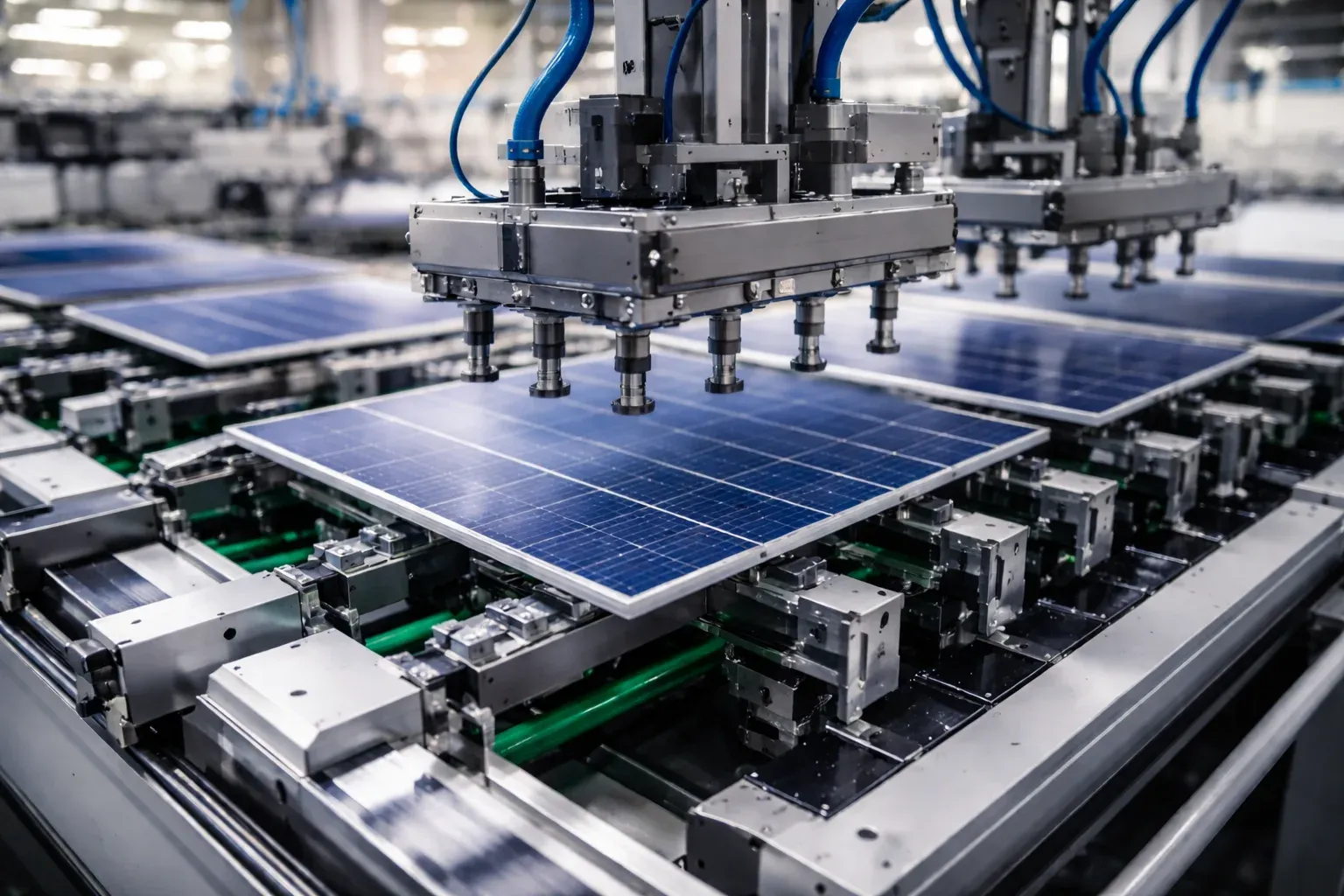
Solar panels convert sunlight into electricity using the photovoltaic (PV) effect, a process first discovered in 1839. The vast majority of solar panels are made from crystalline silicon, a material highly purified and processed into thin wafers. The manufacturing of a solar panel is a multi-stage process, from raw material extraction and purification to cell fabrication, assembly, and rigorous quality testing.
While solar energy generation is clean, the manufacturing process itself requires energy and resources, contributing to an environmental footprint that is actively being reduced through innovation. Understanding this intricate process can help you appreciate the technology that contributes to abundant, clean energy for homes.
Understanding the journey from raw materials to a finished solar panel can highlight the technology's potential. Fuse Energy believes in a future with abundant energy, and while we don't manufacture panels, we support homes that use solar power.
The core components of a solar panel
A solar panel is more accurately called a photovoltaic module, made from a group of solar cells wired together inside a frame. The main components include solar cells, a tempered glass front sheet, an encapsulant layer, a backsheet, and an aluminium frame.
Silicon: the heart of the solar cell
Silicon is the most important material used to make solar panels and is the second most abundant element on Earth. However, the silicon used in solar panels must be of very high purity, known as solar-grade silicon. Solar cells are typically made out of silicon and sit between layers of semiconducting materials. One layer of silicon is negatively charged, while the other is positively charged, creating an electric field that enables the flow of electrons to generate electricity.
Glass, frame, and encapsulation
Beyond the silicon cells, several other materials are crucial for a panel's durability and performance. The front of a solar panel is typically made of toughened glass, usually 3.2mm thick, to protect the cells from environmental damage while allowing maximum sunlight transmission. Encapsulant layers, often made from Ethylene Vinyl Acetate (EVA) film, bond and protect the cell circuit between the outer layers, preventing moisture penetration and enhancing mechanical stability.
A backsheet, typically made from a durable polymer-based material, forms the rear protective layer, shielding internal components from dust, UV radiation, and moisture. Finally, an extruded aluminium frame provides structural support, protects against impact and weather, and allows for easy mounting. Copper and silver are also used in conductors and interconnections within the panel.
Step-by-step: from sand to solar cell
The journey of a solar panel begins with raw silicon, often extracted from quartz.
Silicon purification and ingot growth
The process starts with extracting silicon from quartz, which is then heated to extremely high temperatures in a furnace. A carbon arc is added, bonding with oxygen to create carbon dioxide, leaving behind molten silicon. To achieve the high purity required, the silicon is passed through heat sources multiple times.
For monocrystalline panels, a single fragment of high-purity silicon is melted and formed into a cylindrical ingot. For polycrystalline panels, several silicon fragments are melted together to form the ingot. During melting, small amounts of boron or gallium are added to give the silicon a positive electrical charge.
Wafer slicing and doping
Once the cylindrical ingot is formed, it is sliced into thin discs, or wafers, often as thin as a sheet of paper. These wafers are then treated with phosphorus, which forms a negatively charged layer on one side, while the other side retains its positive charge. This doping process creates the necessary electrical difference for the photovoltaic effect. An anti-reflective coating is also applied to the wafers to maximise light absorption and prevent reflection.
Adding electrical contacts
Thin strips of silver are printed onto the front of the solar cells, and copper wires connect the cells at the back. These metal conductors collect and transport the electricity generated from sunlight. Each wafer, now a solar cell, is designed to convert sunlight into electricity.
Assembling the solar panel
Once individual solar cells are manufactured, they are meticulously assembled into a complete solar panel.
Cell stringing and layup
Solar cells are connected electrically to form a circuit. This involves stringing them together, often using thin metal ribbons, to achieve the desired voltage and current. These interconnected cells are then laid out in a grid pattern.
Lamination and framing
The cell circuit is then encapsulated between protective layers. A thin layer of glass is added to the front, and a backsheet is applied to the rear. These layers are sealed together using an encapsulant (like EVA) through a lamination process, creating an airtight unit that protects the cells from moisture and environmental damage. Finally, an aluminium frame is attached around the edges, providing structural integrity and a means for mounting the panel.
Testing and quality control
Before leaving the factory, each solar panel undergoes extensive testing to ensure it performs as expected. Panels are put through flash testers to identify their efficiency, temperature performance, and power output under Standard Test Conditions (STC). This rigorous quality control ensures reliability and efficiency.
Different types of solar panels and their production
While the core principle remains the same, there are distinct types of solar panels, each with its own manufacturing nuances and characteristics.
Monocrystalline solar panels
Monocrystalline solar panels are made from a single, highly purified silicon crystal. This single-crystal structure results in higher efficiency, typically ranging from 20% to 23%. They have a uniform black appearance and perform well in low-light conditions. The manufacturing process involves growing a large, single-crystal silicon ingot using methods like the Czochralski process, which is then sliced into wafers. This process is more energy-intensive but yields a more efficient product.
Polycrystalline solar panels
Polycrystalline solar panels are made by melting several silicon fragments together and forming them into square blocks, which are then sliced into wafers. This method is simpler and generally cheaper to produce than monocrystalline panels. However, they typically have lower efficiency rates, ranging from 15% to 18%, and a blue hue due to the multiple silicon crystals. They may also perform less efficiently in low-light conditions compared to monocrystalline panels.
Thin-film solar panels
Thin-film solar panels differ significantly from their silicon-based counterparts. Instead of silicon wafers, they use much thinner layers of photovoltaic material, such as amorphous silicon (a-Si), cadmium telluride (CdTe), or copper indium gallium diselenide (CIGS), coated onto a substrate like glass, metal, or plastic.
How are thin-film solar panels made?
Thin-film solar panels are manufactured by coating a base material (substrate) with a thin layer of photovoltaic material like amorphous silicon, cadmium telluride, or copper indium gallium diselenide (CIGS). This process is generally faster and uses fewer raw materials than crystalline silicon panel production, resulting in lighter, more flexible panels.
This manufacturing process is often faster and wastes fewer raw materials, leading to lower production costs and a smaller manufacturing carbon footprint. Thin-film panels are lightweight and flexible, making them suitable for various applications, though they generally have lower efficiency, ranging from 7% to 18% conversion rate, and a shorter lifespan compared to crystalline silicon panels. The UK has manufacturers producing flexible thin-film solar products.
The environmental footprint of solar panel manufacturing
While solar energy is a clean power source, the production of solar panels does have an environmental impact.
Energy and resource consumption
The manufacturing process, particularly the purification of silicon and the production of wafers, is energy-intensive. This often involves mining for core components like silicon, aluminium, and copper, which can disrupt local ecosystems and water supplies if not managed responsibly. The energy used in factories, especially if sourced from fossil fuels, contributes to carbon emissions. Some processes also create harmful substances like nitrous oxide gas and perfluorocarbon (PFCs), which contribute to global warming.
Waste management and recycling
At the end of their lifespan, solar panels can be recycled. More than 90% of the materials in a solar panel, including the aluminium frame, glass, crystalline silicon cells, and copper wiring, are recyclable. Organisations in the UK and Europe specialise in solar recycling, working to minimise electrical waste in line with Waste from Electrical and Electronic Equipment (WEEE) regulations.
Balancing production impact with lifetime benefits
Despite the environmental costs of manufacturing, the benefits of solar panels significantly outweigh them. Once installed, panels produce electricity with virtually no emissions for 25 years or more. The energy payback time for solar panels, which is the time it takes for a panel to generate the amount of energy used in its production, typically ranges from 1 to 4 years. This means that over their lifetime, panels offset far more carbon than is produced during their manufacturing.
"Manufacturing carries a real but time-limited footprint - research puts solar's whole-life carbon footprint at roughly 3-21 g CO2/kWh, among the lowest of any electricity source, against several hundred grams per kWh for fossil fuels. Once installed, a panel produces electricity with no ongoing emissions for 25 years or more." — Switch Together
Most UK solar systems now pay for themselves in 7-15 years, depending on usage, energy prices, and installation cost. This long operational lifespan means many homeowners enjoy decades of savings after breaking even.
Innovation and the future of solar manufacturing
The solar industry is continuously evolving, with ongoing innovations aimed at improving efficiency and sustainability.
Advancements in efficiency and materials
Research and development are focused on increasing the efficiency of solar cells, allowing them to convert more sunlight into electricity from a smaller area. This includes advancements in silicon-based technologies and the exploration of new materials like perovskites. These innovations aim to make solar panels even more powerful and cost-effective.
Sustainable production practices
Efforts are also concentrated on making the manufacturing process itself more sustainable. This involves reducing energy consumption during production, minimising waste, and developing more efficient recycling methods. As the industry grows, there's a push towards using renewable energy sources to power manufacturing facilities, further reducing the carbon footprint of solar panel production.
Understanding how solar panels are made highlights the intricate technology contributing to clean energy. At Fuse Energy, we believe in a future with abundant energy, and solar power is a key part of that vision. While Fuse Energy does not manufacture or install solar panels, we support homes that have already embraced this technology.
Disclaimer
For the avoidance of doubt, this article is provided for informational purposes only and is not intended to constitute legal or financial advice. The author and/or Fuse Energy shall not be responsible for any losses arising out of any reliance on the information contained herein.