Floor insulation: your guide to a warmer UK home
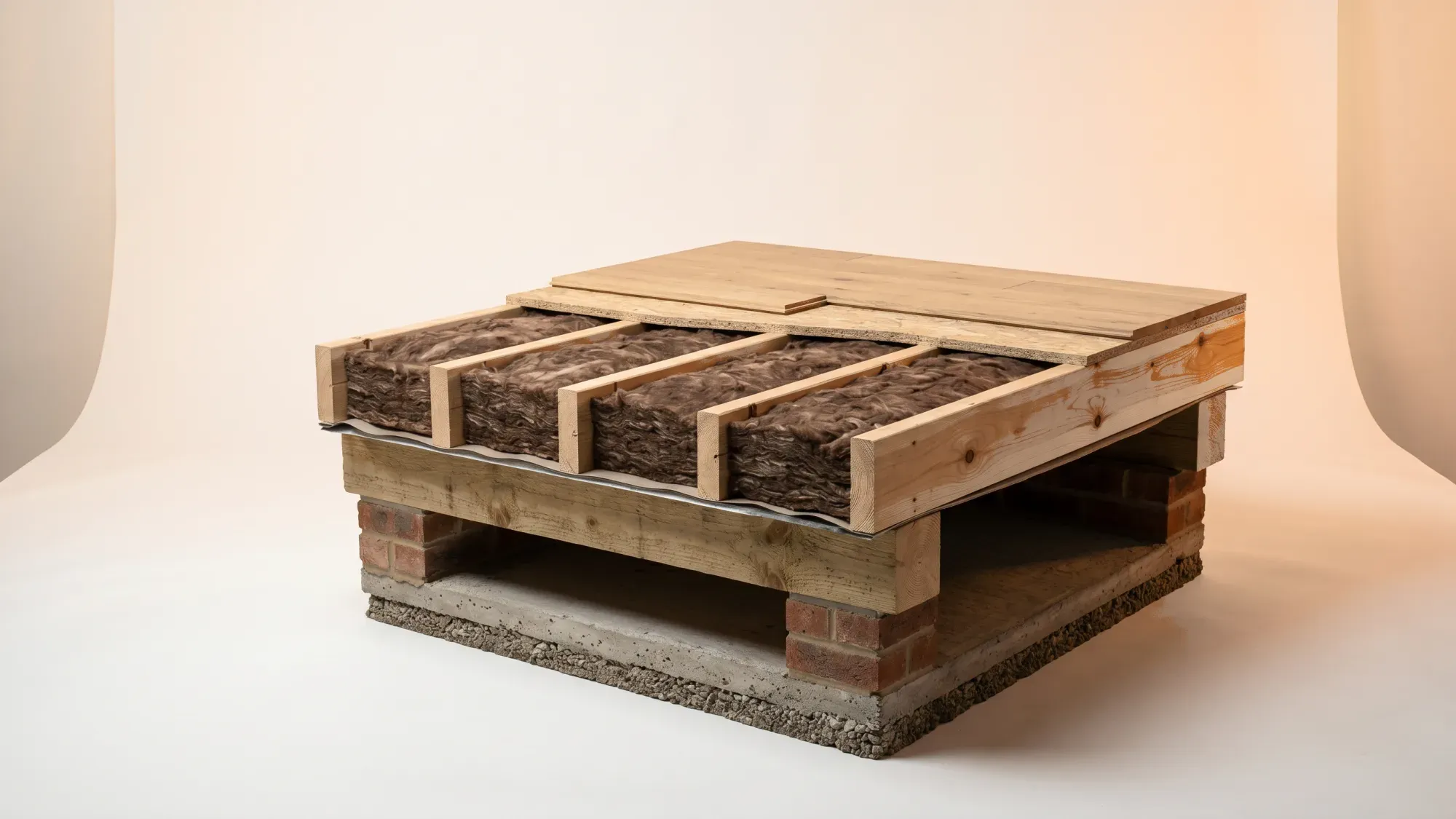
Uninsulated floors can account for 10-15% of a home's total heat loss, making your heating work harder than it needs to. Investing in floor insulation is a proactive step UK homeowners can take to gain greater control over their home's energy performance and heating costs, preparing their home to maximise the benefits of smart energy management and tariffs.
Making your home more energy-efficient with floor insulation is a smart move, and managing your energy supply effectively is the next step. Discover how Fuse Energy can help you optimise your home's energy use and costs by switching here.
Enter your address to get a quote and see how much you could save
Why insulate your floor?
Insulating your floor offers more than just a reduction in energy bills; it transforms your living space into a more comfortable and efficient environment.
Reducing heat loss and energy bills
A significant portion of your home's warmth can escape through uninsulated floors. Addressing this can lead to tangible savings. For a typical semi-detached house, insulating a suspended timber floor could save around £70-£135 per year on energy bills. Some estimates suggest annual savings from floor insulation of £50 to £160 for a typical semi-detached property. This reduction in heat loss means your heating system does not have to work as hard, directly lowering your energy consumption and costs.
Enhancing home comfort and draught proofing
Cold spots and draughts are common complaints in homes with uninsulated floors. These can make rooms feel colder than the thermostat suggests, leading to increased heating use. Floor insulation, especially when combined with draught sealing around floorboards and skirting, eliminates these cold air intrusions, making your home feel warmer and more comfortable. This improved thermal comfort is often the most noticeable benefit for homeowners.
The environmental benefits
Reducing your home's energy consumption directly translates to a smaller carbon footprint. By needing less energy to heat your home, you contribute to lower greenhouse gas emissions. For an average household, insulating floors can achieve savings of up to 455 kg of CO₂ per year. This makes floor insulation an environmentally responsible choice, aligning with broader efforts to combat climate change.
Understanding different floor types and their insulation needs
The type of floor in your home dictates the most effective insulation method and materials. Most UK homes have either suspended timber or solid concrete floors.
Insulating suspended timber floors
Common in older properties, suspended timber floors feature wooden floorboards over joists, creating a void underneath. This void often allows cold air to circulate, leading to significant heat loss.
The easiest way to insulate these floors is by fitting insulation material between or beneath the floor joists. This can be done from below if there is sufficient crawl space, or by lifting floorboards from above. Mineral wool is a popular choice for its breathability, which is crucial to prevent moisture build-up in the void and protect the timber from rot. It is vital to ensure adequate ventilation is maintained in the subfloor void, even after insulation, by not blocking air bricks.
Insulating solid concrete floors
Solid concrete floors, typically found in post-1950s builds and extensions, sit directly on the ground. Insulating these floors usually involves laying rigid insulation boards on top of the concrete slab before installing the final floor finish, or as part of a full floor rebuild. This method is generally more disruptive and costly than insulating suspended timber floors, often requiring a significant renovation.
Types of floor insulation materials
Choosing the right material is key to effective floor insulation. The best option depends on your floor type and specific requirements.
Rigid insulation boards (PIR, XPS, EPS)
Rigid insulation boards are highly effective, particularly for solid concrete floors.
- PIR (Polyisocyanurate) boards offer high thermal performance per millimetre, making them ideal where floor height is a concern. They are rigid, stable, and suitable for use under various floor finishes.
- XPS (Extruded Polystyrene) boards are moisture-resistant and provide good thermal performance.
- EPS (Expanded Polystyrene) boards are a more affordable option, though they offer lower thermal performance than PIR or XPS for the same thickness, meaning a thicker board is needed to achieve the same U-value.
Mineral wool (rockwool) insulation
Mineral wool, including rockwool, is a widely used material for suspended timber floors. It comes in batts or rolls and is fitted between joists, held in place by netting or a breathable membrane. Its breathability is a key advantage, allowing moisture vapour to pass through without getting trapped, which is essential for suspended floors.
Other insulation options
Beyond the most common types, other materials are available:
- Sheep's wool and hemp are natural, eco-friendly alternatives, often used in suspended timber floors.
- Recycled plastic bottles can also be processed into insulation material.
- Cellulose and wood fibre are other options that can be used.
Installation considerations and costs
Understanding the practicalities and financial aspects is crucial before embarking on a floor insulation project.
DIY vs professional installation
Insulating suspended timber floors can sometimes be a DIY project, especially if there is good access to the subfloor void. Materials are readily available from DIY stores. However, tasks like lifting floorboards, ensuring proper ventilation, and precise cutting of insulation require care. Solid floor insulation is generally more complex and disruptive, making professional installation advisable. Incorrect installation can lead to poor performance or even damp issues.
Average costs for floor insulation in the UK
The cost of floor insulation varies significantly based on floor type, property size, and installation method. Professional floor insulation for an average UK home typically costs between £1,300 and £3,000.
- Suspended timber floors: Professional installation can range from £800 to £1,500 per room if insulated from below, or £1,500 to £4,700 if floorboards need lifting.
- Solid concrete floors: This is generally more expensive, with costs ranging from £4,000 to £6,000 per room for retrofit, or £1,000 to £3,000 for an overlay if floor finishes are already up. A full dig-out and re-pour starts at around £8,000.
What is a U-value in floor insulation?
A U-value measures how effectively a building element, such as a floor, prevents heat loss. It quantifies the rate of heat transfer through a specific section of construction. A lower U-value indicates better insulation and higher energy efficiency, making it a critical factor in both new builds and renovation projects.
Potential grants and funding
While national grants for insulation are less common than for other measures, homeowners should check for local council grants or schemes for energy efficiency improvements. The Warm Homes: Local Grant is a UK Government-funded scheme delivered by local authorities in England, aiming to improve energy efficiency for low-income households, and can cover measures like underfloor insulation. Eligibility often depends on household income (usually £36,000 or less per year), benefits received, or postcode area, and the home must have an Energy Performance Certificate (EPC) of D, E, F or G.
Building Regulations in the UK specify minimum U-values for new and replacement floors, influencing insulation requirements. For a ground floor, the U-value should not exceed 0.25 W/m²K for existing dwelling refurbishments in England, Wales, and Northern Ireland.
Making your home energy-efficient with floor insulation
Floor insulation is a foundational step towards a more energy-efficient home, but its true value is unlocked when integrated into a broader energy management strategy.
Integrating insulation with smart energy management
By reducing your home's heating demand through effective floor insulation, you create a more stable and predictable environment for smart energy management. With less heat escaping, your smart thermostat can more accurately control your home's temperature, and you can potentially take greater advantage of flexible energy tariffs. This foundational efficiency makes your home more responsive to smart technologies, allowing you to optimise energy usage and costs.
Next steps for a cosy, cost-effective home
If you are considering floor insulation, start by assessing your current floor type and structure. Research suitable insulation materials and methods, then determine the feasibility of DIY versus professional installation. Obtain quotes from qualified installers or source materials if undertaking DIY. Monitoring your home's improved comfort and energy consumption post-insulation will highlight the benefits.
Floor insulation is a crucial, proactive step for UK homeowners to gain greater control over their home's energy performance and heating costs. It prepares your home to maximise the benefits of smart energy management and tariffs. Fuse Energy does not offer insulation products or installation services; our focus is on optimising energy supply and management for an already efficient home.
Once your home is well-insulated, you will want to ensure you are getting the most out of your energy supply. Fuse Energy offers clear pricing, real-time usage data through our app, and 24/7 human customer support to help you manage your energy effectively. Switching to Fuse Energy takes just a few minutes, so you can start taking control of your bills today. Click here to switch to Fuse Energy and explore a smarter way to power your home. You can also learn more about our mission to make energy abundant by clicking here.
Disclaimer
For the avoidance of doubt, this article is provided for informational purposes only and is not intended to constitute legal or financial advice. The author and/or Fuse Energy shall not be responsible for any losses arising out of any reliance on the information contained herein.