EV charger installation in Galloway
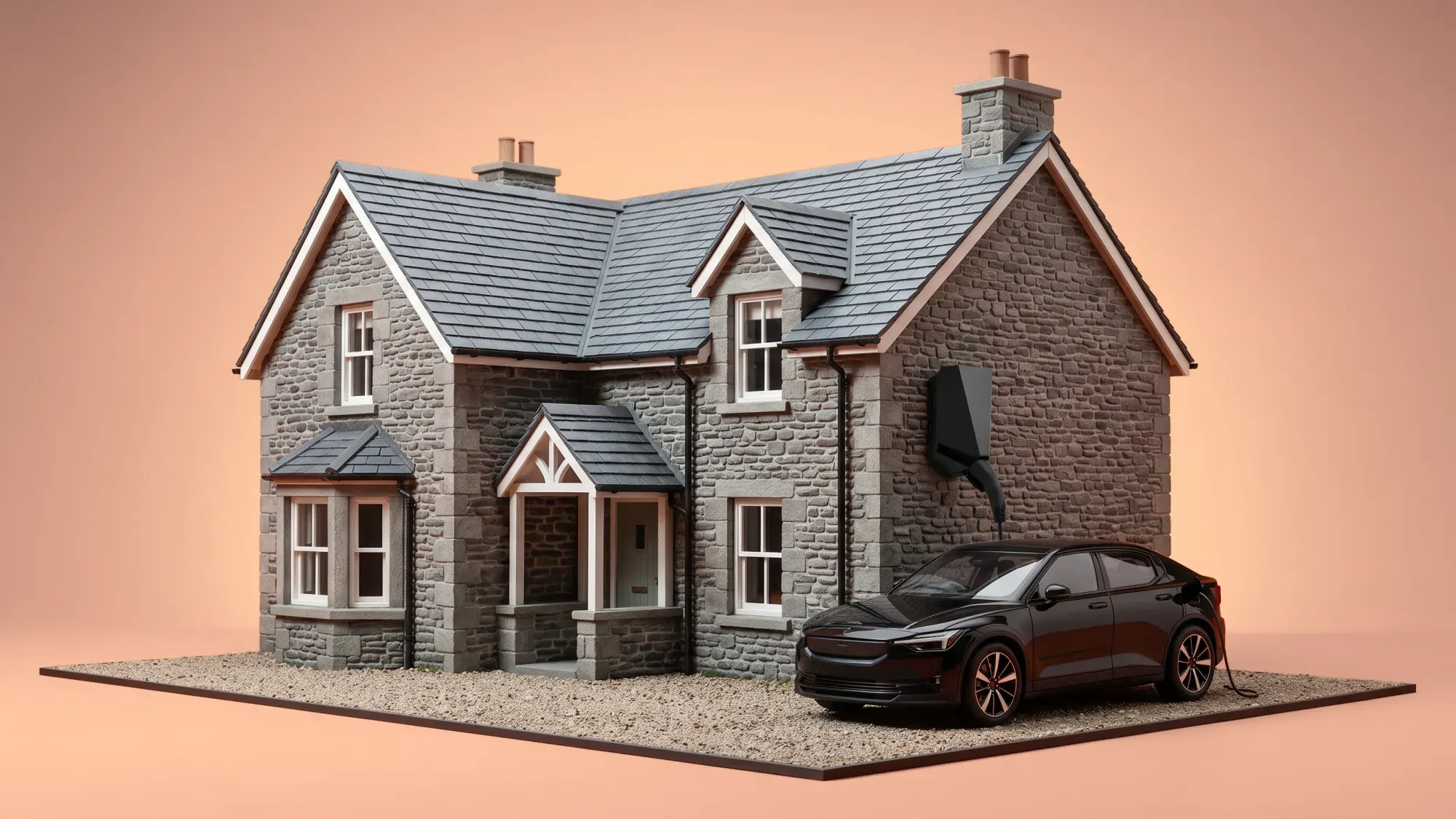
Installing an EV charger at home in Galloway is a significant step towards a future with more control over your energy. Properties in this region, from the Solway coast to the hills of Dumfries and Galloway, often have unique considerations for installation. Understanding local requirements, including grant schemes and coordinating with your Distribution Network Operator (DNO), is key to a smooth setup. This guide will help you navigate the process for your home EV charger.
Why install an EV charger at home in Galloway?
Convenience and cost savings for Galloway drivers
Having a home EV charger offers unparalleled convenience, allowing you to plug in overnight and wake up to a fully charged vehicle. This eliminates the need to seek out public charging stations, which can be sparse in rural parts of Galloway and often more expensive than home charging. With a home charger, you can take advantage of cheaper off-peak electricity tariffs, significantly reducing your running costs compared to petrol or diesel vehicles.
Supporting Galloway's green future
Transitioning to an electric vehicle and home charging contributes directly to a cleaner environment, reducing local air pollution and supporting Scotland's broader net-Zero ambitions. By charging at home, especially with smart charging solutions, you can optimise your energy consumption, potentially using more renewable energy and lessening the strain on the grid during peak times.
Understanding EV charger grants for Scottish homeowners
Navigating the grant landscape for EV chargers can seem complex, but specific schemes are available to help homeowners reduce installation costs.
The OZEV EV Chargepoint Grant: what you need to know
The Office of Zero Emission Vehicles (OZEV) offers several EV chargepoint grants1 designed to support the uptake of electric vehicles. These grants can help reduce installation costs for eligible applicants.
The EV Chargepoint Grant for renters and flat owners provides up to £500 towards installing a chargepoint at the property. To be eligible, you must own and live in a flat, or rent any residential property, and have private off-street parking. Additionally, the EV Chargepoint Grant for households with on-street parking provides up to £500 for installing a chargepoint. This scheme is for those who own or rent their property, have only on-street parking, and are installing a cross-pavement solution, such as a charging gully. For all domestic OZEV chargepoint grants, the customer applies for the grant themselves via the GOV.UK website. The OZEV-authorised installer's role begins only after the customer's application is approved. You must use an OZEV-authorised installer and an OZEV-approved chargepoint model to qualify for either scheme.
Who is eligible for the OZEV EV Chargepoint Grant?
The EV Chargepoint Grant for renters and flat owners is available to individuals who own and live in a flat, or rent any residential property, and have private off-street parking. The EV Chargepoint Grant for households with on-street parking is for those with only on-street parking who are installing a cross-pavement solution. Applicants must use an OZEV-authorised installer and an approved chargepoint model.
Home Energy Scotland: additional support for EV charging
Beyond the OZEV grants, Scottish homeowners can access support through Home Energy Scotland. This organisation provides advice and can offer grants for energy efficiency and renewable technologies, including guidance on EV charging. Home Energy Scotland's Domestic Charge Point Funding offers grants towards the cost of purchasing and installing a home chargepoint for eligible households in Scotland. While this fund has been paused and reopened previously, it is expected to run again, potentially offering support for eligible homeowners, with higher payments for rural and island postcodes.
The EV charger installation process in Galloway
Choosing the right charger for your home
Selecting an EV charger involves considering your vehicle's compatibility, charging speed requirements, and smart features. Smart chargers allow you to schedule charging during off-peak hours, which can lead to significant cost savings. Your chosen installer can advise on models best suited to your home's electrical system and your specific needs. For more details, you can explore how to pick the right home EV charger for your requirements.
Local grid considerations: Distribution network operators
Your local DNO is responsible for maintaining the power lines and cables that deliver electricity to your home. Any new home EV charger installation, or indeed a solar or battery grid connection, must be notified to your DNO (chargers via the ENA connect-and-notify route; solar or battery systems under G98/G99).
The connect-and-notify route applies where the property's total demand stays at or below 60amps, with the DNO notified after installation. Larger or more complex installations need DNO approval before work starts. Your OZEV-authorised installer will typically manage these notifications on your behalf, ensuring compliance with local regulations.
Should you experience a power cut, you can dial the free national number 105, which will route you directly to your DNO for assistance. You can find your specific DNO using the Energy Networks Association's "Find my network operator" tool.
What to expect on installation day
On the day of installation, a qualified electrician will typically assess your property, install the chargepoint, connect it to your home's electricity supply, and test the system. They will also provide a demonstration of how to use your new charger. The installer will handle the necessary paperwork, including the ENA connect-and-notify notification to your DNO. For a comprehensive overview of the process, consider reading our guide on EV charger installation.
Costs of home EV charger installation in Galloway
The cost of installing a home EV charger in Galloway can vary, but understanding the influencing factors and available grants can help manage expenses.
Factors influencing installation price
Several elements contribute to the overall cost:
- Charger model: Different brands and models come with varying price tags and features.
- Installation complexity: Factors like the distance from your electricity meter to the chargepoint, the need for trenching, or upgrades to your home's electrical panel can increase costs. Older rural properties in Galloway might require more extensive electrical work.
- Electrical capacity: Your home's existing electrical capacity may need upgrading, particularly for faster charging units.
- Installer fees: These vary based on the company's rates and the complexity of the job. You can find more information on how much an EV charger costs in the UK.
Maximising savings with available grants
By utilising the OZEV EV Chargepoint Grants (up to £500 for eligible applicants) and potential support from Home Energy Scotland, you can significantly reduce the upfront cost of your installation.
Finding a reliable EV charger installer in Galloway
Choosing the right installer is crucial for a safe, efficient, and compliant EV charger installation.
Key questions to ask potential installers
When seeking quotes, ask potential installers:
- Are they OZEV-authorised? This is essential for grant eligibility.
- Do they have experience working in Galloway, particularly with older or rural properties?
- Do their quotes include all costs, including the DNO notification process and any potential electrical upgrades?
- What warranty do they offer on the charger and the installation?
- Can they provide references from previous customers?
Ensuring certification and local expertise
Always choose an installer who is certified and has a proven track record. Local expertise is particularly valuable in an area like Galloway, where specific housing types and grid connections might require tailored solutions. An experienced local installer will be familiar with your DNO's requirements and can navigate the installation process smoothly.
Beyond the charger: integrating EV charging with home energy
Smart charging and energy management
Smart chargers offer advanced features like scheduled charging, which allows you to charge your EV when electricity is cheapest, typically overnight. Many smart chargers can also integrate with home energy management systems, optimising charging based on your household's overall energy consumption and generation (e.g., from solar panels). This level of control helps you manage your energy usage efficiently and reduce costs.
Considering solar and battery storage for ultimate control
For ultimate energy independence and cost savings, consider integrating your EV charging with solar panels and battery storage. Generating your own electricity with solar panels and storing it in a home battery allows you to power your EV with clean, self-generated energy, further reducing your reliance on grid electricity and protecting you from fluctuating energy prices. This approach positions home EV charger installation as a seamless and accessible part of a broader home energy upgrade journey, alongside smart meters, solar, and batteries.
References
- UK Government. Electric vehicle chargepoint grants
Disclaimer
For the avoidance of doubt, this article is provided for informational purposes only and is not intended to constitute legal or financial advice. The author and/or Fuse Energy shall not be responsible for any losses arising out of any reliance on the information contained herein.