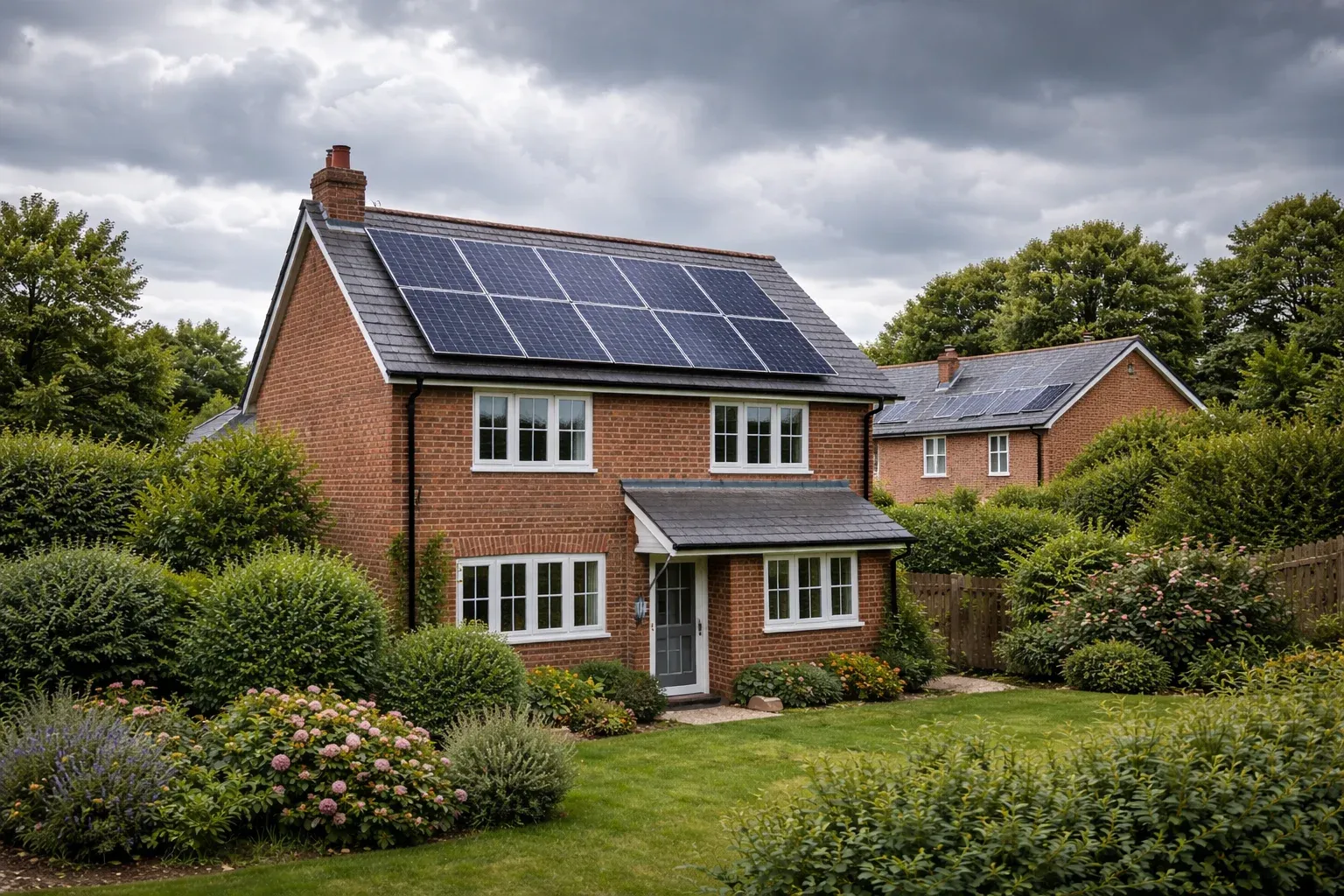
Solar panels undeniably work on cloudy days, converting diffuse light into usable electricity. This is crucial for UK homeowners, who might otherwise question the viability of solar technology in a country known for its overcast skies. Modern photovoltaic (PV) technology is adept at capturing this indirect sunlight, ensuring that your solar investment continues to generate power even when the sun is not shining brightly.
Understanding solar panel performance in overcast conditions
Solar panels do not solely rely on direct, intense sunlight to generate electricity. Their ability to produce power extends to capturing diffuse light, which is scattered by clouds and atmospheric particles.
The science of diffuse light
Sunlight reaches Earth in two primary forms: direct beam radiation and diffuse radiation. Direct radiation travels in a straight line from the sun, creating sharp shadows on clear days. Diffuse radiation, however, is sunlight scattered by clouds, water vapour, dust, and other atmospheric particles, arriving at your panels from multiple directions across the sky. Solar panels, through their photovoltaic cells, convert light (photons) into electricity, a process that does not require direct, unobstructed sunlight.
How modern solar panels capture indirect sunlight
Modern solar panels are designed to capture both direct and diffuse light effectively. Advancements in solar technology, including anti-reflective coatings and textured glass, allow cells to absorb photons even when sunlight is not direct. This means that even on a heavily overcast day, your panels will still be generating electricity, albeit at a reduced capacity compared to a clear, sunny day.
Factors affecting solar panel efficiency on cloudy days
Several factors influence how much electricity your solar panels produce when the sky is grey. Understanding these can help homeowners maximise their system's output.
Panel technology and low-light performance
Not all solar panels perform equally in low-light conditions. Modern monocrystalline solar panels are generally more efficient in lower light compared to older polycrystalline panels, making them a superior choice for areas with frequent overcast weather.
Impact of cloud density and type
The amount of electricity generated on a cloudy day largely depends on the density and type of cloud cover.
How much electricity do solar panels produce on cloudy days?
On heavily overcast days, solar panels typically produce 10-25% of their rated output. This can rise to 50-80% on lightly cloudy days or with light or patchy cloud cover. The specific output depends on cloud thickness and panel efficiency.
Thick, heavy clouds can reduce output to as low as 5-20% of peak capacity. While light or patchy clouds might only cause a minimal drop in performance, sometimes a mix of clouds and sun can even boost total solar irradiance due to the "edge-of-cloud effect", where sunlight concentrates around cloud edges.
Temperature and panel output
While it might seem counterintuitive, cooler temperatures can actually improve solar panel efficiency. Solar panels generate electricity from light, not heat, and their performance can decrease slightly as temperatures rise above 25°C. This means that a cool, cloudy day in the UK can sometimes lead to more efficient energy generation per photon compared to a scorching hot day where panels might overheat.
Solar panels in the UK: performance on cloudy days
Despite the UK's reputation for cloudiness, solar panels remain a worthwhile investment for homeowners across the country.
UK's solar radiation and diffuse light contribution
The UK receives between 750 and 1,100 kilowatt-hours of solar irradiance per square metre per year, making solar a viable investment nationwide. Crucially, diffuse light can account for a significant portion of the total solar radiation received. This means that even when the sun is not directly visible, a substantial amount of light is still available for conversion into electricity.
Average output on overcast days in Britain
On overcast days in Britain, solar panels still generate electricity from diffuse light. They typically produce 10-25% of their rated capacity on heavily overcast days, and 50-80% when there is light cloud cover. Even in rainy conditions, panels can generate 10-30% of their capacity, with the added benefit of rain cleaning the panels and improving efficiency once the skies clear. A typical 4 kW solar installation in the UK can generate between 3,400 and 4,200 kWh annually, demonstrating excellent returns despite the weather.
Seasonal variations in solar generation
Solar generation in the UK is seasonal, with higher output during the longer, brighter summer days and reduced output in winter due to shorter daylight hours and lower sun angles. However, panels continue to produce valuable electricity throughout the winter months, typically contributing around 15-20% of their annual output during this period.
Maximising your solar output on less sunny days
Even with reduced output on cloudy days, there are practical steps homeowners can take to ensure their solar system performs optimally.
Maintenance tips for optimal performance
Keeping your solar panels clean is essential. Rain can help wash away dust and debris, but occasional manual cleaning can prevent build-up that might reduce efficiency. Ensuring your panels are free from shading, such as from trees or neighbouring buildings, is also crucial, as even partial shading can significantly impact output. Proper installation with optimal orientation and angle also plays a key role in maximising efficiency.
The role of battery storage and smart energy management
Pairing solar panels with battery storage is a highly effective way to maximise their value, especially on less sunny days. A solar battery stores excess electricity generated during sunnier periods, making it available for use during cloudy days, evenings, or overnight. This reduces your reliance on grid electricity and allows you to use more of your self-generated power. Smart energy management systems can further optimise this by intelligently directing power where and when it is needed most.
Portable solar panels and cloudy weather
Portable solar panels operate on the same principles as rooftop installations and will also generate electricity on cloudy days, albeit at a reduced rate. Their output depends on the panel's efficiency and the density of the cloud cover. While they might not provide a full charge on heavily overcast days, they can still offer a useful top-up for devices or contribute to stretching stored power in portable battery stations.
The financial benefits of UK solar, even with clouds
Investing in solar panels in the UK offers significant financial benefits, even with the country's variable weather.
Understanding the Smart Export Guarantee (SEG)
The Smart Export Guarantee (SEG) is a government-backed scheme that ensures homeowners are paid for any surplus renewable electricity they export back to the National Grid. All large energy suppliers in the UK must offer SEG tariffs, allowing you to earn money for the power your panels generate but your home does not immediately use. This turns even modest cloudy-day generation into a profitable endeavour.
Reducing your reliance on grid electricity
By generating your own electricity, you reduce the amount you need to import from the grid, directly lowering your energy bills. Even on cloudy days, the power generated contributes to your home's needs, lessening your dependence on external energy suppliers. The average UK home uses around 2,500 kWh of electricity per year, and solar panels can significantly offset this consumption.
Long-term savings and return on investment
Despite initial installation costs, solar panels offer substantial long-term savings and a strong return on investment. Annual savings for a typical 4kW system can range from £600-900, with payback periods typically between 7-12 years. The ability to generate your own clean electricity, coupled with payments for exported power through the SEG, makes solar a sound financial decision for many UK homeowners.
Making the most of your solar with Fuse Energy
Fuse Energy empowers homeowners with existing solar panels to maximise the value of their generation, even on cloudy days. We understand that variable output is part of solar, and we are here to help you turn that into tangible benefits.
Monitoring your generation with the Fuse app
The Fuse app provides clear insights into your solar generation, allowing you to monitor your system's performance in real-time. You can see how much electricity your panels are producing, even on less sunny days, and track your energy usage to make informed decisions about when to consume or store your power.
Export tariffs for your surplus energy
Fuse offers export tariffs that ensure you are fairly compensated for any surplus electricity your solar panels send back to the grid. This means that every kilowatt-hour generated, whether on a bright sunny day or a heavily overcast one, contributes to your financial benefit.
For the avoidance of doubt, this article is provided for informational purposes only and is not intended to constitute legal or financial advice. The author and/or Fuse Energy shall not be responsible for any losses arising out of any reliance on the information contained herein.