Air fryer electricity cost: 39p an hour
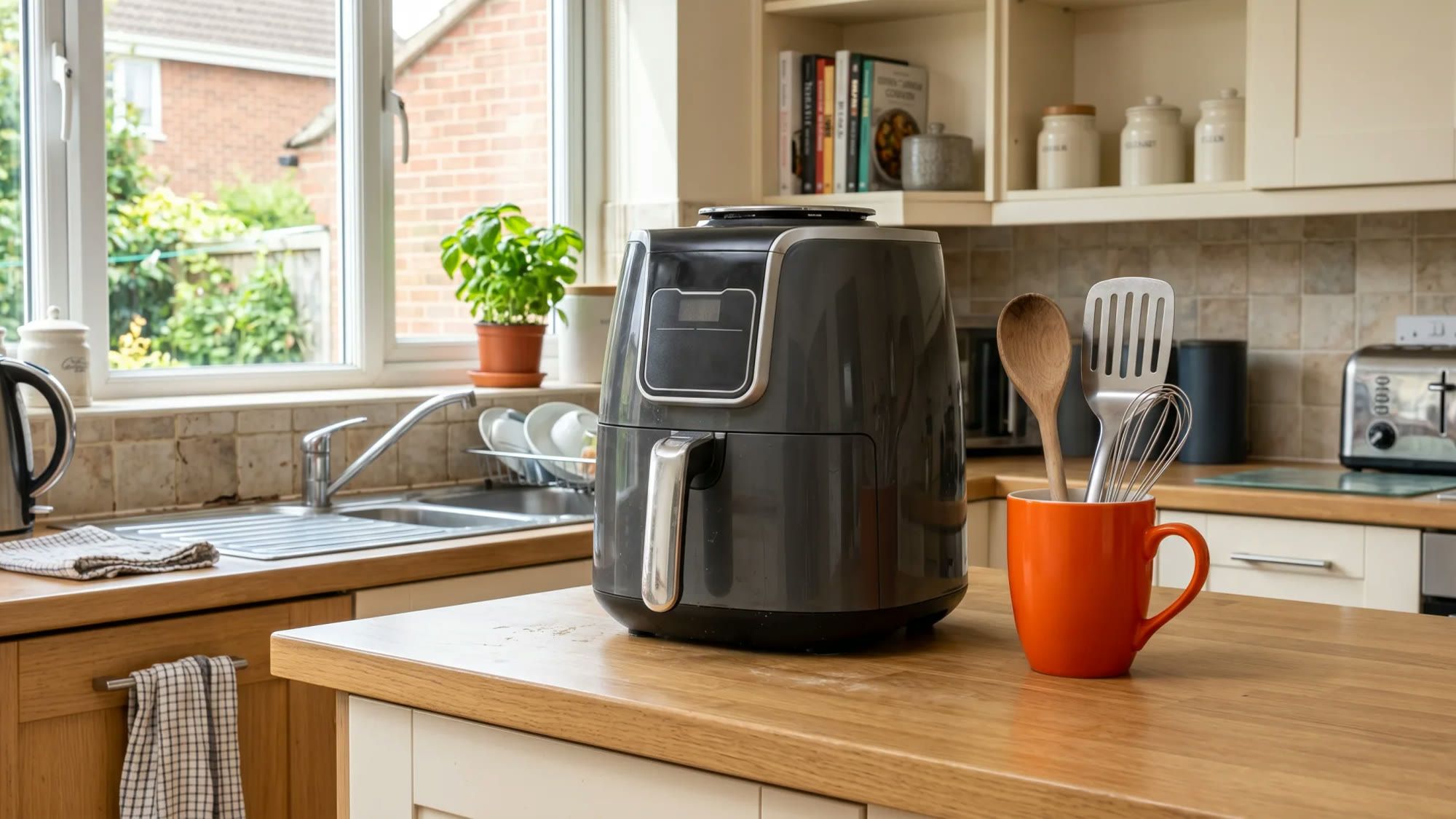
Air fryers generally use less electricity than conventional ovens for many cooking tasks, primarily because of their smaller size and faster cooking times. Understanding your air fryer's wattage and current UK electricity rates is key to knowing its actual running cost, which can be around 39p per hour for a typical model. Fuse aims to empower customers with clear insights into their overall energy consumption, enabling greater control over their household budget.
Want to understand your energy usage better and take control of your bills? Fuse Energy offers clear pricing and tools to help you manage your household energy. Click here to switch to Fuse Energy today.
Enter your address to get a quote and see how much you could save
Understanding air fryer electricity consumption
Air fryers have become a popular kitchen appliance, offering a quicker and often healthier way to cook. Many UK homeowners and renters are concerned about how much electricity these devices actually consume and their impact on household budgets.
How air fryers work
An air fryer operates much like a compact convection oven. It uses a heating element and a powerful fan to circulate hot air rapidly around the food. This process cooks food quickly and evenly, creating a crispy texture similar to deep-frying but with significantly less oil. The efficient circulation of hot air means that air fryers often cook food faster and at lower temperatures than traditional ovens.
Typical wattage and kilowatt-hours (kWh)
The electricity consumption of an air fryer is determined by its wattage and how long it is used. Most air fryers typically use between 800 watts (W) and 2,200W of power, depending on their size, brand, and settings. Smaller models might draw around 800W to 1,500W, while larger, family-sized units can reach 1,800W to 2,200W.
To calculate electricity consumption in kilowatt-hours (kWh), you divide the wattage by 1,000 (to convert watts to kilowatts) and then multiply by the hours of use. For example, a 1,500W (1.5 kW) air fryer used for 30 minutes (0.5 hours) would consume 0.75 kWh.
Calculating the cost to run an air fryer in the UK
Knowing the wattage and usage time allows you to calculate the running cost, which is particularly relevant given fluctuating energy prices in the UK.
Current UK electricity unit rates
The typical electricity unit rate for a Direct Debit customer on a Standard Variable Tariff in the UK is 26.11p per kWh, as of 1 July to 30 September 2026. This rate, set by Ofgem1, includes VAT at 5% and is an average across England, Scotland, and Wales. It is important to remember that this is a unit rate, and your total bill will also include a daily standing charge.
Step-by-step cost calculation
To calculate the cost of running your air fryer:
- Find your air fryer's wattage: This is usually listed on the appliance or in its manual. If it is a range (e.g., 1,500W-2,000W), use the higher number for a maximum cost estimate.
- Determine usage time: How long do you typically use it for a session? (e.g., 20 minutes, 30 minutes). Convert this to hours (e.g., 20 minutes = 0.33 hours, 30 minutes = 0.5 hours).
- Calculate kWh consumed: (Wattage / 1,000) × Hours of use.
- Example: A 1,800W air fryer used for 20 minutes: (1,800W / 1,000) × 0.33 hours = 0.594 kWh.
- Multiply by the unit rate: kWh consumed × Current electricity unit rate.
- Example: 0.594 kWh × £0.2611/kWh = £0.155, or about 16p per session.
How much does it cost to run an air fryer for an hour in the UK?
Running a typical 1,500W air fryer for one hour in the UK, at the current average electricity unit rate of 26.11p per kWh (July-September 2026), would cost approximately 39.17p. This calculation assumes continuous operation at maximum wattage, though actual usage may vary as the appliance cycles on and off to maintain temperature.
Air fryers vs other kitchen appliances
Comparing air fryer energy use to other common kitchen appliances helps consumers make informed decisions about efficient cooking methods.
Air fryer vs oven electricity use
A conventional electric oven typically uses between 2,000W and 5,000W of power. While an air fryer's wattage can overlap with the lower end of an oven's range, air fryers are often more energy-efficient for smaller cooking tasks. This is due to their smaller cavity size, which heats up much faster, and the efficient circulation of hot air, which reduces overall cooking time. For instance, an average 2,200W electric oven might cost around 85p per hour to run, needing a full hour to preheat and cook, whereas a 1,500W air fryer could cost about 17p for a 30-minute session.
Air fryer vs microwave electricity use
Microwaves are generally very energy-efficient for reheating and quick cooking tasks. They typically use between 700W and 1,200W and heat food directly without warming the surrounding air, reaching temperature almost instantly. For tasks like reheating leftovers or boiling water, a microwave will likely be more efficient than an air fryer. However, for cooking items that require browning or crisping, an air fryer is often a better choice than an oven.
Air fryer vs other small appliances
When compared to other small kitchen appliances:
- Kettles: A kettle typically uses 2,200W to 3,000W, but only for short bursts. Boiling a litre of water might cost a few pence.
- Slow cookers: These are very energy-efficient, often rated as low as 200W. While they cook for much longer, the hourly cost is minimal, around 8p per hour for an average-sized model.
- Toasters: Toasters use high wattage (around 800W-1,800W) but for very short periods, making their overall energy consumption low per use.
Air fryers strike a balance, offering speed and versatility that can make them a more efficient alternative to an oven for many dishes, especially when cooking for one or two people.
Factors affecting air fryer energy use
Several variables influence how much electricity your air fryer consumes. Being aware of these can help you manage your energy usage.
Appliance size and model
Larger air fryers typically have higher wattages to heat their bigger cooking cavities. A compact 2-3 litre model might draw 800W to 1,200W, while a 6-litre or larger model could be in the 1,800W to 2,200W range. Multi-function air fryers, which combine air frying with other cooking methods, may also have higher power requirements.
Cooking time and temperature
Longer cooking times and higher temperatures naturally lead to greater electricity consumption. An air fryer that cooks food in 15 minutes at 180°C will use less energy than one cooking the same food for 30 minutes at 200°C. The rapid heating and efficient air circulation of air fryers mean they often require less time and sometimes lower temperatures than conventional ovens for similar results.
Food type and quantity
The type and quantity of food you are cooking also play a role. Denser foods or larger batches will require longer cooking times, increasing energy use. Conversely, cooking smaller portions or foods that cook quickly will minimise consumption. Using the air fryer for appropriate portion sizes maximises its efficiency.
Tips for efficient air fryer use
Optimising your air fryer's efficiency can help reduce your energy bills without sacrificing convenience.
Preheating and batch cooking
- Avoid unnecessary preheating: While some recipes recommend preheating, many air fryers heat up so quickly that it is often not essential, especially for foods with shorter cooking times. Skipping preheating can save a few minutes of high-wattage use.
- Batch cook when possible: Cooking larger quantities of food at once, rather than multiple small batches, can be more energy-efficient. This maximises the use of the heated cavity and reduces the total time the appliance is running.
Placement and maintenance
- Ensure proper ventilation: Place your air fryer in an area with good airflow around it. Obstructed vents can make the appliance work harder, consuming more energy.
- Keep it clean: Regularly cleaning the air fryer's basket, heating element, and interior ensures optimal performance. Food debris can reduce efficiency and prolong cooking times.
Smart cooking habits
- Match appliance to task: Use your air fryer for tasks where it excels - smaller portions, crispy foods, and quick meals. For large roasts or multiple dishes, a conventional oven might still be the more practical choice.
- Don't overcrowd the basket: Overfilling the air fryer can lead to uneven cooking and require longer cooking times, negating its efficiency benefits. Cook in batches if necessary to maintain proper air circulation.
- Consider defrosting first: Cooking frozen food directly in an air fryer will increase cooking time and energy consumption. Defrosting items beforehand can lead to quicker, more efficient cooking.
By understanding how air fryers consume electricity and adopting smart usage habits, UK households can effectively manage their energy costs. The average UK home uses around 2,500 kWh of electricity per year, making efficient appliance use a key part of overall energy management.
Managing your energy bills should be clear and easy to understand. Fuse Energy focuses on straightforward pricing, so you can see exactly what you are paying without unnecessary complexity. If you have a smart meter, you can view detailed usage data through the app or website, helping you understand how you can lower your bills. If you do not have a smart meter, Fuse Energy can upgrade your non-smart meter, completely for free. This can make it easier to track spending and make informed decisions about your energy use. Our 24/7 human support team is always on hand with fast response times whenever you need help. Click here to switch to Fuse Energy today. Find out about our mission by clicking here.
References
Disclaimer
For the avoidance of doubt, this article is provided for informational purposes only and is not intended to constitute legal or financial advice. The author and/or Fuse Energy shall not be responsible for any losses arising out of any reliance on the information contained herein.