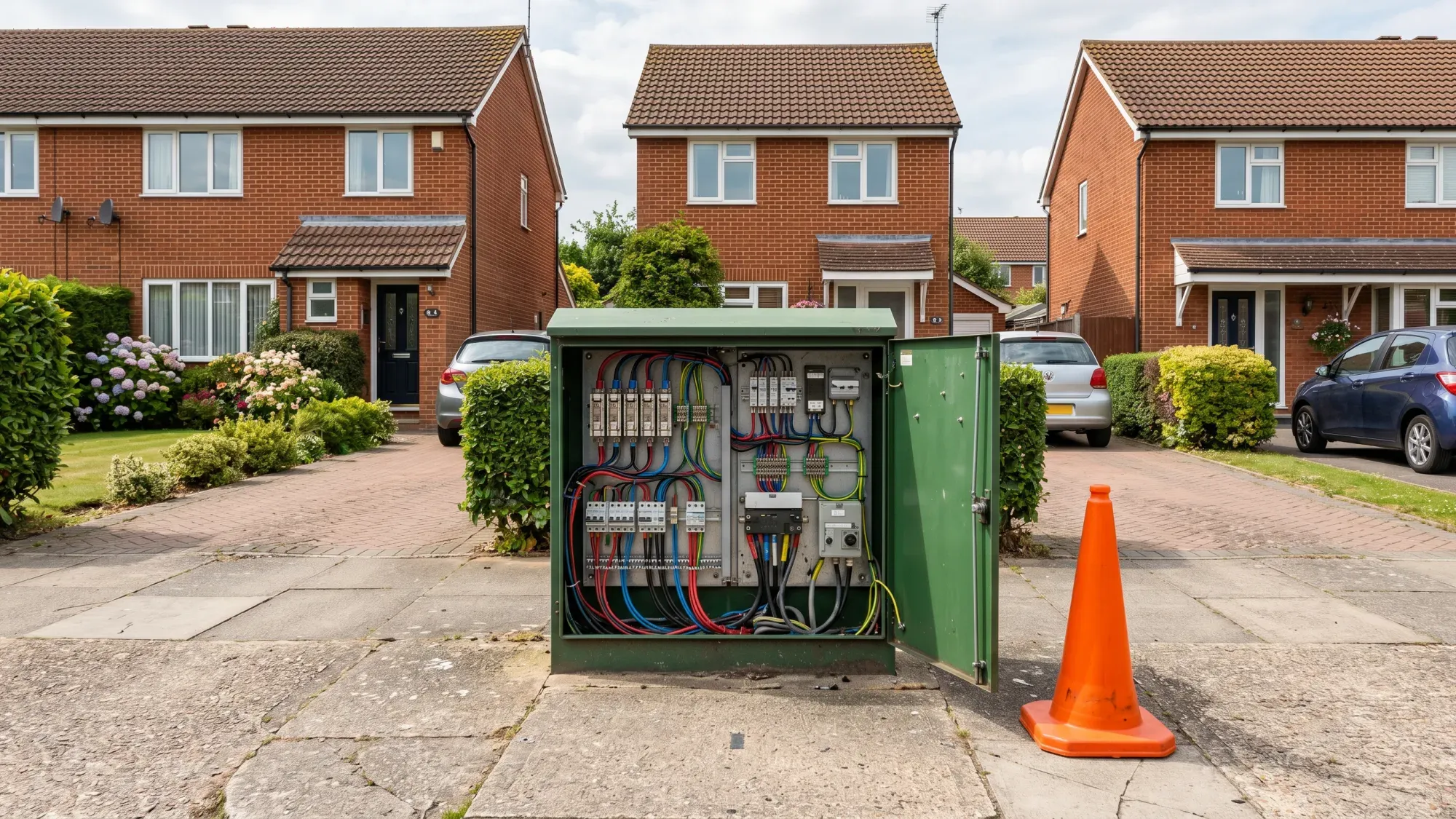
Experiencing a power cut can be disruptive and, at times, concerning. Knowing exactly what to do and who to contact is crucial for a swift resolution and your safety. In the UK, the process for reporting and getting updates on power cuts is distinct from contacting your energy supplier.
Thinking about Check for a power cut in your area? With Fuse Energy, you get clear pricing, real-time usage data, 24/7 human customer support, and a modern energy experience designed around you. Signing up takes just a few minutes, so you can take control of your bills from day one. Click here to switch to Fuse Energy today and start saving.
What is a power cut?
A power cut, also known as an electricity outage, is an interruption to your electricity supply. These can range from brief, localised issues to more widespread and prolonged outages caused by severe weather or system faults. While most power cuts are short-lived, it's important to be prepared for longer durations.
Your energy supplier's role
Your energy supplier, like Fuse Energy, handles your billing, account management, and customer service for your energy usage. They are the company you pay your bills to and who you contact for tariff queries or account-specific issues. However, they are not responsible for the physical infrastructure that delivers electricity to your home.
Your network operator's role
Distribution Network Operators (DNOs) are the companies responsible for maintaining and operating the electricity cables, power lines, and substations that bring power to your property. They are the ones who fix power cuts that aren't caused by a problem within your home. Ofgem, the UK's energy regulator, oversees the performance and obligations of DNOs regarding power cuts.
If your power goes out, it's important to first confirm it's a network-wide issue and not a localised fault within your property. Check if your neighbours have power or if street lights are on. If they do, the problem might be with your trip switches or prepayment meter.
Call the 105 national helpline
The national helpline for reporting power cuts in the UK is 105, which is free to call from any phone. This number connects you directly to your local Distribution Network Operator, regardless of who your energy supplier is. This service is available across England, Scotland, and Wales.
Find your distribution network operator (DNO)
If you prefer to check online or want to know your specific DNO, the Energy Networks Association (ENA) provides an online postcode tool. This tool helps you identify your local Distribution Network Operator by entering your postcode. Your DNO is determined by your geographical location, not by your energy supplier.
Check online outage maps
Many DNOs also offer their own websites and online outage maps where you can report a power cut, track updates, and view estimated restoration times for your area. These online tools are often the best places for key updates during storms or emergencies.
Prioritise safety first
During a power cut, safety is paramount. Turn off and unplug electrical appliances that shouldn't be left unattended, such as irons, ovens, and computers, to protect them from power surges when electricity is restored. Keep away from damaged power lines or infrastructure, and if you spot any, contact your network operator immediately. Use battery-operated or wind-up torches instead of candles to avoid fire hazards.
Prepare for a prolonged outage
Keep a mobile phone fully charged so you can use it for updates or calls. Have a battery or wind-up radio handy for news updates, as internet and mobile signals can be affected. Keep fridges and freezers closed to maintain their temperature for several hours. It's also wise to have some bottled water and non-perishable food that doesn't require cooking.
Protect your appliances
Unplug sensitive electronics like televisions and computers. This prevents potential damage from power surges when the electricity supply is restored.
How to get updates on restoration
Your local network operator's website and social media channels are the best sources for updates and estimated restoration times during a power cut. You can also call the 105 helpline for information.
The Priority Services Register (PSR)
The Priority Services Register (PSR) is a free service offering extra support to vulnerable customers during power cuts and other energy-related issues. You can register if you are of pensionable age, have young children, live with a disability or long-term medical condition, use medical equipment reliant on electricity, or are experiencing temporary difficulties such as a recent hospital stay or bereavement.
Being on the PSR can provide benefits such as advanced notice of planned power cuts, priority support in emergencies, and an identification and password scheme for visitors. You can sign up with your energy supplier or network operator.
Contacting Fuse Energy for account queries
While Fuse Energy cannot directly resolve network-wide power cuts or provide real-time status updates, our 24/7 human customer support remains available for account-specific queries. If you have questions about your billing, tariff, or other account details during an outage, Fuse is here to help.
Electricity and gas supply issues are handled by different entities and contact numbers. If you suspect a gas problem, it's critical to act immediately and contact the correct service.
Recognising a gas emergency
You might recognise a gas emergency by a strong smell of rotten eggs or sulphur, which is an odour added to natural gas to make leaks detectable. Other signs include a hissing sound near gas appliances, or if you experience symptoms of carbon monoxide poisoning like headaches, dizziness, or nausea.
Contacting the gas emergency service
If you smell gas or suspect a gas leak, evacuate the property immediately and, from a safe distance, call the National Gas Emergency Service on their free 24-hour helpline: 0800 111 999. Do not use electrical switches, light matches, or do anything that could ignite the gas. They will advise you on what to do next and send engineers to investigate.