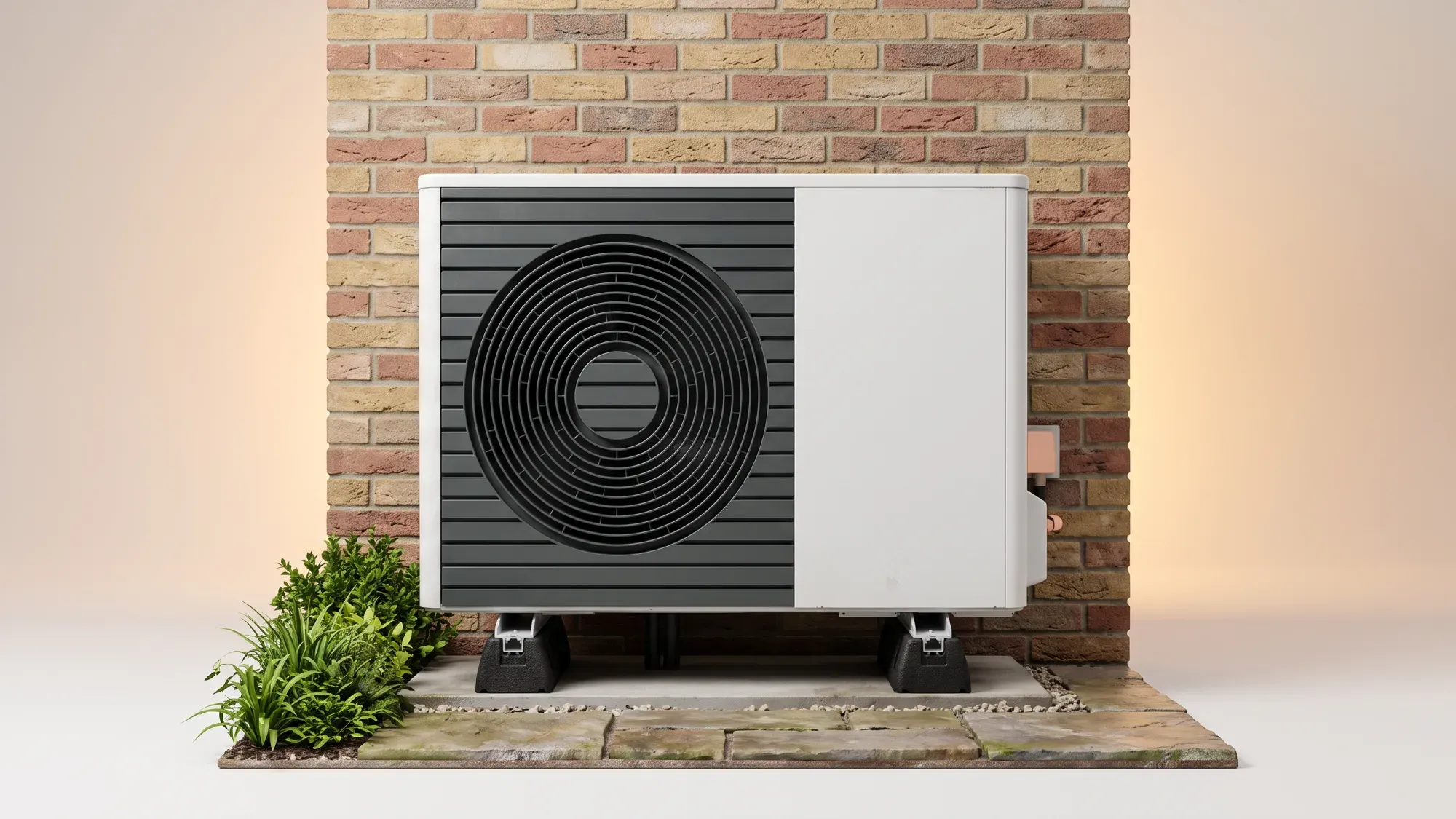
Choosing the right radiators is crucial for maximising your heat pump's efficiency and ensuring your home stays warm without excessive running costs. Heat pumps operate differently from traditional boilers, and understanding these differences is key to making informed decisions about your heating system.
Why radiator choice matters for heat pumps
Understanding low-temperature heating systems
Heat pumps are designed to operate most efficiently at lower flow temperatures, typically between 35°C and 45°C. This contrasts sharply with traditional gas boilers, which usually run at 60-70°C, or even 75°C. This lower operating temperature means that radiators need to be specifically chosen or adapted to effectively heat your home. If your radiators were sized for a high-temperature boiler system, they might not provide sufficient warmth when paired with a heat pump, leading to discomfort or forcing the heat pump to work harder.
The role of Delta t in heat pump efficiency
Delta T (ΔT) is a critical factor in radiator selection, representing the temperature difference between the average water temperature inside the radiator and the desired room temperature. For heat pump systems, radiators are often sized using a Delta T of 30°C (e.g., 45°C flow, 20°C room temperature, 5°C return). This is significantly lower than the Delta T50 standard used for modern gas boilers, which assumes a 75°C flow and a 20°C room. A smaller Delta T means the radiator will deliver less heat, highlighting the need for larger or more efficient radiators with heat pumps.
Impact on your heat pump's Coefficient of Performance (CoP)
The Coefficient of Performance (CoP) is a measure of a heat pump's energy efficiency, indicating how much heat it produces for every unit of electricity consumed. A higher CoP means greater efficiency and lower running costs. The CoP of a heat pump is directly impacted by the flow temperature; lower flow temperatures result in a higher CoP. Conversely, a heat pump's CoP can decrease by approximately 2.5% for every 1°C increase in flow temperature. Running a heat pump at 55°C instead of 35°C can roughly halve its efficiency, leading to significantly higher electricity bills.
Types of radiators suitable for heat pumps
Aluminium radiators: lightweight and responsive
Aluminium radiators are often considered a superior choice for heat pump installations due to their high thermal conductivity. Aluminium conducts heat approximately four to five times more efficiently than mild steel, allowing it to heat up and cool down faster. This responsiveness makes them well-suited to heat pump controls and can lead to energy savings by reducing warm-up times. They also typically contain less water than steel radiators, further contributing to faster heating cycles.
Steel panel radiators: high output options
While aluminium offers distinct advantages, modern steel panel radiators can also be effective with heat pumps, provided they are correctly sized. Steel radiators are durable and can retain heat for longer periods. However, when used with heat pumps, they typically need to be 1.5 to 3 times larger than they would be with a gas boiler to deliver adequate heat output at lower flow temperatures.
Underfloor heating: the ultimate low-temperature emitter
Underfloor heating systems are highly compatible with heat pumps, as they are designed to operate very efficiently at low flow temperatures, often between 35-40°C. Their large surface area allows for even heat distribution across a room, making them an excellent choice for maximising heat pump efficiency and comfort.
Considering radiator size and surface area
Regardless of the material, radiators for heat pump systems generally need a larger surface area or enhanced heat emission properties to deliver sufficient warmth at lower flow temperatures. This means that you may need larger radiators than you are accustomed to with a traditional boiler system.
Sizing your radiators for optimal Performance
Calculating heat loss for each room
Accurately calculating the heat loss for each room in your home is the foundational step for sizing radiators. This involves considering factors such as room dimensions, insulation levels (U-values of walls, ceilings, and floors), window types, and the room's exposure to external elements. This calculation determines the required heat output in Watts (W) to maintain your desired room temperature.
Matching radiator output to heat pump flow temperatures
Once you know the heat loss for each room, you need to select radiators whose output matches this requirement at your heat pump's intended flow temperature. Since heat pumps operate at lower flow temperatures, a radiator's heat output will be significantly reduced compared to its rating at a higher Delta T. For instance, a radiator's output at Delta T30 might be only 30-50% of its output at Delta T50. This necessitates choosing radiators with a higher rated output (at Delta T50) to compensate for the lower operating temperatures of a heat pump.
The importance of a lower return temperature
Maintaining a lower return water temperature to the heat pump is crucial for maximising its efficiency. The heat pump extracts more heat from the source (e.g., outside air) when the temperature difference between the flow and return is greater. Properly sized radiators facilitate this by transferring heat effectively to the room, causing the water to cool down more before returning to the heat pump.
Upgrading your radiators: what to consider
Assessing your existing heating system
Before making any changes, assess your current radiators. If they were installed for a high-temperature boiler, they might be undersized for a heat pump. A professional heating engineer can help determine if your existing radiators can cope or if upgrades are necessary. Retaining unsuitable radiators can lead to underperformance and discomfort.
Professional installation and system balancing
Upgrading radiators for a heat pump system is not a simple DIY task. It requires professional assessment, installation, and system balancing. A qualified heating engineer will ensure radiators are correctly sized, positioned, and integrated into the overall heat pump system. Proper balancing ensures that heat is distributed evenly throughout your home, preventing cold spots and optimising efficiency.
Integrating with smart heating controls
Pairing your heat pump and optimised radiators with smart heating controls can further enhance efficiency and comfort. Smart controls allow for precise temperature management, zoning, and scheduling, enabling your system to run only when and where heat is needed. This responsiveness complements the fast heat-up times of aluminium radiators, for example, and helps maintain the low, steady temperatures at which heat pumps excel.
Long-term benefits of efficient radiators
Reduced energy bills and running costs
By ensuring your radiators are perfectly matched to your heat pump, you enable the system to operate at its highest possible efficiency. This translates directly into lower electricity consumption and, consequently, reduced energy bills. The UK Government's Boiler Upgrade Scheme (BUS) offers grants of £7,500 for air source and ground source heat pump installations in England and Wales, which can help offset the initial cost of transitioning to a low-carbon heating system, including associated radiator upgrades.
Enhanced home comfort and consistent heating
Optimised radiators provide consistent and comfortable heating throughout your home. Because heat pumps work best when maintaining a steady temperature over longer periods, correctly sized radiators help achieve this without requiring the heat pump to cycle on and off frequently or run at less efficient higher temperatures.
Contributing to a lower carbon footprint
Choosing efficient radiators for your heat pump system not only benefits your wallet but also the environment. By maximising your heat pump's efficiency, you reduce your overall energy consumption and reliance on fossil fuels, contributing to a lower carbon footprint and supporting the transition to a more sustainable future.
For the avoidance of doubt, this article is provided for informational purposes only and is not intended to constitute legal or financial advice. The author and/or Fuse Energy shall not be responsible for any losses arising out of any reliance on the information contained herein.