Air source heating radiators explained
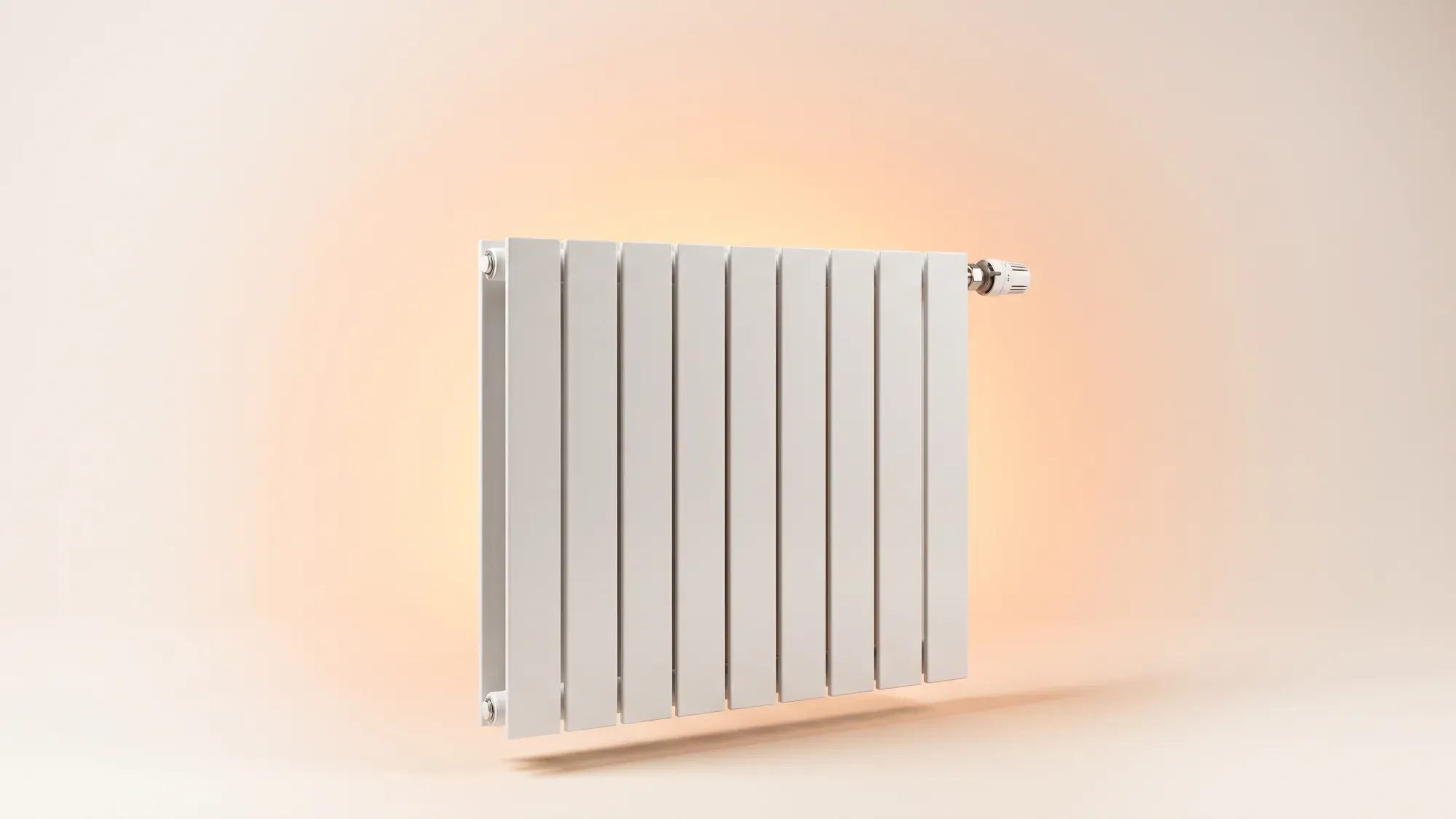
Integrating an air source heat pump (ASHP) into your home heating system can significantly reduce carbon emissions and running costs. Many UK homeowners wonder if their existing radiators are suitable for this change. The good news is that many current radiator systems can work effectively with ASHPs, though some upgrades might enhance performance and efficiency. Fuse supports UK homeowners with smart tariffs and electricity supply for their air source heat pump systems, helping them maximise comfort and savings.
Understanding how your energy works is key to making the most of your air source heat pump. Fuse Energy offers clear pricing and real-time usage data through its app, helping you stay in control of your bills. Click here to see how easy it is to switch.
Enter your address to get a quote and see how much you could save
Understanding air source heat pumps and radiators
Air source heat pumps are an increasingly popular low-carbon heating solution in the UK, offering an alternative to traditional gas boilers. They work by extracting heat from the outside air, even in cold temperatures, and transferring it into your home's heating system.
How heat pumps work with radiators
Unlike gas boilers that burn fuel to generate high-temperature water, ASHPs use electricity to move heat. This heat is then circulated through your home via a distribution system, which can include both underfloor heating and radiators. While underfloor heating is often considered ideal due to its large surface area, radiators are fully compatible with heat pumps.
The importance of low flow temperatures
Air source heat pumps operate most efficiently at lower flow temperatures, typically between 35-55°C. This contrasts with traditional gas boilers, which usually run at higher flow temperatures of 60-80°C. Running a heat pump at lower, consistent temperatures allows it to extract heat from the outside air more efficiently, significantly improving its Coefficient of Performance (CoP) - the ratio of heat output to electricity input. This means your radiators will feel warm to the touch rather than very hot, providing a more even and comfortable heat distribution throughout your home.
Assessing your existing radiators for compatibility
One of the main concerns for homeowners considering an air source heat pump is whether their current radiators will be suitable. The answer is often yes, but with important considerations.
Are your current radiators suitable?
Many existing radiators, particularly modern panel or cast iron types, can work with heat pumps. However, radiators designed for gas boilers (which operate at higher flow temperatures) may not emit enough heat when connected to a heat pump system running at lower temperatures. This does not automatically mean a full replacement is necessary; often, adjustments or strategic upgrades are sufficient.
Factors affecting compatibility
Several factors determine if your existing radiators are compatible and effective with a heat pump:
- Radiator size and type: Heat pumps require radiators with a larger surface area to effectively distribute heat at lower flow temperatures. Double or triple panel radiators, or those with convector fins, are often more suitable than smaller, single-panel designs.
- Heat loss of your home: The amount of heat your home loses directly impacts the required heat output from your radiators. A well-insulated home will need less heat, making existing radiators more likely to cope.
- Desired room temperature: Your preferred indoor temperature also plays a role. Achieving a comfortable temperature with lower flow temperatures might require larger radiators.
When an upgrade might be necessary
You might need to upgrade your radiators if:
- They are undersized: If your current radiators are too small to adequately heat a room at lower flow temperatures, you will need larger ones to maintain comfort.
- Your home has poor insulation: While insulation is crucial for any heating system, it becomes even more important with heat pumps. If your home is poorly insulated, your radiators will need to work harder, potentially requiring upgrades.
- You want to maximise efficiency: Upgrading to larger or more efficient radiators can improve a heat pump's CoP, leading to lower running costs.
Choosing the right radiators for heat pumps
Selecting the right radiators is key to optimising your heat pump system's performance and ensuring a comfortable home.
Types of heat pump compatible radiators
Radiators designed for low-temperature systems are engineered to maximise heat transfer at lower flow temperatures.
- Larger panel radiators: These are a common choice, offering increased surface area to emit more heat. Double or triple panel radiators are often recommended.
- Aluminium radiators: Known for their excellent thermal conductivity and low water content, aluminium radiators heat up and cool down quickly, making them highly responsive to temperature changes and efficient with heat pumps.
- Low water content radiators: These radiators require less water to heat up, making them more efficient for systems running at lower temperatures.
- Fan-assisted radiators: Some radiators incorporate fans to boost heat output, which can be particularly effective with lower flow temperatures.
Radiator sizing for optimal efficiency
Correct radiator sizing is critical for a heat pump system to operate efficiently and provide adequate warmth. A general guideline suggests that radiators for heat pumps might need to be around 2.5 times larger than those used with traditional boilers to achieve the same heat output.
Why do heat pumps need larger radiators?
Heat pumps operate at lower flow temperatures (35-55°C) compared to gas boilers (60-80°C). To deliver the same amount of heat to a room at these lower temperatures, radiators need a larger surface area. This increased surface area allows for more efficient heat transfer, ensuring your home remains warm and comfortable while the heat pump runs at its optimal efficiency.
Understanding heat output and Delta t
Radiator heat output is measured in Watts and depends on the temperature difference (Delta T or ΔT) between the radiator's surface and the room's air. Manufacturers typically provide heat output data at a standard ΔT of 50°C (for boiler systems). For heat pumps, you need to consider the radiator's output at a lower ΔT, corresponding to the heat pump's flow temperature (e.g., ΔT 20°C or 30°C). A qualified installer will perform a room-by-room heat loss calculation to determine the precise heat output required for each space.
Maximising efficiency and comfort with your system
Achieving optimal efficiency and comfort with an air source heat pump and radiators involves more than just the radiators themselves.
The role of home insulation
A well-insulated home is fundamental to the efficient operation of any heating system, especially a heat pump. Good insulation reduces heat loss, meaning your heat pump needs to generate less heat to keep your home warm, thereby reducing running costs and improving efficiency. Up to 35% of heat can escape through walls, highlighting the importance of cavity or solid wall insulation. Loft and floor insulation, as well as draught-proofing and double glazing, also play significant roles.
Optimising your heating controls
Modern heating controls, such as smart thermostats and thermostatic radiator valves (TRVs), allow you to manage your heating more effectively. TRVs enable individual radiators to regulate their own temperature, preventing overheating in unused rooms and allowing your heat pump to modulate more efficiently. Running your heat pump continuously at a lower, steady temperature rather than in short bursts of high heat is generally more efficient.
Achieving consistent home comfort
Low-temperature heating systems provide a more consistent and even warmth throughout your home, avoiding the hot and cold spots sometimes associated with high-temperature systems. While the radiators may not feel as hot to the touch, they deliver a steady background heat that can lead to greater overall comfort.
Installation, upgrades, and professional advice
Transitioning to an air source heat pump system with compatible radiators requires careful planning and professional execution.
The radiator upgrade process
If radiator upgrades are needed, the process typically involves:
- Heat loss survey: A professional assesses your home's insulation and calculates the heat demand for each room.
- Radiator sizing: Based on the heat loss calculations and the heat pump's optimal flow temperature, appropriate radiator sizes and types are determined for each room.
- Installation: Existing radiators are replaced with new, correctly sized units. This can range from replacing a few radiators to a full system overhaul.
Working with qualified installers
It is crucial to work with Microgeneration Certification Scheme (MCS) certified installers for your heat pump installation. MCS certification ensures that the installation meets high industry standards and is a requirement for accessing government grants like the Boiler Upgrade Scheme1. A certified installer will conduct a thorough property assessment, including insulation levels and existing heating distribution, to design a system tailored to your home's specific needs.
System design and balancing
Proper system design and balancing are essential for the heat pump and radiators to work in harmony. This includes ensuring correct pipework, appropriate controls, and balancing the system so that each radiator receives the right amount of heat.
Costs, savings, and UK grants
Understanding the financial aspects of upgrading to an air source heat pump with compatible radiators is important for UK homeowners.
Typical radiator upgrade costs
The cost of upgrading radiators for a heat pump system can vary. Replacing a single radiator typically costs around £150 to £250, including the unit and fitting. For a 3-bedroom house needing 6 to 8 radiators replaced, the total cost could range from £900 to £2,000. Some sources suggest that upgrading radiators can add £500 to £1,500 to the total cost of a heat pump installation. It is important to get a combined quote from your installer that covers both the heat pump and any necessary radiator work.
Long-term energy savings
While there is an upfront investment, air source heat pumps can lead to significant long-term energy savings, especially for homes switching from electric, oil, or LPG heating. Heat pumps are highly efficient, typically producing 3 to 4 kWh of heat for every 1 kWh of electricity consumed. Optimising your radiator system to work efficiently with the heat pump can further enhance these savings by improving the system's CoP.
Accessing government grants
The UK government offers financial incentives to help homeowners transition to low-carbon heating. The Boiler Upgrade Scheme (BUS) provides a grant of £7,500 towards the cost of installing an air source heat pump in England and Wales. This grant can significantly offset the initial investment. To be eligible, your installation must be carried out by an MCS-certified installer. The BUS is currently scheduled to run until March 2028. For eligible off-gas grid properties replacing oil or LPG heating, a temporary increase to £9,000 is available until March 2027.
Switching to an air source heat pump is a big step towards a greener, more efficient home. Fuse Energy is here to support your journey with smart tariffs designed for heat pump users, helping you manage your electricity consumption and costs effectively. Our 24/7 human support team is always on hand to help you understand your usage and get the most from your system. Click here to learn more about switching to Fuse Energy. You can also find out more about our mission to power a sustainable future here.
References
- UK Government. Boiler Upgrade Scheme
Disclaimer
For the avoidance of doubt, this article is provided for informational purposes only and is not intended to constitute legal or financial advice. The author and/or Fuse Energy shall not be responsible for any losses arising out of any reliance on the information contained herein.