Air source heat pump disadvantages
Air source heat pumps offer a greener way to heat your home, but like any significant investment, they come with potential drawbacks. Understanding these disadvantages upfront is crucial for homeowners considering the switch, allowing for informed decisions and realistic expectations.
Understanding air source heat pump disadvantages
Many homeowners are drawn to air source heat pumps for their environmental benefits and long-term running cost savings. However, focusing solely on the positives can lead to unexpected challenges down the line. A balanced perspective, acknowledging both the advantages and the potential pitfalls, is essential.
Why homeowners need to know the drawbacks
Ignoring the genuine disadvantages of air source heat pumps can result in dissatisfaction, unexpected costs, and a heating system that does not meet expectations. Homeowners need a clear, factual understanding of these issues to properly assess suitability for their property and budget. This proactive approach helps to mitigate problems before they arise, ensuring a smoother transition to low-carbon heating.
A balanced view of heat pump technology
Air source heat pumps extract heat from the outside air, even when temperatures drop as low as -15°C, to warm your home and provide hot water. Their efficiency is measured by the Coefficient of Performance (COP), typically ranging from 2.5 to 4, meaning they produce 2.5 to 4 units of heat for every unit of electricity consumed. While highly efficient, their optimal performance depends heavily on factors like a home's insulation and the suitability of its heat distribution system. For more on how these systems work, you might find our article on heat pump efficiency helpful.
High upfront costs and installation complexity
The initial investment for an air source heat pump is often a significant barrier for many homeowners. Beyond the unit itself, installation can involve extensive work, adding to the overall expense and disruption.
Initial investment and government grants
The total cost for an air source heat pump system, including supply and installation, typically ranges from £8,000 to £18,000 before grants, depending on property size and system specifications. This is considerably higher than a traditional boiler replacement. Fortunately, the UK government offers grants to help offset these costs. The Boiler Upgrade Scheme (BUS) provides a £7,500 grant towards the installation of an air source heat pump in England and Wales. Since 21 July 2026, this grant has been uplifted to £9,000 for eligible off-gas grid properties that rely on oil or LPG. To qualify for the BUS grant, installations must be carried out by an MCS (Microgeneration Certification Scheme) certified installer. You can learn more about the scheme in our BUS article.
Disruption during installation
Installing an air source heat pump is not a simple swap. It often requires significant changes to a home's existing heating infrastructure. This can include upgrading radiators to larger sizes or installing underfloor heating, replacing hot water cylinders, and extensive pipework modifications. Such work can be disruptive, taking several days to complete and potentially requiring temporary alternative heating and hot water solutions.
Space requirements for components
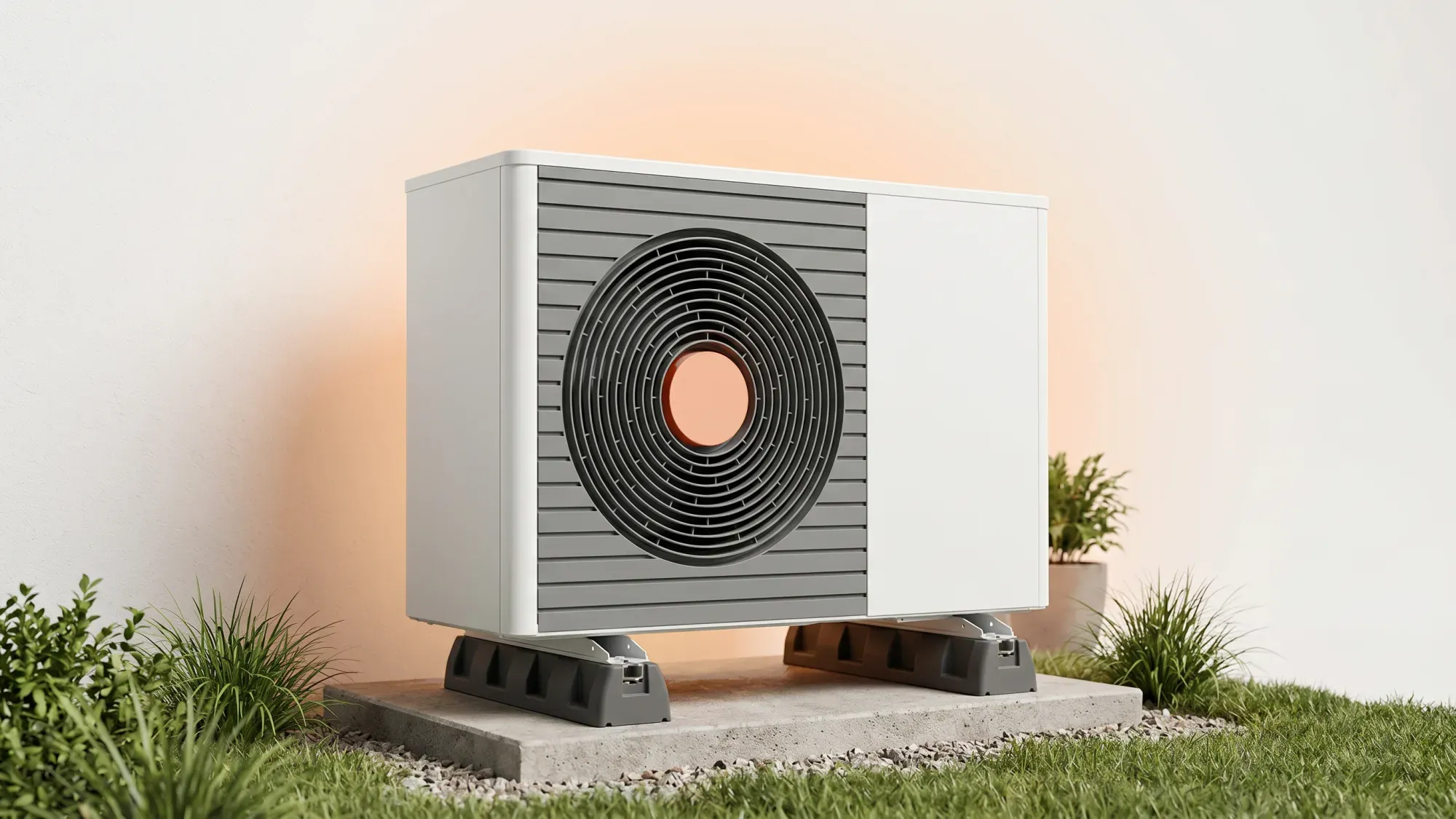
An air source heat pump system comprises both an outdoor unit and indoor components. The outdoor unit, which resembles an air conditioning unit, needs sufficient space around it for optimal airflow and maintenance. Indoors, a hot water cylinder is typically required, which can be larger than a standard boiler and may necessitate reconfiguring utility spaces or airing cupboards. These space demands can be a challenge, particularly in smaller homes or properties with limited external areas.
Performance and efficiency in cold weather
While modern air source heat pumps are designed to work effectively in cold climates, their efficiency can be affected by very low temperatures, which can impact running costs.
Impact of lower temperatures on COP
Air source heat pumps can operate in temperatures as low as -15°C. However, their Coefficient of Performance (COP) - the ratio of heat produced to electricity consumed - decreases as the outside temperature drops. This means that in colder conditions, the heat pump will consume more electricity to generate the same amount of heat, making it less efficient. While a typical COP might be between 2.5 and 4, this figure is often measured at moderate temperatures.
Reliance on supplementary heating
During periods of extreme cold, when the heat pump's efficiency is reduced, a supplementary heating source may be needed to maintain comfortable indoor temperatures. This is often an immersion heater within the hot water cylinder or direct electric heaters. Relying on these less efficient electric heating methods can temporarily increase running costs.
Running costs in winter
The decrease in COP during colder months directly impacts running costs. While heat pumps are generally more efficient than traditional electric heating, the increased electricity consumption in winter can lead to higher bills than anticipated, especially if a home is not adequately insulated or if the system is undersized.
Noise levels and aesthetic concerns
The outdoor unit of an air source heat pump generates some noise during operation, which can be a concern for homeowners and their neighbours, particularly in densely populated areas.
Decibel levels of outdoor units
Modern air source heat pump outdoor units typically operate at noise levels between 40 and 60 dB(A). To put this in context, this is comparable to the sound of a refrigerator or a quiet conversation. While often not intrusive, the continuous hum can be noticeable, especially at night when ambient noise levels are lower.
Planning considerations for noise
Noise emissions from air source heat pumps are subject to planning regulations and local authority guidelines. In England, for an installation to qualify as permitted development (meaning it does not require full planning permission), the noise level must not exceed 37 dB(A) at the nearest neighbouring window. This strict limit, assessed using MCS 020 noise standards, is crucial to prevent disturbance to nearby properties. Installers must carefully site the unit to comply with these regulations.
What is the MCS 020 noise limit?
The MCS 020 is a UK technical standard that regulates noise levels from air source heat pump installations. It sets a maximum allowable noise level of 37 dB(A) at the nearest neighbouring window for an installation to qualify as permitted development in England and Wales. Installers use this standard to assess and manage noise.
Visual impact on property exterior
The outdoor unit of an air source heat pump is a visible addition to a home's exterior. Its size and placement can impact the aesthetic appeal of a property, which can be a particular concern for homeowners in conservation areas or with listed buildings. Careful consideration of siting and screening is often necessary to minimise visual intrusion.
Home suitability and system integration
Not all homes are equally suited to air source heat pumps, and successful integration often depends on specific property characteristics and existing heating systems.
The importance of good insulation
For an air source heat pump to operate efficiently and cost-effectively, a home must have excellent insulation. Heat pumps deliver heat at a lower temperature over longer periods compared to traditional boilers. If a home is poorly insulated, heat will escape quickly, forcing the heat pump to work harder, reducing efficiency, and increasing running costs. Upgrading insulation, including loft and cavity wall insulation, is often a prerequisite for optimal performance.
Radiator and hot water system requirements
Air source heat pumps typically work best with larger radiators or underfloor heating systems, which are designed for lower flow temperatures. Existing radiators in older homes may be too small to effectively heat rooms at these lower temperatures, necessitating costly upgrades. Additionally, the hot water system usually requires a well-insulated storage cylinder, as heat pumps heat water more slowly than gas boilers.
Suitability for Older UK properties
Older UK properties, particularly those built before modern insulation standards, can present significant challenges for air source heat pump installation. Their often solid walls, single-glazed windows, and smaller radiators may require extensive and expensive upgrades to achieve the necessary thermal efficiency and heat distribution for a heat pump to perform well. While not impossible, the cost and disruption of these preparatory works can be substantial.
Mitigating air source heat pump disadvantages
While air source heat pumps have their challenges, many of these can be effectively managed and mitigated through smart planning, optimised energy use, and appropriate system design.
Optimising with smart home energy management
The initial disadvantages of an air source heat pump can feel like a scarcity of comfort or control. However, smart energy management can turn these challenges into opportunities for greater efficiency and control. Integrating your heat pump with a smart home energy system, like Fuse's all-in-one app, allows you to monitor and manage your energy consumption in real-time. This capability gives you the power to play with your energy usage, optimising when your heat pump operates to take advantage of cheaper electricity rates or periods of high renewable generation. It is a power play, shifting the balance of energy control into your hands. Homeowners often pair this with a smart meter installation to track usage.
Leveraging smart tariffs for lower running costs
High running costs, especially in colder weather, are a common concern. However, by leveraging smart tariffs, homeowners can significantly reduce these. Smart tariffs offer variable pricing throughout the day, making electricity cheaper during off-peak hours. By programming your heat pump to run more during these cheaper periods, you can heat your home and hot water more cost-effectively. Fuse's optimised energy supply and smart home integration are designed to help you make these strategic choices, giving you control over running costs and efficiency.
Ensuring proper sizing and installation
Many performance issues and higher running costs stem from incorrectly sized or poorly installed heat pump systems. A thorough heat loss survey by an MCS-certified installer is critical to ensure the heat pump is correctly sized for your home's specific heating demands. Proper installation also addresses noise concerns by ensuring optimal placement and mounting. Investing in a professional, certified installation from the outset is paramount for long-term efficiency and satisfaction. Fuse's 24/7 human customer support provides peace of mind for homeowners navigating the complexities of heat pump ownership, offering assistance should any issues arise.
Conclusion: balancing the pros and cons of air source heat pumps
Air source heat pumps represent a significant step towards decarbonising home heating in the UK. While they come with notable disadvantages, such as high upfront costs, potential installation complexity, reduced efficiency in very cold weather, and noise considerations, these are not insurmountable barriers.
Making an informed decision for your home
The key to a successful air source heat pump installation lies in thorough research and realistic planning. By understanding the financial commitment, assessing your home's suitability, and addressing potential issues like insulation and radiator upgrades, you can make an informed decision. Government grants like the BUS significantly reduce the initial financial burden, making these systems more accessible.
The future of home heating in the UK
Despite the drawbacks, the long-term benefits of air source heat pumps - including reduced carbon emissions and lower running costs when optimised - position them as a cornerstone of the UK's future heating landscape. With advancements in technology, smarter energy management systems, and supportive government policies, many of the current disadvantages are becoming increasingly manageable. By embracing smart energy solutions and ensuring a well-planned installation, homeowners can overcome these challenges and gain control over their home's energy future.
Disclaimer
For the avoidance of doubt, this article is provided for informational purposes only and is not intended to constitute legal or financial advice. The author and/or Fuse Energy shall not be responsible for any losses arising out of any reliance on the information contained herein.